
Rosh Hashanah is the Day of Judgment. The fate of individuals and the destiny of empires are determined. We assemble before God, weighing our behavior, pleading for mercy, yearning to be inscribed in the Book of Life.
However, the day carries a broader theme. It is the anniversary of creation, the day God summoned the world into being. By judging humanity, He reasserts His sovereignty over His creation. On Rosh Hashanah, we not only look inward at our choices but also look outward at history, tracing the presence of God as He guides the unfolding story of His world.
History has both a beginning and an end. Its beginning is creation; its conclusion is redemption. When history arrives at its final chapter, God’s presence will saturate all existence, and humanity in its entirety will acknowledge Him.
Each Rosh Hashanah, as we advance along the arduous path toward that destiny, we pause to reflect on the year that has passed. Which events have magnified His presence in our world, and which have obscured it?
On this day of awe and majesty, we ask ourselves: What is the condition of God’s presence in the world of 2025?
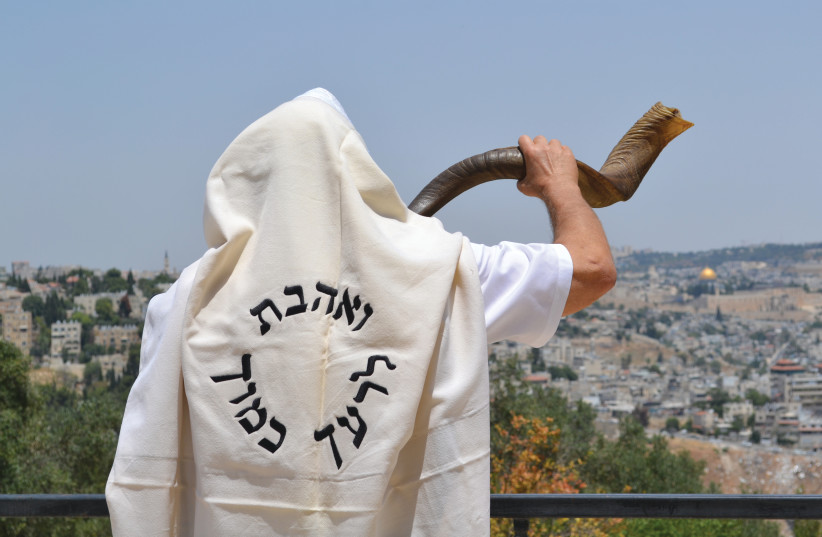
Divine stage
God’s presence is most intensely concentrated in the land He chose for His people. It is there, more than anywhere else, that the great drama of His presence unfolds.
Unfortunately, the war of these past two years has clouded that presence. The assault of Oct. 7, launched against His people in His land, was a hillul Hashem – a desecration of His name. Our enemies sought to weaponize Shabbat and Simchat Torah, two hallmark days of Jewish identity, turning them against us. Their assault was not only on flesh, blood, and Jewish cities but also on God’s presence in His land.
The assault on His name
Beyond the military assault on His land and His people, the war is driven by competing visions of God in our world.
The original standoff between the Arab world and the nascent State of Israel was not fundamentally religious. The State of Israel was founded on socialist and Marxist principles, while Arab opposition was rooted in seeing Israel as an obstacle to Arab national aspirations.
Decades later, the basis of this conflict has become overtly religious. Islamic fundamentalism claims to act in the name of God – but this is a distortion. God is neither wrathful nor vengeful; He does not delight in the loss of innocent life, and there are no “infidels” whom He automatically disfavors. By claiming otherwise, Islamic fundamentalism has vandalized the face of God in our world. Too many people now associate religion with death and destruction rather than with the mercy and compassion that define the true nature of God.
Strife dims the divine
The social strife that continues to plague Israel has further obscured God’s presence. Internal discord among Jews pushes His presence farther from our midst. We are all His children, and when we cannot reconcile our differences, our Father feels more distant.
Clashing forces
Recent events – the war and the consequential choices facing our people – have had a dual impact: They have sparked both religious revival and increased alienation.
Oct. 7 and the unleashing of antisemitism have had a paradoxical effect: While bringing violence and tragedy, many hearts also drew closer to God, religion, and tradition. There has been a surge in people openly expressing Jewish identity and pride, as well as a renewed commitment to religious and spiritual life.
Conversely, the decision by many observant Jews not to serve in the Israeli army can lead non-religious Jews to view religion more negatively. Those who choose not to serve often do so out of a sincere belief that they are acting in accordance with the Torah and the will of God, thereby elevating His name. However, despite their conviction, the unintended consequence is that many non-religious Israelis develop a critical view of religion, risking a weakening of their regard for faith and connection to God.
Violence pushes Him away
While the measure of God’s presence is most concentrated in the Land of Israel and in events there, it must also be considered on a broader cultural and global scale.
As our world grows more polarized, it also grows more violent. Disputes are increasingly settled through force rather than dialogue.
Stepping back, we see that the Book of Genesis presents a broader trajectory that moves from violence toward peaceful resolution. The opening scenes are filled with death and bloodshed – a brother murders his sibling out of jealousy, and four strong-armed tyrants impose their iron will, persecuting the populations of five neighboring empires.
When Abraham and his family enter the scene, the tide begins to turn. Abraham literally ends a world war. A potential military clash with the monarch Abimelech is resolved peacefully through treaties and understanding. Isaac and Jacob each faces the threat of military confrontation, but both episodes conclude without bloodshed. The only violent escalation occurs when the brothers respond to the abduction of Dinah – and even then, Jacob issues a harsh rebuke.
God desires that humanity resolve its conflicts without resorting to violence. Abraham’s legacy introduces this principle. Whenever humans resort to violence – whether in speech or deed – God’s design is corrupted, and His presence recedes. Peace draws Him near, while unnecessary violence distances Him.
AI and the divine Creator
Artificial intelligence has erupted into our culture, reshaping nearly every facet of life. Its pace is so rapid that we can barely predict its impact even over the next few years. Perhaps we should turn to AI itself – ask ChatGPT – about how this technology will affect us in the immediate future. Ironically, only AI can offer a true measure of the revolution it is unleashing.
Moreover, though the rise of AI raises countless questions about human experience, it also provokes a deeper question: How will humanity regard its creator when humans themselves become supreme creators? Darwin displaced God from the natural world by denying divine creation. Will AI push God farther from human consciousness, crowning humans as creators who, in effect, displace God from His role as the ultimate creator?
Truth and morality under siege
God’s signature is emet – He embodies the only absolute in our world. Therefore, as human beings uphold truth, His signature is strengthened.
Similarly, His traits are mercy and compassion; when we act with moral integrity, we amplify His presence in the world.
However, both truth and morality are under siege. Information overload and AI-generated content have blurred the boundaries between what is true and what is false. Facts are increasingly manipulated to serve private agendas, further blurring the line between truth and falsehood. As truth becomes muddled, morality, too, grows unsettled and uncertain.
Cultural relativism and political polarization have recast morality as subjective, shaped by individual attitudes; what is “right” or “wrong” now varies from person to person, with no absolute standards applying to all. We have watched in horror as murder and hatred are contextualized, justified, or dismissed. As humanity loosens its grip on truth and its clear vision of absolute right and wrong, our eyes drift ever farther from God.
On Rosh Hashanah, we pray that God will enter our world and make His presence unmistakable – for those who strive to push Him away, and for those who have yet to open their eyes to Him.
The writer is a rabbi at the Hesder pre-military Yeshivat Har Etzion/Gush, having Yeshiva University ordination and an MA in English literature. His books include To Be Holy but Human: Reflections Upon My Rebbe, HaRav Yehuda Amital, available at mtaraginbooks.com