Author Shira Greenspan and illustrator Rinat Gilboa have teamed up to create My First Tanakh Stories, bringing their love of Bible stories to children ages six months to six years, as well as to their parents and grandparents.
Each story is 22-28 pages long and its durable, hard 15 x 15 cm. cardboard pages are easy for little hands to hold. The authors use catchy language, simple engaging text, vibrant colorful illustrations, guided questions, and a glossary to introduce young children to stories from all three parts of the Bible.
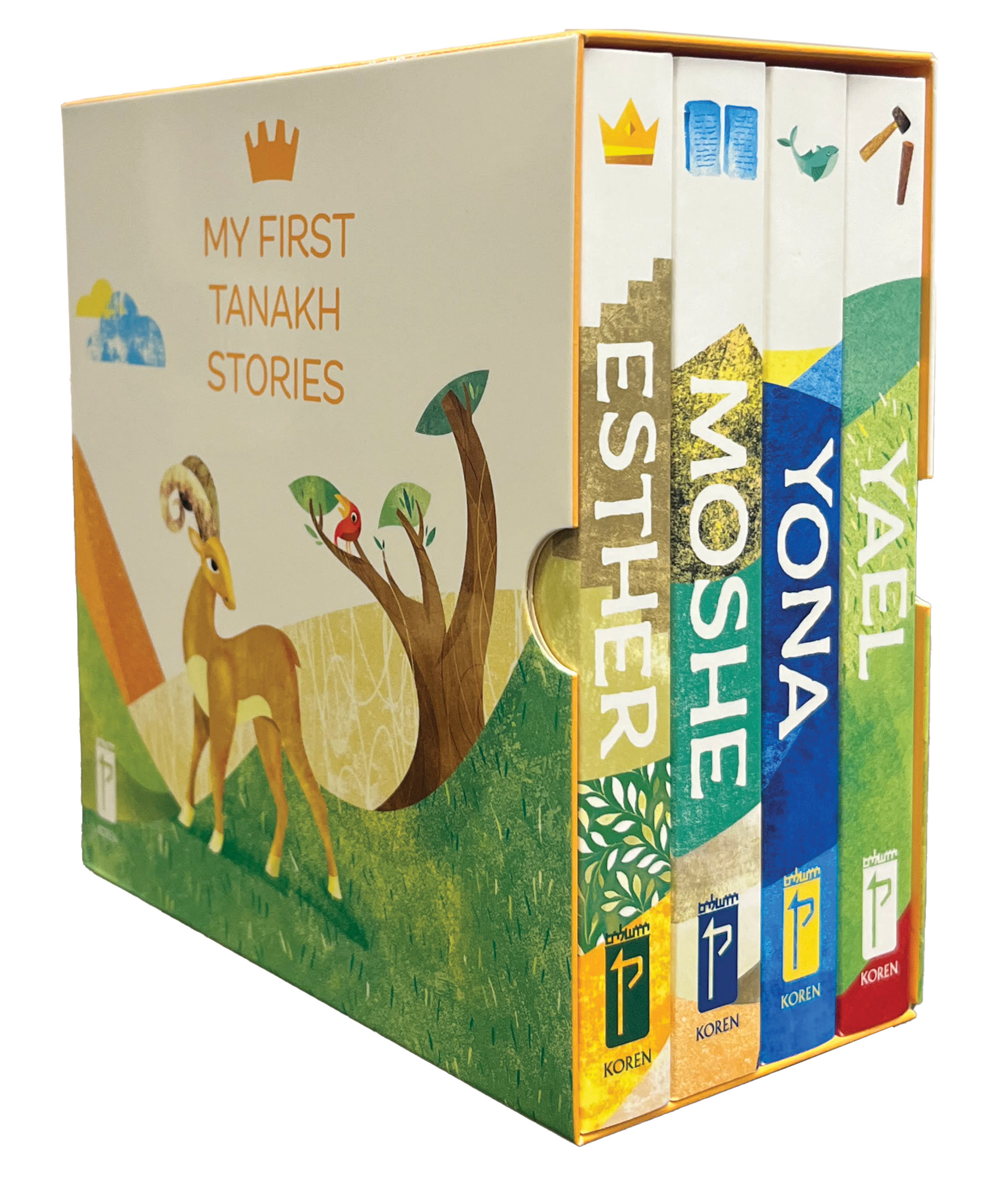
The eight books published to date, available as individual books or in boxed sets of four (box one: Avraham, Miriam, Eliyahu, and Ruth; box two: Moshe, Esther, Yonah, and Yael) are available in English, Hebrew, French, and Spanish.
The stories, which remain loyal to the biblical text, are crafted to be read aloud, making them ideal for adults to read with children, exploring the rich Jewish biblical heritage together while engaging in intergenerational discussions.
Guide for grown-ups
Each book includes a “Guide for Grown-ups,” which introduces the “Consider the Text,” “Consider the Art,” and “Consider the Character” sections, and a glossary that includes an explanation of the Hebrew terms used in the stories.
The loyalty to the biblical text is praiseworthy and the particular qualities or events of each protagonist highlighted are generally thoughtfully chosen. The stories nonetheless offer children and adult readers a gateway to the highlights of well-known Bible stories. The intricacies and nuances of the stories and characters will continue to emerge as the readers mature.
Warning: At times, it appears that the authors may have forgotten the age of the intended audience when they reference death (three times in the Ruth story) and murder (Yael killing Sisera with a tent peg).
I FIRST TACKLED “Avraham Teaches Others,” reasoning that it came first chronologically of the eight stories in the series – and featured the well-known story of biblical Avraham and Sarah opening their tent to the three strangers who later reveal themselves as angels of God.
In the case of Avraham, one question in the “Consider the Text” section asks, “What does Avraham do to help his guests feel welcome and comfortable in his home?”
The “Consider the Art” questions range from “What emotions does Abraham express in each part of the story?” to the more concrete “How many things in this book come in threes?”
“Consider the Character” asks: “What is it about Avraham and Sarah that inspires the guests to say their family should be among the ones to ‘pass Hashem’s values to each generation?’”
A glossary on the last page of each book introduces the parent and child to such words and concepts as “Elonei Mamre” (place where they welcomed the three guests), “Hashem,” “Chesed” (lovingkindness), and “Tzedakah and Mishpat” (“the active recognition that everything in the world essentially belongs to God”).
I decided to first work my way through the Torah books before moving on to the Prophets and Holy Writings.
“Miriam Finds Her Voice” highlights the story of “one big sister, Miriam, in a sea of many slaves.” She reasons: “I’ve got my voice, and that’s my power too,” as she saves her brother, Moshe, when she “runs off and returns with their mother” to feed the hungry baby as he emerges from the basket.
Miriam uses her voice again later in the story as the Israelites cross the Sea of Reeds. “So upon the dry land, in a voice proud and strong, tambourine in her hand, she leads them in song.”
The thoughtful questions for adults to raise with young readers include: “Why does Miriam feel surprised that Pharaoh’s daughter wants to help? At which points of the story is the water calm? At which points does the water have more movement?” and “How does Miriam use her voice to save her baby brother?”
Pictures invite further discussion beyond what is mentioned in the text
TO THE ILLUSTRATOR’S credit, pictures invite further discussion beyond what is mentioned in the text. In this case, a page with no words shows darkness, frogs, and a blue sea, but doesn’t discuss the Ten Plagues. The story then jumps to “With Hashem’s saving hand, the slaves are set free…”
Readers who want to learn more details about the biblical story are directed to “check out Exodus 2 and 15. For even more on Miriam and her voice, check out Numbers 12.” Each book in the series provides the citation to the biblical verses, so the adult reader who wishes can better prepare for his or her read-aloud session.
The last of the stories from Torah, “Moshe Finds Forgiveness,” recounts Moshe’s two trips up Mount Sinai to get the tablets. When he returns after a long absence of 40 days to discover the Golden Calf, he smashes the tablets and the calf.
The text is empathetic to the plight of the people who have been waiting so long for Moshe to return: “What are we supposed to do? What’s taking so long? Don’t we need a leader? Everything feels wrong!”
After Moshe smashes the tablets, the remorseful Israelites say, “We were so wrong… to forget Hashem above us. But what are we to do now? Does Hashem still even love us?” The guide questions ask, “What do the Children of Israel do differently to show that they are ready to follow Hashem properly?” and introduce such glossary terms as “sinning,” “stay true,” and “mitzvot.”
Of the final five books in the series, three come from Prophets – “Yael Makes a Plan” (Judges 4-5), “Yonah Tries Again” (Book of Jonah) and “Eliyahu Finds Hashem” (I Kings 18-19). Two stories are taken from the Holy Writings: “Ruth Makes a Promise” (Ruth 1 and 2), and “Esther Helps Save the Jews” (Esther 3-8).
I was curious to see if Yael, after giving warm milk to Sisera, the evil man intent on killing the Jews, would actually be depicted using tent pegs to kill him, as the actual biblical story recounts. True to the story, it reads, “Is there anything here to keep Sisera around? And that’s when I notice the pegs in the ground.”
A graphic picture on the next page – with Yael holding a peg in one hand and a hammer in the other – reads, “So I reach out for a tent peg, hold it tightly in my hand, and use it to peg Sisera securely to the sand.” I hope not too many preschool children are having nightmares about people killed by tent pegs.
One question in the “Consider the Character” section asks: “How can stories about your ancestors help you make choices when you don’t know what to do? How can Yael’s story help you? It is possible older readers may be able to understand the question; younger readers will have a much harder time.
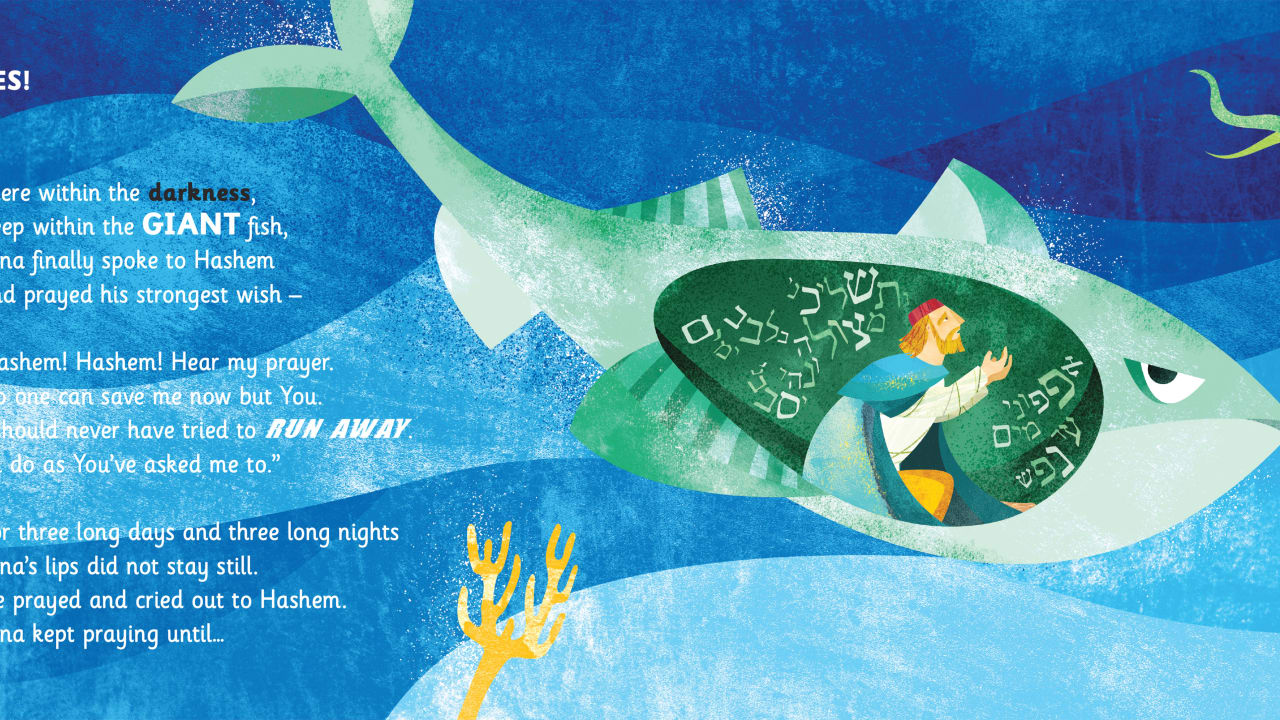
In “Yonah Tries Again,” Greenspan offers one of the few retellings of the Yonah story for children that stays away from the word “whale,” and instead sticks with “giant fish,” a more accurate translation of the biblical Hebrew.
In addition, Greenspan uses the word teshuva (“repentance”) throughout the story – the point of the Yonah story. And, unlike most children’s stories about Yonah, she doesn’t stop after Yonah is released from the fish.
She tells the story to the end, including Yonah’s dismay at the saving of Nineveh, and God’s lesson to Yonah – by letting the kikayon tree die – about the preciousness of all of God’s creations.
“Eliyahu Finds Hashem” introduces readers to a character they may only know briefly from the Passover Seder and Havdalah. They learn more about Eliyahu – that he was a “messenger with a fiery disposition… on a mission” to convince the people “to stop all of your mistakes and only serve Hashem.”
Questions posed by the authors include: “What can you do to get someone to listen to what you have to say?” and “If you could speak to Eliyahu, what would you say to him?”
'We’re doomed! Have you seen?'
I admit to saving two of my favorite Bible stories for last. Greenspan doesn’t simply retell the entire megillah in “Esther Helps Save the Jews.” She elects to leave out details about the king’s feast, Vashti, and Ahasuerus’s inability to sleep and asking to hear a story (about Mordechai saving his life) from the chronicles of the kingdom.
Instead, the story starts with “We’re doomed! Have you seen? Did you hear they want to destroy all the Jews!” It explains that “it’s the king’s adviser Haman behind this evil show,” then focuses on Esther as the one who “can change Haman’s decree.”
Several questions posed by the authors are still relevant today: “What does it mean for the Jewish nation to be united? Why do you think Esther wants the nation to pray and do teshuva together before she continues with her part of the plan? And, “Do you have a story of when you or someone in your family was in the right place, at the right time, to help others?”
Finally, “Ruth Makes a Promise” starts with Ruth and Orpah in Moab, their marriage to Naomi’s sons, and the sad events that happen next. “But soon, both their lives just don’t go as planned. Their husbands both die, and to add to their tears, they both become poor within just a few years.” The authors use the word “died” on several occasions. This may be hard for young readers to understand.
The story then focuses on Ruth’s loyalty to Naomi and their gleaning together. It ends without telling the story of Boaz, a distant relative she eventually marries.
Greenspan and Gilboa are off to a terrific start in bringing some of the most important Bible stories to young Jewish readers. They have the potential to introduce Jewish readers to stories and values of Jewish tradition – and to bring parents and grandparents and children closer together. ■
MY FIRST TANAKH STORIES
By Shira Greenspan
Illustrated by
Rinat Gilboa
Koren Jerusalem
$32 per boxed set;
$8 per book