
Prayer is the most intimate dimension of our spiritual lives. It confronts us with the invisible presence of God. It is a dialogue between our inner selves and the essence of the life force we call our creator. It cannot be reached by words, yet this is all we have to express our hopes, fears, joys, and yearnings. Prayer is not distant from us. As the Ba’al Shem Tov is quoted as having said: “The soul is always at prayer.”
Prayer may be an essential part of Jewish practice, but it is precisely because of its regularity that its inner essence is often passed over. Familiarity may not lead to contempt, but prayers can often lose their sense of amazement that is at their root.
One way of trying to capture this essence is to look at the underlying structure of the prayers, the way they were placed by our ancient sages. Is there something about this structure that could give us a hint at the meaning of the prayers themselves?
A look at prayers in Judaism
If we look at the weekday Shaharit prayers, we are faced with an apparently random collection of psalms, quotations from the Bible, and original prayers written by the sages. The first texts could, of course, be considered as merely preparation for the main prayers – the Shema and the Amidah, sympathetic chords to put the congregant in the “right mood.” But is there, in fact, something more?
The Ari (Rabbi Isaac Luria of Safed, 16th century) looked at the whole morning prayer as a spiritual journey in which each and every part of the prayers leads to a more and more elevated level of the person’s encounter with the divine.
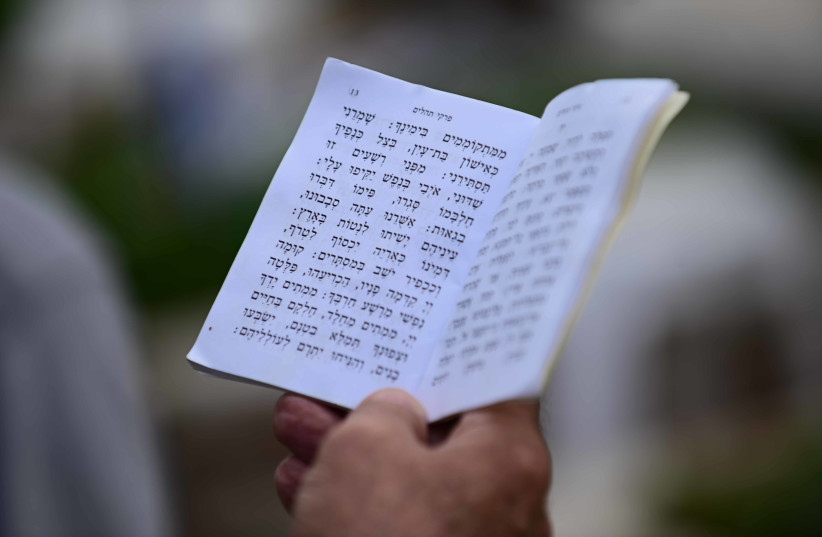
He divides the prayers into four parts, according to the kabbalistic division of the world – starting from the bottom asiyah (the world of action); to yetzirah (the world of formation); briah (the world of creation); and atzilut (the world of emanation). These fairly abstract concepts are made more tangible through the prayers that accompany them.
Thus, the first prayers that are said are concerned with our bodily functions and needs, very much of this world. This is the world of asiyah. These are followed by quotes from the Bible (the Book of Chronicles, and so on), as well as the last chapters of the Book of Psalms (145 to 150), the emergence of the Jewish people from Abraham, and then onto the song sung by Moses and the Children of Israel after the splitting of the Sea of Reeds. Thus, the world of yetzirah.
In the third stage, we are with the angels in heaven singing the praises of God – expressing the dual nature of being closer to the Divine while simultaneously finding it impossible to grasp Him (“Holy, holy, holy”). This third stage of briah climaxes in the Shema, which seals the covenant between God and Israel.
Finally, in the fourth part of the journey, atzilut, we reach the silent prayer –the Amidah – in which we are totally enclosed in God’s presence. Though we repeat the Amidah aloud, we have essentially finished the prayers. It just remains to say more benedictions and praises as though to come down from the height achieved in the prayers.
Now, if we look at the content of the prayers, we can see how this spiritual journey is reinforced. The first level, asiyah, is, as already stated, about the bodily functions – we thank God for being alive, with our faculties intact, and our ability to study Torah and do good deeds (we quote from the Mishna, which tells us about the good things that have no measure).
In the second stage, Ashkenazim, at least, say Psalm 30, which begins with the words “mizmor shir chanukat habayit leDavid” as though it were written for the inauguration of the Temple, but which, in fact, has nothing to do with the Temple or its service. Some Sephardi prayer books indeed leave out this inscription and begin with the second verse of the psalm, which mentions the fact that our bodies have been resurrected from the dead (sleep being a sixtieth part of death) and restores us to life.
This suggests that the Ashkenazi ritual is more in tune with the awareness expressed in the psalm of this daily awakening as an existential event following the earlier blessings for our bodies and souls.
The Ashkenazi ritual then recites some lessons from history – the fact that we were only a few and that we wandered in exile from nation to nation, but that we had the covenant with God, which entitled us to the Land of Israel. Psalm 100 is then recited and could be seen as a summary of our awareness of being alive and thankful to be in the presence of Hashem.
After some initial words of praise of God and Israel from various sources – mainly from the Book of Psalms, we move to the book’s last psalms, beginning with Psalm 145, which gives the whole book its name – namely Tehila.
These psalms combine historical references with the glories of nature and of human community, as if nature is partaking of praise of the Universal Creator of the world. In fact, nature and the natural and social world are very much part of all of these psalms, as though to tell us that this world in all its glory is a means by which we can and should praise God.
WE FOLLOW the psalms with two miraculous or even supernatural events, one is the choice of Abraham as the founder of our faith community, from all the people of the world, he was picked by God – a miraculous event in itself. Then, one of the most supernatural events that happened to his descendants – the crossing of the Reed Sea and the song that accompanied this.
This is the final act in the leaving of Egypt. Leaving Egypt as a daily existential fact of our existence carries a deeply metaphorical dimension, and here the fusion of the natural world and the supernatural is the perfect bridge between the nature-based psalms and what follows in the lead-up to the Shema and the Amidah.
This bridge takes us from the world of yetzirah to that of briah – or the world of angels. For after entering through the gate of blessing (the declaration of “Barchu”), we are in a higher place – a place where angels praise God. It is here that we become partners of the highest spiritual beings – angels – who praise God eternally and through whose agency we find the language to articulate our own praises. This lends us the power to recite the Shema, which in itself reflects different aspects of our relation with the divine.
The first paragraph of the Shema emphasizes our individual fealty to God and the need to teach the next generation, and to show real signs of our devotion. The second paragraph is more communal, repeating many of the lessons of the first, but adding the consequences of our obeying, or rebelling against, the word of God. It is a reality check.
The third paragraph is ostensibly about the mitzvah of tzitzit, the fringes that we add to our clothing. Though it is not stated explicitly, it suggests that the commandment of the fringes is to distinguish Jewish civilization from other civilizations, hence perhaps the reference to God who took us out of Egypt, the seat of immorality. Clothes make the man, and the fringes make the Jew.
SO WE arrive at the final stage of our spiritual journey – atzilut – which literally means that we are at one with God. The very introductory sentence – “O Lord, open my lips that my mouth may declare your praise” – indicates that we are now in God’s hands. It is He who is saying the prayers with us. We are no longer in control of our words.
Like the biblical Hannah, we have come to the end of our spoken words. We desire the hidden aspect of God, which we can reach only through silent or hidden prayer. We desire that our will is totally His. We are in one sense “dead” – not in the normal sense, but rather in the sense of being dead to the world outside of us.
Indeed, there are references to death in this prayer – beginning with God who keeps faith “with those who sleep in the earth” and continuing with the statement concerning God’s ability to revive the dead.
Then, as we end the prayer, we make two references to the Torah as a living entity (a Torah of life), as though to hint to us that it is the Torah that gives life to our strivings, gives direction to an otherwise meaningless existence. It is the Torah that revives us, after having been in the company of the divine, to have shared His desires, His prayers.
The possibility of our having erred in our journey may be the reason why we follow the essential prayer of the Amidah with slihot, a supplication for those who have gone astray along the way. The models offered include those of Moses praying for the Children of Israel after the sin of the golden calf, and that of David after his tryst with Bathsheba.
On Mondays and Thursdays, in particular, this prepares us for the reading of the pure Torah. But even on the other days, the sages instructed that we should be engaged in a small piece of Torah study before we leave the synagogue. Hence, we read the passage concerning the coming of redemption with the quotations from Isaiah about his encounter with the holiest of holies.
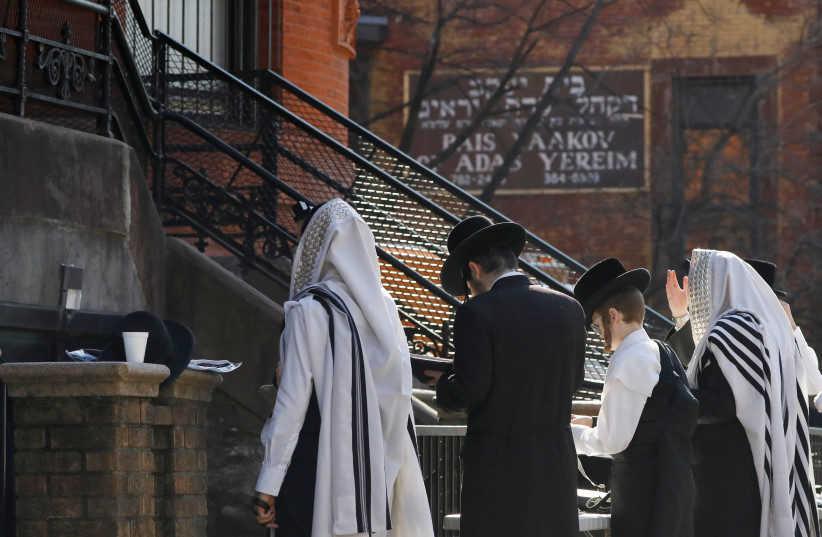
This leads to the saying of a daily psalm – a reminder of the Temple service. Interestingly, a good number of the psalms emphasize the importance of justice, as though to remind us that it is not enough to pray; our actions outside the synagogue should reflect the divine aspect of social justice.
In both the Sephardi and hassidic tradition, the morning prayers end with the aleinu prayer, which is probably the more correct formulation since the prayer is a summary of our yearning for the one God and (in the second paragraph) our desire that the one God is known throughout the world.
Thus, our prayers reach a coda that reflects our unfinished business and our need to fulfil our side of the agreement. Perhaps it is no wonder that in Israel – the headquarters of the struggle to realize these prayers – we add another prayer (“There is none like our God”) followed by yet another reminder of Temple times – the making of the sweet smelling incense – and a short passage from the Talmud where we state that God is the strength of his people, and that He will bless us with peace.
We end the Amidah as well as kaddish with the words “He who makes peace in the worlds above let him make peace down for us and for all Israel.” (“Oseh shalom bimromov...”) According to Midrash Tanhuma, this is in response to Moses’ question regarding the altar that God commands him to burn offerings on over a sheet of copper.
But surely, queries Moses, won’t the copper burn when the sacrifices are brought on it?
No, says God. In the upper worlds, fiery angels pass through halls of ice but do not melt, while the angels do not lose their flames.
Our chemistry and our physics are different here. That which cannot be reconciled below is made wholesome above. This is why we pray that just as these contrary elements can coexist above, so should they do so in the world below.
This is the aim of our prayers. So be it. ■