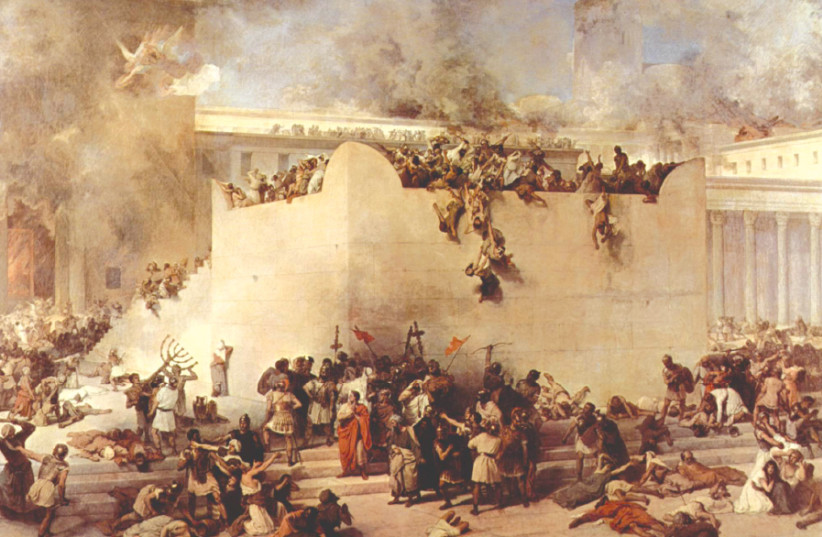
The 17th of Tammuz commemorates the breaching of the walls of Jerusalem by the Romans (70 CE), which occurred three weeks before the destruction of the Second Temple on Tisha B’Av. The Jerusalem Talmud (Taanit 4:8, 68c) maintains that the breaching of the walls of Jerusalem by the Babylonians (586 BCE) also occurred on this date, though The Babylonian Talmud (Taanit 28b) accepts the citation of Jeremiah (52:6-7) that this event took place on the 9th of the month. The 17th of Tammuz occurs 40 days after Shavuot, when Moses ascended Mount Sinai to receive the Ten Commandments. When the Israelites feared that Moses was not coming down as promised, they forced Aaron to fashion the golden calf. The next day, 40 days by Moses’ count, the lawgiver was horrified at viewing this idolatrous act and smashed the tablets.
According to the Mishna (Taanit 4:6), five catastrophes occurred on the 17th of Tammuz, the only Jewish observance that begins and ends during the declining moon. These include: (1) Moses broke the First Tablets in response to the incident of the golden calf; (2) the daily sacrifices in the First Temple were suspended during the siege of Jerusalem after the kohanim could no longer obtain the animals required; (3) the walls of Jerusalem were breached prior to the destruction of the Second Temple; (4) prior to the Great Revolt, Roman general Apostamos burned a Torah scroll (setting the dangerous precedent for similar burning of Jewish books in future centuries); and (5) an idol was placed in the sanctuary of the Holy Temple, a brazen act of desecration and blasphemy.