
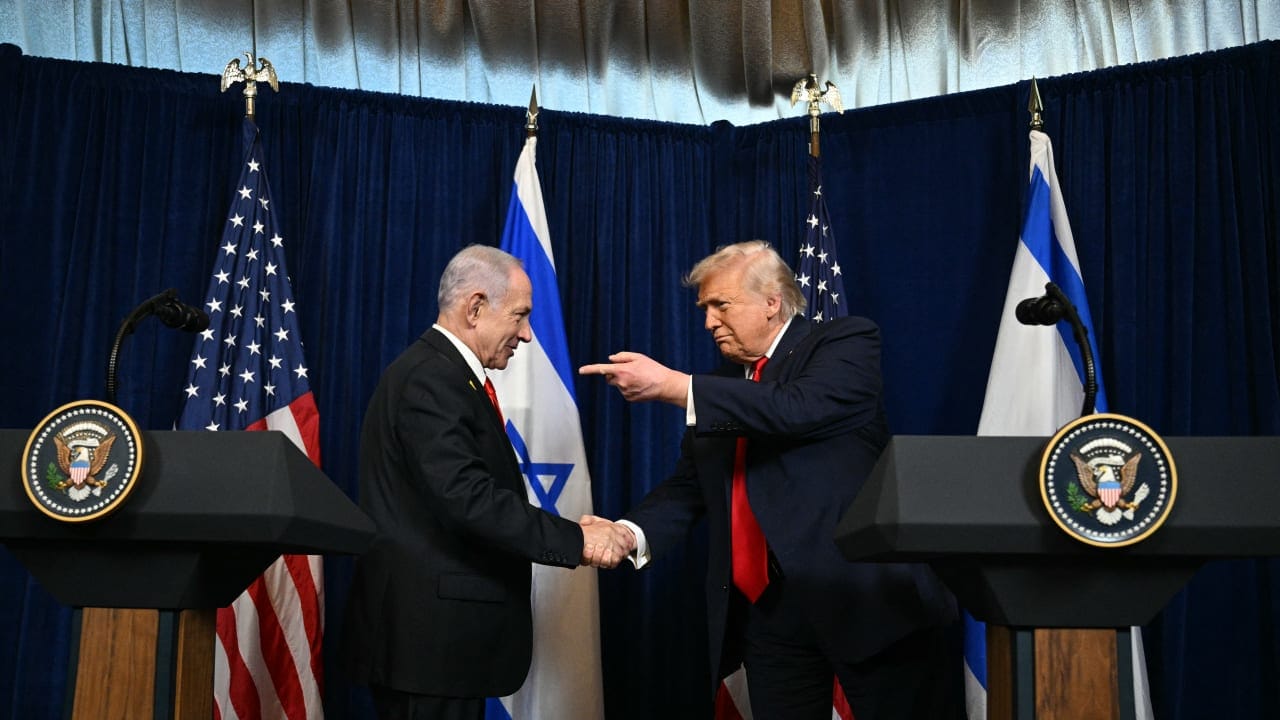

In a phone interview with Fox News on November 3, US President Donald Trump announced that the annual $3.8 billion in US military assistance to Israel would be phased out by the end of 2026, rather than expiring at the end of 2028 as originally negotiated. This was part of the $38 billion military aid package negotiated and signed by the Obama administration in September 2016, covering a 10-year period from 2019 to 2028.
To understand the ramifications of this development for Israel and the US, we must first understand what this Memorandum of Understanding (MOU) entails.
How aid evolved
In 1998, president Bill Clinton negotiated the first 10-year MOU package with Israel. This aid package systematically phased out US economic support funds to Israel and expanded US Foreign Military Financing for Israel. It was a $26.7 billion package paid out over 10 years at about $2.67 billion a year.
Israel was allowed to spend up to 26.3% of the funds domestically, and the rest on purchasing US-made military goods and arms. Israeli purchases of missile defense systems were to be funded on an ad hoc basis through various appropriation bills in the US Congress.
In 2007, president George W Bush renewed the MOU and increased the amount to $30 billion over the following 10 years. There was no economic aid in the deal, as it had been phased out completely under Clinton’s agreement. This was a 100% military aid package. Israel could still spend 26.3% of the funds on domestic purchases. No money was allocated to missile defense systems, as these were being funded annually by the US Congress by then.
When the Obama administration negotiated its MOU with Israel, it made a few changes. The amount was increased to $38 billion over 10 years, as with the previous MOUs. This was once again a strictly military package, but Israel could not spend a dime of the aid money in Israel. All of the funds had to be spent on materials purchased in America.
So, for example, even Israeli Army boots, which were previously made in Israel, now had to be purchased in America. This cost Brill Shoe Industries in Rishon Lezion 120 jobs, as the Defense Ministry refused to place orders for its boots, even though Brill had been manufacturing IDF boots for decades.
This is just a small example of the loss of Israeli manufacturing jobs resulting from the MOU’s requirement that the funds be spent in America. While it helped the American economy, it hurt Israel’s.
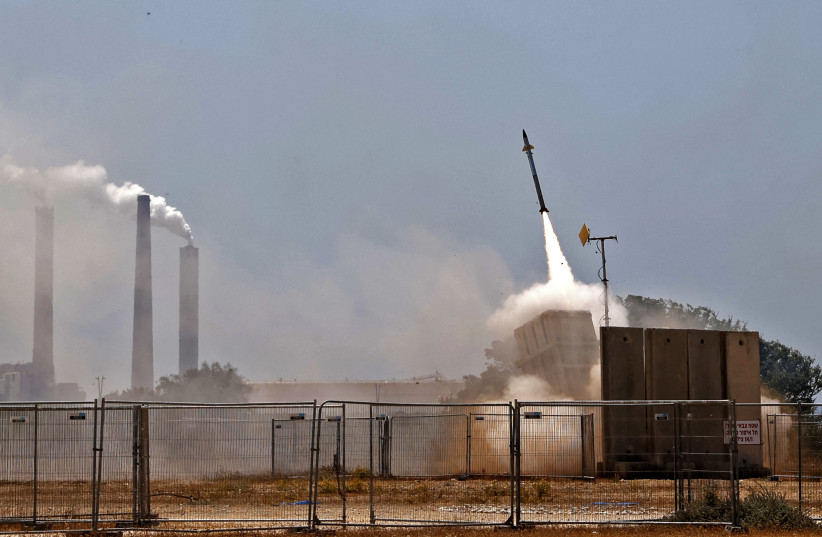
Another major difference between Barack Obama’s MOU and the previous two deals was that it included funding for missile defense systems, capped at $500 million per year. Obama’s deal also completely phased out Israeli military fuel purchases, which had been allowed in the first two MOUs.
The Obama administration, at the time of the signing of its 10-year MOU, tried to “make hay” of the fact that it was the largest military aid package ever granted to Israel. Obama’s relationship with Israel was “complicated,” to say the least. He made no secret of his personal dislike of the Israeli prime minister and his policies.
Two incidents illustrate this relationship. At the November 2011 G20 summit in France, the French president at the time, Nicolas Sarkozy, complained to Obama about Prime Minister Benjamin Netanyahu, saying, “I don’t want to see him anymore; he’s a liar.” Obama responded, “You’re fed up with him, but I have to deal with him every day!”
This private conversation was picked up by a hot microphone and went viral, causing considerable embarrassment to the Obama administration.
Then, of course, there was Bibi’s address to the US Congress in 2015, which was not coordinated with the White House and was widely seen as a snub to Obama. The address was a plea by Netanyahu to Congress not to approve the upcoming JCPOA nuclear deal with Iran, which Israel and many in America opposed. The deal was approved and went into effect, only for Trump to withdraw the US from it on May 8, 2018.
On the other hand, Trump has been, in the words of none other than Michael Oren (paraphrased), “The best US president for Israel since 1948.” I heard him say this in Ma’aleh Adumim at the beginning of Trump’s first term in office. Trump has had his disagreements with Bibi over the years, however, and has never forgiven him for calling Joe Biden to congratulate him on winning the 2020 election.
The Trump reversal
So, why would a US president who has been so supportive of the State of Israel over many years suddenly cut short a military aid package to Israel?
Firstly, this decision to phase out the MOU military aid early was coordinated with Netanyahu. So, this cannot be seen as a negative act towards Israel by the US.
Secondly, $3.8 billion is a lot of money, no matter how you look at it. But it is about 1.4% of the annual government budget of the State of Israel, which is NIS 850 billion, or about $270 billion. The US government’s annual budget is $7.4 trillion. So, $3.8 billion, or even $38 billion, is hardly a blip on the radar.
The elimination of this military aid might hurt the Israeli economy, as Israel would have to pay for the hardware itself, but it would also have a positive economic impact by removing the MOU’s restrictions on domestic purchases. That would create jobs and stimulate economic growth in Israel.
Sovereignty dividend
Perhaps the biggest benefit of this early phasing-out of the MOU is its positive impact on Israeli sovereignty. I see three dimensions to this impact.
First, financial sovereignty: Israel would have greater responsibility for financing its own defense.
Second, military sovereignty: Israel would have much more flexibility in selecting and purchasing weaponry from other sources and in further developing its domestic weapons manufacturing capabilities.
Third, diplomatic sovereignty: there would be less American leverage arising from the aid relationship between Israel and the US. This is most likely why Trump made the announcement when he did: to quell opposition to American funding of Israeli military spending with US tax dollars. However, the announcement might have had greater impact had it come a few weeks before Election Day in the US, rather than on Election Day itself.
A case can be made that $3.8 billion a year in 2026 is not worth as much as it was in 2019. A case could also be made that the positive impact on the Israeli economy, as well as Israeli sovereignty, far outweighs the negative impact of losing this military financial aid sooner than expected.
As we say, gam zo letova – this, too, is for the best.■
Norman Derovan, a former first vice president of Wealth Management at Morgan Stanley, made aliyah with his family in 2010. They are living their dreams in Ma’aleh Adumim.