
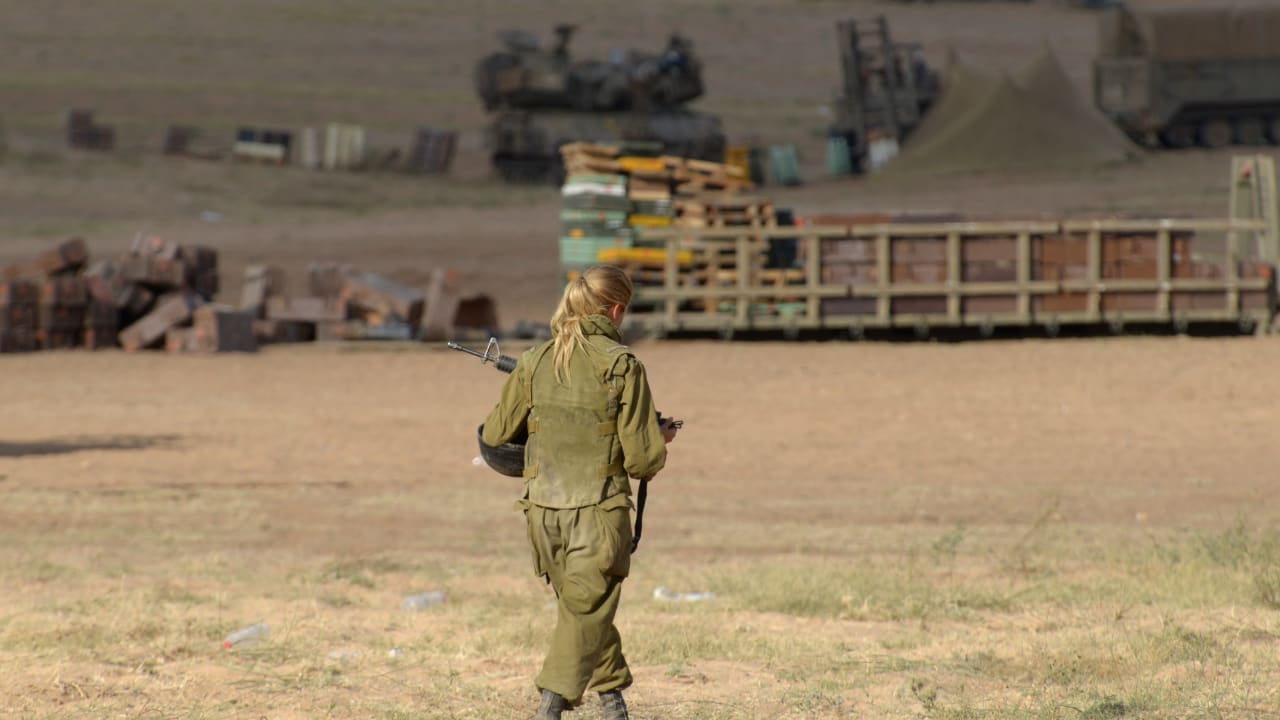
Young people sharing their daily lives on social media has fast become commonplace in today’s world. But for young Israelis who serve in the IDF, including new immigrants, chronicling their activities online comes with risks – and orders.
For US-born Golda Daphna, who moved to Israel in September 2023 with a healthy TikTok following, the decision to continue posting online even after starting her military service was not an official decision.
“I already had a TikTok with 30,000 followers, where I posted videos of my daily life; so when I enlisted, I decided to keep doing that,” she told The Jerusalem Report.
“Showing my military service on social media wasn’t an ‘official decision,’ as I have always been posting about my life online,” she explained, adding that she decided not to take on a formal social media role in the army because doing it full time is “really draining.”
Official policy
While the IDF has a social media department that shares posts about the army’s activities online, its official policy states that soldiers must avoid sharing any content that could compromise personal or operational security. That also means they are forbidden from posting any content online unless they have special approval from their commanders.
This policy had been in place for at least four years prior to Hamas’s October 7, 2023, attack. However, in the early months of the war, some soldiers did controversially share content about their experiences in Gaza.
This caused the army to forge a much clearer social media policy, declaring earlier this year that all soldiers up to the rank of brigadier general must keep their faces hidden in both social and traditional media. The reason was concerns about legal actions against Israeli soldiers traveling abroad.
For foreign-born or lone soldiers, the concern is even greater amid threats by pro-Palestinian groups in some countries to push for legislation or legal action against citizens who serve in the IDF, such as efforts to strip individuals of their citizenship or prosecute them.
There is also concern that foreign-born or immigrant soldiers might face harassment in their home countries if their identities are revealed. In one case in the US, the family of an IDF soldier murdered in a November 2023 terror attack faced hostilities by anti-Israel activists.
Hateful responses
Daphna, who has a total of 76,000 followers on Instagram and TikTok and was serving in the IDF as a technical professional in the Medical Corps, received special permission to continue with her posts – and she decided to keep going even after facing hateful backlash.
“As the war went on, I became more confident and proud of how strong we are. That’s when I understood that the hate comments in my videos were proof of our strength,” she told the Report.
In her videos, Daphna, who has since completed her army service, shows her daily life in Israel. From interviewing people on the street to cooking or video-blogging about her routine, she emphasizes her connection with Judaism and spirituality.
“Something that really pushed me to keep posting was American Jews, not because of hasbara [public diplomacy] but because it was important for them to see someone serving in the IDF and being happy while doing so,” she said.

Internal jealousy
According to Daphna, the real challenge wasn’t the antisemitic comments – it was jealousy within the pro-Israel advocacy community.
“Social media is really draining, and many times we found ourselves in situations where hatred comes from jealousy,” she said, specifying that “one-sided drama, and especially being attacked by people in the Jewish community, is what hurts the most.
“I had situations where other influencers copied my work or called me names – and that, coming from people who want to spread the same message, really hurts,” she said.
“I think the over-saturation of content, with everyone wanting to be a hasbara influencer, has taken out some of the joy for me personally when posting, mainly because I never did it to become famous or influential,” she explained.
“Recently, I had many people telling me that they want to be like me, to see their following grow, and asking me for advice. But the reality is that I made videos because I like posting online. The main reason to continue posting is that I have fun.”
Official voice
Nezira Feruglio made aliyah from Argentina in 2022 when she was 19, knowing that she had to serve in the IDF as part of the process of becoming an Israeli citizen.
“When coming to Israel, I knew that the army was a main part of Israeli life, and I had no doubt that I had to serve,” she told the Report.
“I also knew that this was not the image people back in South America had of olim,” she said when asked about the reasons for posting content while in the army.
“So, I wanted to show it online: how it was to enter the army, to serve the country, and defend it with the IDF.”
The catalyst for Feruglio was October 7. She understood that “people won’t listen to you just for being in Israel. Having the uniform on was a way to stand out and say, ‘Look at me. I’m an official voice, and I know what I’m talking about.’”
In her experience on TikTok, where she has 93,000 followers, she has had more confrontations with the pro-Palestine crowd.
“Eighty percent of interactions in my videos are about ‘Free Palestine,’ with Jew-hating messages or anti-Zionist rhetoric. And this became even worse when I posted in uniform, with the comment section almost exclusively full of hate comments,” she said.

Serious reporting
“There was also a break after October 7, when I decided to slightly change my content from humor and daily life in Israel videos to more serious reporting, where I told the people back in Argentina what was happening,” she recounted.
“It was a real shock for my followers, and I think that translated into a lack of supporting comments in my videos. Most Argentinians are Catholics, and when the war started it became almost ‘dangerous’ for them to publicly defend Israel. Regardless, many of them did message me privately to show their support.”
Support from home
Feruglio described how her posts affected her family back home: “They were really supportive but were also a little afraid, to the point that they asked me to close my social media when traveling abroad to places in Europe. But that was not the case when going back to Argentina, where, little by little, I saw that people started not only supporting Israel but also wanting to really learn about what was happening,” she said.
“I think those interactions with teens and young adults trying to learn without previous knowledge were what made me realize the importance of sharing my life as an IDF soldier online.”■