
Making aliyah is incredibly difficult.
Even though services and organizations like Nefesh B’Nefesh exist, the fact remains that aliyah entails moving to a faraway country – likely continents away – and packing your life up in the process to begin your new life in a new land.
Moving is thought of as one of the most stressful and difficult things people can go through in their lives, and that’s all without having to get used to a new language and the sheer barrage of culture shock that moving to Israel entails.
This is a challenge for anyone, no matter how much you prepare. But that’s where people like Rabbi Sid Slivko come into play.
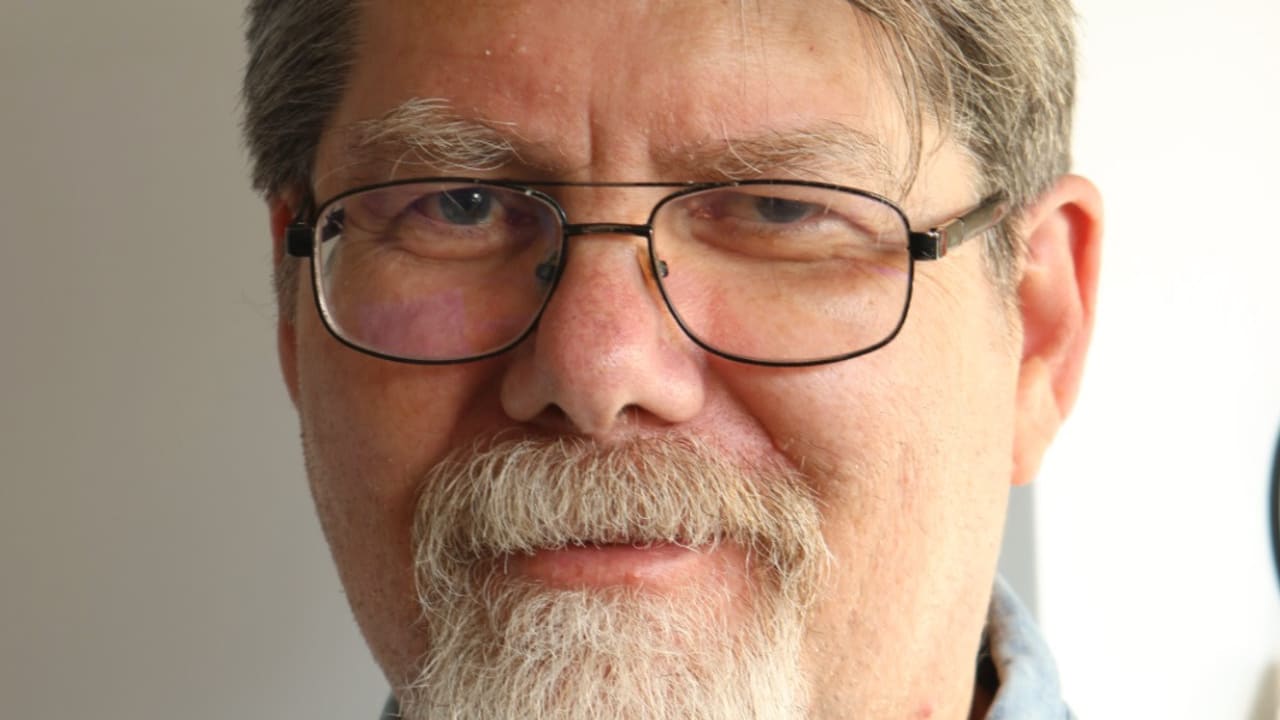
Since coming to Israel, Slivko has essentially built an entire life here, and raised a family to boot. But through the organization he works with, Olim Paveway, he is able to help make sure that olim (new immigrants) aren’t just able to live in Israel – they’re able to thrive here.

In Jerusalem was put in touch with him by Jerusalem Post staffer Batsheva Shulman, who writes a regular column on the challenges of aliyah called “Voices of Olim.” Once we heard about Slivko, we knew he was someone worthy of the title of Jerusalemite of the Week.
We sat down with him to hear his story and all about his work.
What brought you to Israel?
My reason changed over time. Until 1999, I would tell people that what brought me to Israel was lack of impulse control. I was here for a year, I liked it, so I decided to stay. After 1999, I realized that I was brought here to meet my future wife, Michele Chabin.
In 1997, I came to Israel for a year-long program called the Senior Educators at Hebrew University. Participants spent a year in Israel while working with mentors on individual projects that we were expected to take back to our home communities.
The thing is, after a year of living here, I decided I didn’t want to leave. So, I convinced the folks at the program that staying in Israel and teaching Diaspora communities online was even better than going back to my New Jersey classroom. They let me stay, and I got a position running an online education program through the Jewish Agency.
Half a year later I met Michele – through two matchmakers! Eleven months later, we were married. I guess that’s really why I came to Israel.
What made you want to become a rabbi?
I grew up in a religious home in Philadelphia, where my father was a rabbi – generally a good reason not to become a rabbi. I wanted to be a paleontologist. Then I wanted to be a stunt man; then an artist; then a psychologist. But I had some kind of epiphany in college.
It was my first year at Yeshiva University. One night, I went out with friends to the West Village when we were stopped by this homeless guy on the street who told us that he was Jewish too. In fact, he told us that he was more Jewish than we were. Well, that got my attention. ‘How do you figure that?’ I asked. ‘Because’ he said, ‘You were born Jewish; I chose it.’
That got me thinking. He was right. I really was just doing what I had always been doing without understanding why I was doing it. That’s when I decided to take a closer look at my life. I changed my major. I chose to become a rabbi.
What was it like starting a life and raising a family in Israel?
My older son was in Rutgers [University] and my daughter, who had just graduated high school, was living in the States when I met my second wife. When she asked if I wanted kids again, I said ‘Sure,’ figuring how much harder it could be. Well, we hadn’t figured on having twin boys. I hadn’t figured that parenting at 50 is a lot different than parenting at 25. It was more of a challenge the second time around. Moreover, this was Israel.
They’re now 23. They’ve been through the Israeli school system, chugim, the army, the war. They’ve made friends, lost friends, and had friends who were seriously hurt in the war. They are different as night and day, but they’re studying together and are building a business together. They are close to their older brother and sister and their families in the States, and occasionally conspire against me, which I find amusing.
I only regret that the twins didn’t get to experience the younger me. They only know the ‘older’ me. In some ways, it’s like I am two different fathers! But they are really close with their American brother and sister and their families. And I am grateful that regardless of what they end up doing in life, they have become solid people.
Tell me about the work you’ve done since living in Israel.
Since coming to Israel, I’ve worn a number of professional hats. I worked at the Jewish Agency. I worked for MASA (I was actually one of the people who ‘sold’ the idea to then-PM Ariel Sharon), and I worked at Shalva. I also did some freelance writing, editing, and graphics for a number of Israeli businesses and NPOs. But the most rewarding work I have done was teaching. I’ve taught for all four Jewish movements, from high school to adult education.
Teaching has always been a creative outlet for me, a whack on the side of the head that gets my adrenaline pumping. Going into a classroom is like walking out on a tightrope without a net. I never know when someone’s going to ask a question that will push me to think of a new idea or make a new connection. So, I continue to teach. I also write, paint – even play guitar a little (very badly, I’m afraid). Through Olim Paveway, I continue to help people thinking about aliyah or people who have taken the ‘leap of faith.’
In other words, I’m doing exactly what I love doing.
What made you get involved with Olim Paveway? What sort of work do you do for them?
When I first moved to Israel, I reconnected with a friend from college who had moved to Israel about ten years ahead of me. Not only did he give me my first Israeli teaching job but he also took me under his wing, acting as my mentor, and gave me sound advice on how to adjust to Israeli living.
The most important piece of advice he gave me was to take what I like doing – my hobby – and turn that into my profession. In other words, reframe myself. It must have worked because that was close to 30 years ago and I’m still here.
I got involved with Olim Paveway because that’s what they do – take olim under their wing and help them adjust to life here. The company was started by Yaakov Gurwitz, an American oleh in partnership with Ofer Nachshon, an Israeli entrepreneur. They understood that olim are more likely to succeed when they have a ‘big brother’ or sister who can show them the ropes when they arrive in Israel.
My official title is community relations coordinator, which means I look for different communities and organizations in Israel, in the Diaspora, explain what it’s like to live in Israel – warts and all – and what we do to help make that settling-in process easier. To that end, we offer personal guide services: links to local businesses and service providers who understand the needs of olim (some of them are olim themselves) and have a good track record of service.
I also put together educational programs for olim, such as our weekly Toolbox Talks Zoomcast, which offers practical solutions to problems olim face here, from how to organize their living space to fit Israeli apartments to how to find a good Israeli lawyer. Sometimes I work directly with individual olim to help them solve their klitah [absorption] issues.
What advice do you have for anyone considering aliyah?
First, don’t try to do it all at once. Aliyah is a one-time event; klitah is a process. Neither of them is a race. Everyone is here to help.
Second, don’t be afraid to ask for help. Get a mentor and follow his or her advice. The knowledge you get will make life easier. It will also give you the wherewithal to help other olim later on.
Third, laugh a lot. Israelis can be self-effacing, which I think is a good survival technique. So don’t take yourself too seriously. When things don’t work, shuck it off and move on to the next challenge.
Fourth, pamper yourself. You’ve earned it!
Finally, go with the flow. Living here presents a whole new set of challenges. What will get you through is being flexible. You’ve already done the hard part by moving here. The rest is just the natural result – embrace it!
Sid Slivko (sslivko@olimpaveway.com) Olim Paveway: https://olimpaveway.com