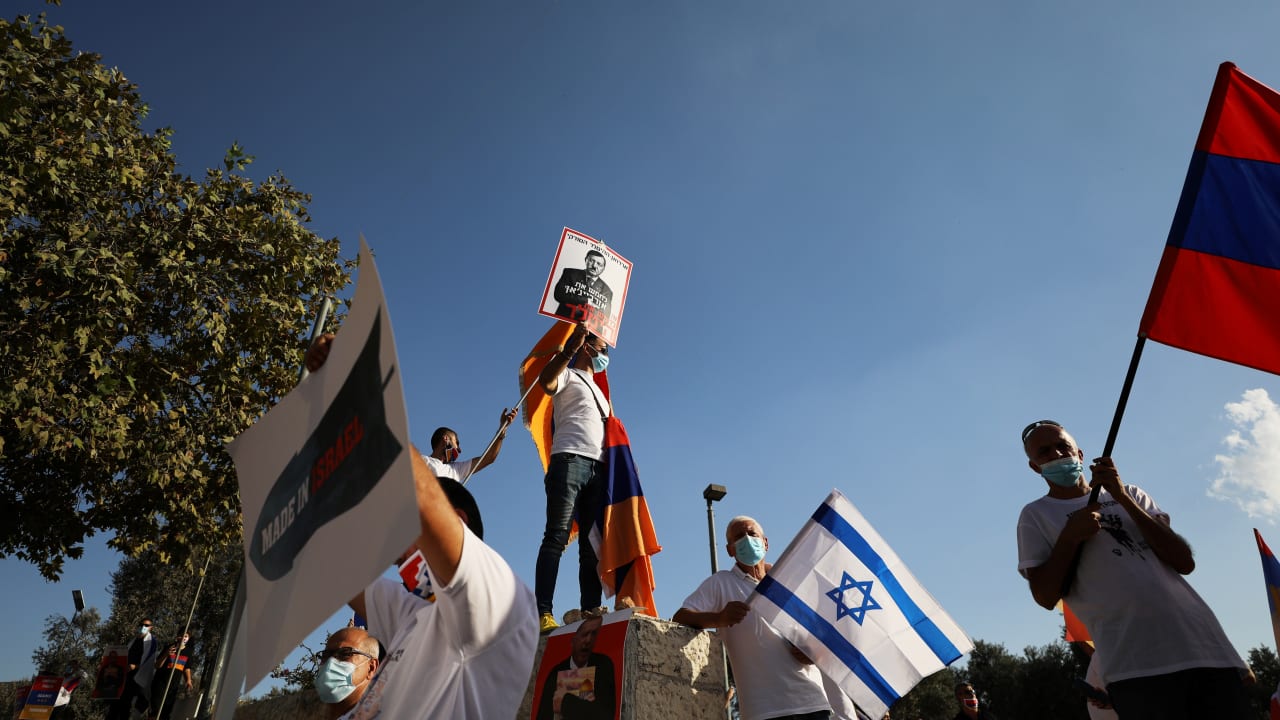
While the Armenian government is cautiously attempting to break years of stagnation and deepen its relations with Israel as part of its pivot toward the West, the Armenian lobby in the United States is pursuing an independent and more adversarial approach.
Some regional analysts suggest that this friction could inadvertently serve Iranian interests by disrupting emerging security partnerships.
The rift surfaced primarily around the issue of the “day after” in the Gaza Strip. A coalition of 18 US organizations, led by the Armenian National Committee of America (ANCA) and A New Policy, issued a joint statement urging the United States and international partners to reject any Azerbaijani role in the planned International Stabilization Force (ISF) for Gaza, a concept outlined under US President Donald Trump’s 20-Point Plan.
These organizations claim that the close security and intelligence ties between Jerusalem and Baku make the Azerbaijanis a biased party, arguing that such a partnership disqualifies Baku from any peacekeeping role in the territory.
The Armenian lobby has also highlighted the 2023 Karabakh war as evidence that Baku is unfit for such missions. On the other hand, the Azerbaijani government frames those military actions as the liberation of its sovereign territory from decades of Armenian occupation.
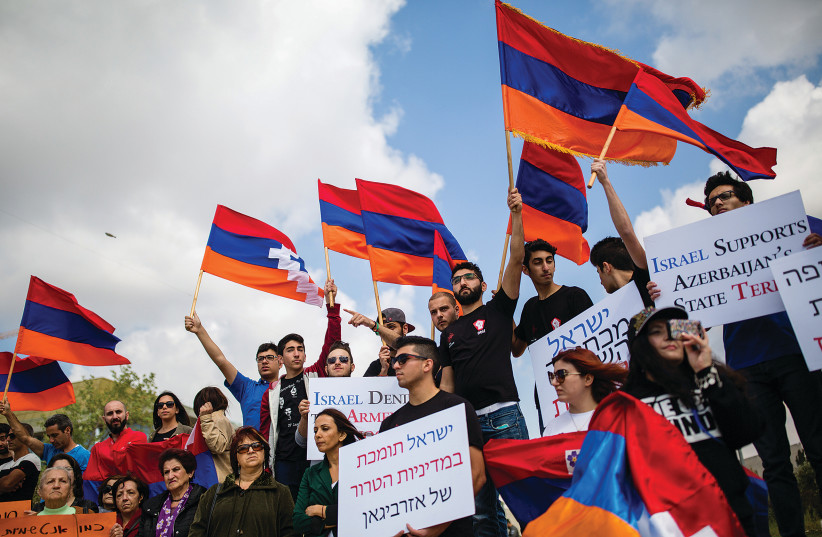
In parallel, the coalition’s messaging has grown sharply critical of Israel. ANCA’s executive director, for example, accused Israel in the joint statement of “aiding and abetting” what he called Azerbaijan’s “genocide of Artsakh,” and argued that these ties make any Azerbaijani involvement in Gaza untenable. This rhetoric has deepened the gap between the official diplomacy of the Armenian government and the actions of the lobby overseas.
Regarding Azerbaijan’s potential role in Gaza, recent reporting suggests Baku has not committed to the force and may only consider a deployment under strict conditions, including a complete halt in hostilities. While Azerbaijan is often discussed in the US as a potential source for a moderate and professional Muslim force, the complexities on the ground mean that any such move remains highly speculative at this stage.
Azerbaijan's Jewish community takes a stand
In a recent letter obtained by The Jerusalem Post and sent to Rabbi Yehuda Kaploun, the US Special Envoy to Monitor and Combat Antisemitism, Rabbi Zamir Isayev presented a different perspective.
Isayev, who serves as the rabbi of the Sephardic community in Baku, emphasized in his letter that Azerbaijan serves as a model of interfaith harmony. He noted that, for centuries, Jews have lived in the country as a respected part of society, practicing their faith in safety. According to Isayev, the Azerbaijani model proves that government support for minorities creates an environment where hatred cannot take root.
This paradox places Jerusalem in a complicated position. There is a clear desire to normalize relations with Armenia, yet there is also a need to maintain the strategic partnership with Baku, a long-standing ally. While the Armenian lobby in the US continues its campaign to oppose these diplomatic shifts, the reality presented by the Jewish community in Azerbaijan serves as a reminder of the complex alliances at play in the region.