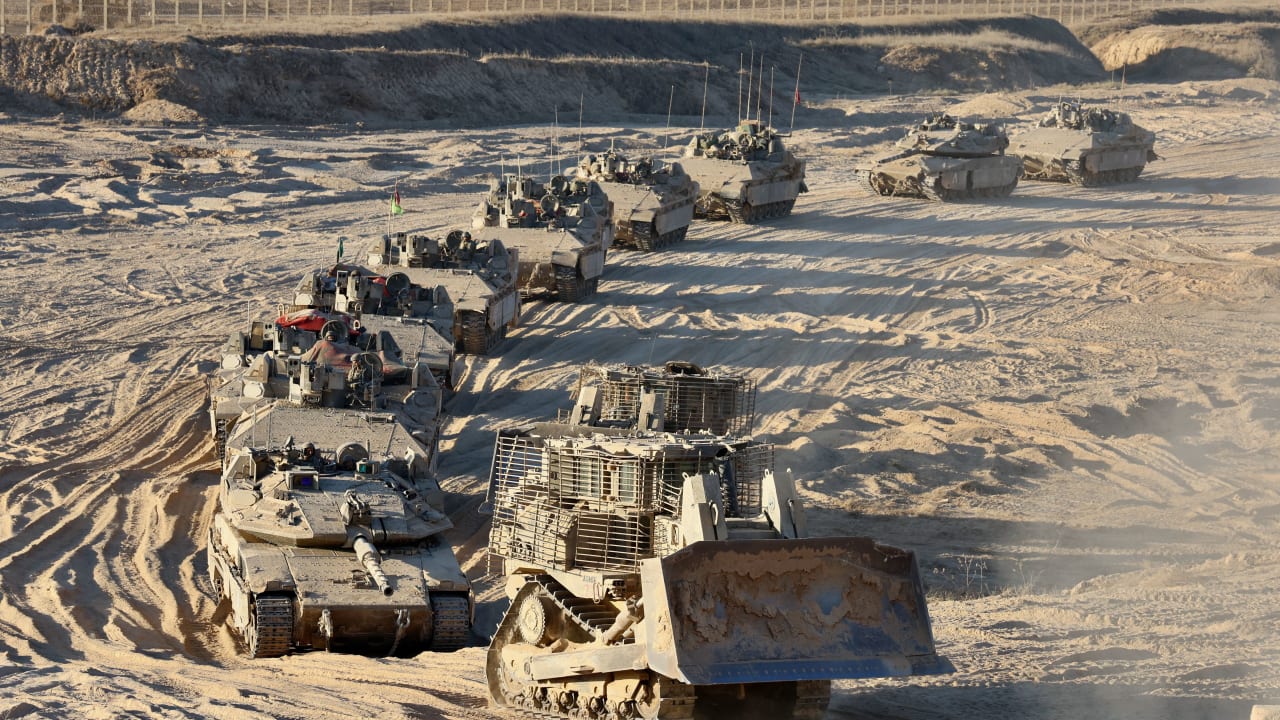
The IDF has started a process for probing several post-October 7 massacre stages of the war, including the question of why Hamas managed to survive the many invasions of Gaza.
At a conference this week, the IDF started to split up different themes for the probe, with the goal of learning lessons from after October 7 that can improve the military going forward.
This means each separate command, directorate, and corps within the military – including intelligence, ground forces, the IAF, and the navy – will all be probed regarding their macro-performance during the war.
Separately, commanders at all the different levels will undertake more micro-level investigations to determine how their divisions or battalions performed, compared with their specific mission parameters and battles.
Finally, the probe will include a section focused on how the connection between IDF General Staff and commanders in the field operated over the course of the war.

Timeline covered in the probe
The time frame of the probe will essentially start with the invasion of northern Gaza in October 2023.
It will then move on to the invasion of Khan Yunis in late 2023 to early 2024.
Next, it will check the invasion of Rafah in Spring-Summer 2024.
Furthermore, the probe will then review the second major invasion of Jabalya in late 2024 and of northern Gaza more broadly in late 2024.
Part of this analysis will probe why and how Hamas made a comeback in these areas after they had been defined as operationally clear from Hamas several months earlier.
In addition, the probe will include the two rounds of re-invading Gaza in Spring-Summer 2025. Gideon’s Chariots I was viewed as not having been effective, and Gideon’s Chariots II was viewed as having been stopped mid-operation by diplomatic processes that eventually ended the war.
Separately, the IDF will probe the invasion of Lebanon in Fall 2024, the invasion of Syria in December 2024, and the various actions, both offensive and defensive, that the IDF has undertaken in those areas since then.
Another section of the probe will review the IDF operation to take over portions of Jenin and Tulkarm in January 2025, including maintaining soldiers there on an indefinite basis until now and for the foreseeable future.
The IDF has already probed the 12-day war with Iran, given that it was shorter and fewer units were involved than in these other major chapters of the war.
Part of the conclusions for the probe will help frame how the IDF will use its mandatory service soldiers versus reservist soldiers going forward, including their length of service.
Furthermore, the IDF has said it is currently still on “war footing,” but with three months having passed since major fighting and the diplomatic process seeming to be advancing, the military will also be exploring how downgrading from being at war to being in a state of emergency less than all-out war would impact its operations, deployment schedules, budgets, and training plans.
This process is moving forward as part of a clear belief by IDF Chief of Staff Lt.-Gen. Eyal Zamir that the focus should move past the October 7 massacre to later events and to preparing the military for the future, rather than keeping the army prisoner to the many failures that led to Hamas’s invasion, which it has already probed in three separate rounds.