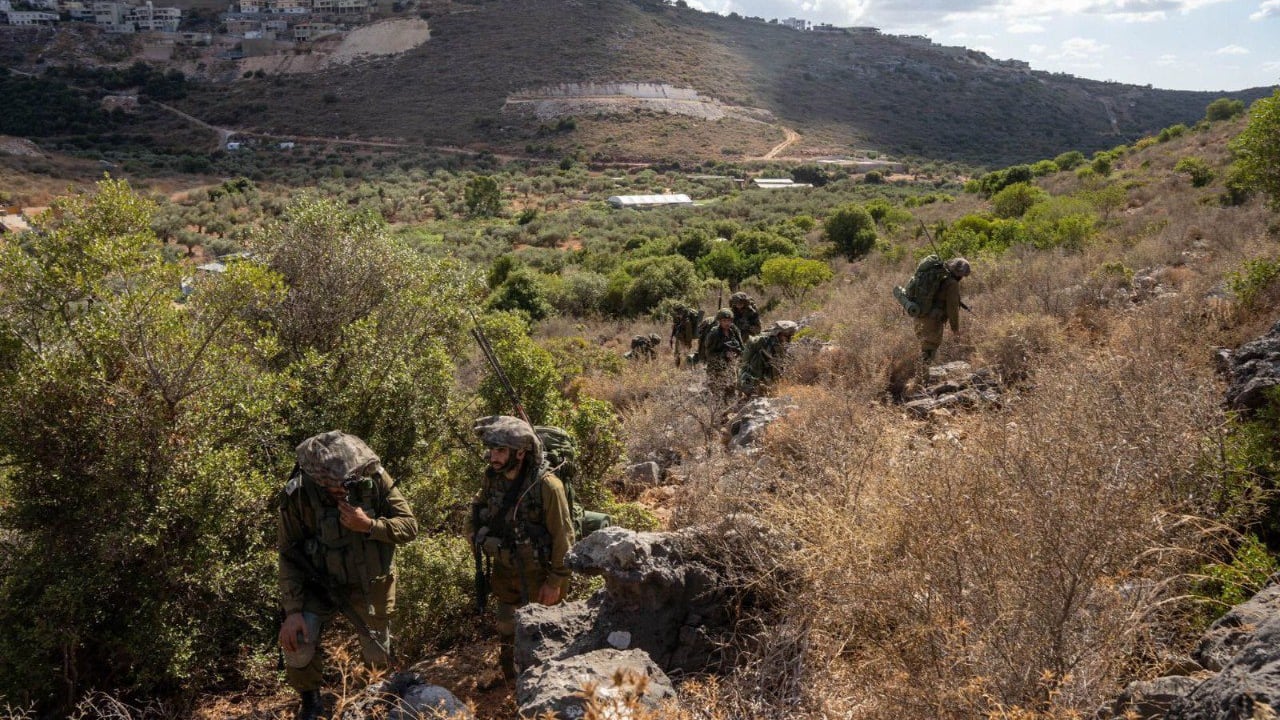
In preparation for a future campaign against Hezbollah, the IDF highlighted two core operational gaps during its reviews and lessons-learning from its latest conflict with the terror organization.
The IDF has pinpointed two major operational gaps in its campaign against Hezbollah: deadly drone strikes by Unit 127, which targeted the Golani Battalion and breached Israeli airspace, and the growing threat from Hezbollah’s anti-tank missile teams. These identifications are prompting a shift in intelligence and strategy that might be employed to respond to future conflicts with the terrorist group.
Unit 127’s drone activity peaked during the attack on the Golani Battalion, resulting in four soldiers killed and over sixty wounded. Some drones even reached deep into Israeli territory, including an attack targeting Prime Minister Benjamin Netanyahu’s residence.
Meanwhile, Hezbollah's anti-tank missile teams posed a significant challenge, requiring a fundamental change in operational and intelligence strategies. Even after the ceasefire, Hezbollah launched additional drones, forcing the IDF to respond with airstrikes on Beirut to deter further attacks.
As the investigations and discussions unfolded, questions arose about whether these gaps were due to specific failures or indicative of a deeper issue within the Intelligence Directorate’s operational priorities. Was there a failure to properly assess Hezbollah’s arsenal, or was there a misuse of intelligence resources in the face of emerging threats?

Senior reserve officers within the Intelligence Directorate have argued that addressing these gaps requires more than just new equipment. They emphasized that a cultural shift in how intelligence is gathered and utilized is essential to effectively counter drone and long-range anti-tank missile threats in future conflicts.
In response to the professional discussions within the Intelligence Directorate, the Israel Air Force, and the Northern Command, a senior military source explained that the issue is being thoroughly investigated.
"The Intelligence Directorate and the intelligence units across the arms are researching and developing an intelligence knowledge base to enable more effective warning models based on various types of intelligence materials, along with compiling a target bank to reduce the threat," the source said. "This is different from the past and in light of the lessons from the October 7 investigations."
'Two teams were established within the Northern Command Intelligence'
The source also suggested that responsibility for these issues is shared between the Intelligence Directorate, the Northern Command, and the Air Force, stating, "In any case, the response is not airtight, and there is a need to continue developing detection and interception capabilities for weaponry. About a year ago, the Northern Command established a low-altitude air defense unit, responsible for building the force to deal with the threat. Additionally, two teams were established within the Northern Command Intelligence, focusing on enemy situational awareness and target research for various rocket systems. The knowledge base has significantly developed, and the information is influencing the force-building and targeting strategies."
Regarding the division of responsibility, the official added, "It is important to separate the enemy knowledge base and warning models for deploying force in the various Hezbollah systems, which fall under the Intelligence Directorate and intelligence units, from the detection, assistance, and interception capabilities, which are outside the Intelligence Directorate’s responsibility and are led by the Ground Forces and air force."
At the same time, the Northern Command adopted a policy of expanded responsibility, improving its warning models and capabilities to deal with these threats both in the northern sector and across the IDF.
In response to these developments, an IDF spokesperson issued the following statement: "The Intelligence Directorate conducted a thorough and in-depth process to investigate its failures on October 7 and is currently in the midst of a broad organizational transformation. This transformation covers all units, sectors, and activities within the Directorate. The failure on October 7 reflected a systemic and wide-reaching failure."
"The warning model in the Lebanon arena, like in other war theaters, is being adjusted and refined according to reference scenarios," the spokesperson added. "The response to the drone and anti-tank missile threat is a top priority in the Intelligence Directorate’s work plan and resource allocation. The IDF's capabilities in the Lebanon sector are reflected in actions and operational achievements accumulated throughout the war with the Hezbollah terror organization. These achievements would not have been possible without high-quality, broad, and precise intelligence."