
Without major changes, Israel is failing to protect Jerusalem from the ongoing threat of an October 7-style invasion from east Jerusalem and surrounding areas, State Comptroller Matanyahu Englman said in a report on Tuesday.
Englman said that the various political and security authorities who are responsible for security for Israeli residents in Jerusalem have mostly ignored the lessons of Hamas's invasion from Gaza, essentially taking the position that such an invasion could never happen in Jerusalem.
According to Englman, "There is a scary narrative in which Palestinians can enter Israeli territory without any oversight or inspection, carrying potential danger for Israeli residents."
"The diplomatic-security cabinet has not held a hearing about the status of whether its decisions have been implemented in over 20 years," he wrote,
Next, the report said, "The location of the forward command centers, even after October 7, 2023, when those [IDF] lookouts who served directly on the border were murdered and kidnapped – could place the Jerusalem Corridor lookouts in [similar] danger," to being overwhelmed, murdered, and kidnapped like their Gaza-border counterparts.
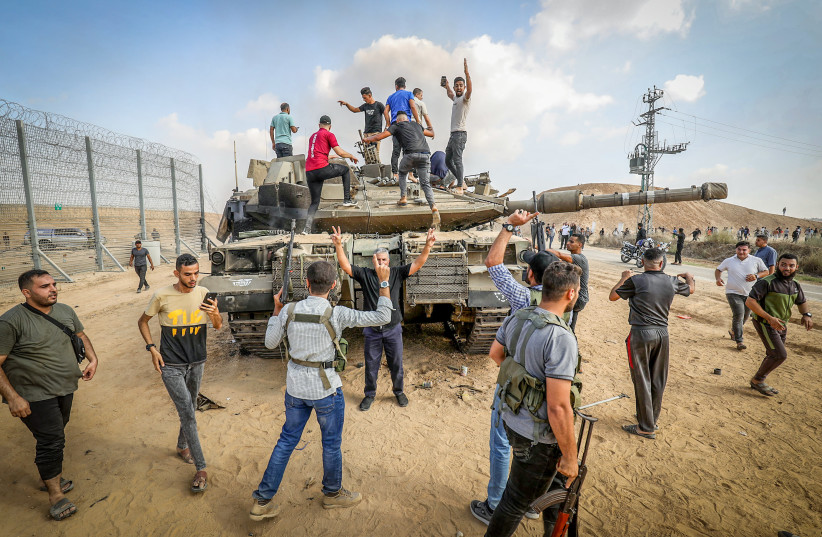
Pressed by The Jerusalem Post about the fact that there is more space for moving lookouts backward from the Gaza border than in the case of Jerusalem, where Israeli and Palestinian areas are much more crunched together, a comptroller source noted that the technology used by the lookouts can be used from a distance.
There are broader deficiencies in command and control as well as in operational readiness, stated the report.
Further, the report explained that the deficiencies and gaps it has noted have a substantial negative influence on security, diplomatic goals, and the economy.
"The deficiencies in the report are so problematic that they should be causing the political-security leadership to lose sleep," warned Englman.
Listing off all those responsible, he said that Prime Minister Benjamin Netanyahu, Defense Minister Israel Katz, National Security Minister Itamar Ben-Gvir, IDF Chief of Staff Lt.-Gen. Eyal Zamir, Police Chief Daniel Levi, Shin Bet Director David Zini, IDF Central Command Chief Maj. Gen. Avi Bluth, the Jerusalem and Border Police commanders, and the National Security Council, "must fix these deficiencies immediately."
There was a greater focus on Katz as the senior defense figure as well as the NSC, which Gil Reich just took over from Tzahi Hanegbi in October.

Over a third of east Jerusalem, West Bank borders lack protective walls
Moreover, the report noted that 61% of the border between Israeli Jerusalem neighborhoods and parts of east Jerusalem and the West Bank have a fence and obstacles, while the other 39% does not.
This 39% is split into an 11-kilometer spot, a six-kilometer spot, a 250-meter spot, and dozens of additional kilometers in two other spots.
The comptroller sent a draft to those covered in the report this past February, with the IDF and the police responding in April and May.
After the report was closed, Englman noted that there was a terror attack at Ramot on September 8 killing six Israelis, and wounding around 10.
Hammering the message home of the danger of West Bank Palestinians using vulnerabilities in the Jerusalem area to cross through, the terrorists came from villages in the Ramallah area and used exactly those Jerusalem security gap areas.
In addition, the report noted that there is a large gap between the number of illegal crossings the IDF lookouts and the police border patrols are recording.
The comptroller said that the police should have taken over more of the checkpoints from the IDF years ago, since they are better trained for activities like inspection and enforcing law and order.
However, the police have plenty of problems as well.
Only two police commanders out of 16 who manage the checkpoints that divide Israelis in Jerusalem from east Jerusalem and other West Bank areas, where police have already taken over, have permanent status at their checkpoints.
The other police checkpoint managers are regularly rotating, reducing the effectiveness and experience level of those commanders with the unique dilemmas presented at such checkpoints.
In multiple prior reports and prior government decisions, at least four checkpoints were also supposed to move from police management to being managed by the Defense Ministry.
The report said that for years this transfer has been frozen, with no explanation given as to why.
Further, the report said that the ministry has claimed that it would need an additional NIS 1.1 billion to take over the said checkpoints from the police, none of which has been allocated.
The Shin Bet, noted the report, should be giving guidance to the police regarding the inspection process at checkpoints.
This guidance could not only catch more potential threats by using superior inspection techniques and technology, but could also make the process faster, alleviating the frustration and humiliation for the overwhelming majority of innocent Palestinians who suffer daily from abnormally long delays to cross into and out of Israel.
For example, the comptroller said that it takes an average of 80 minutes for an individual Palestinian to cross through an IDF checkpoint on foot, while it takes 56 minutes to cross through the same checkpoint by car.
The comptroller accused the Shin Bet of failing to take responsibility, but also accused the cabinet and the National Security Council of failing to raise the issue with the Shin Bet to give the agency clear updated orders.
The comptroller noted that there were 27 deadly terror attacks in 2023, including 10 gunfire attacks, 412 attacks with Molotov cocktails, 98 improvised explosive attacks, and 1,031 rock-throwing incidents.
In November of this year alone, the Shin Bet said there were 232 rock-throwing incidents, 45 Molotov cocktail incidents, 24 improvised explosive incidents, and 60 thwarted substantial violence incidents. There were only two "successful" terror incidents, but that number can vary wildly, with there having been nine in September.
The IDF and Defense Ministry responded, affirming the report's conclusion that the police currently hold primary responsibility.
Moreover, the defense establishment stated that it provides technological solutions to assist the police wherever necessary, and does take responsibility in narrow areas where it is officially responsible.
Next, the IDF said that there are always multiple police representatives present at its IDF Central Command situational assessments meetings, to be prepared for any potential security incident.
Further, the IDF placed responsibility on the political echelon for failing to order completion of the border fence around the Jerusalem area and for failing to allocate funding for building such additional fencing.
However, defense sources said that should the political echelon approve completing the fence and the necessary funding, it is prepared to do so.
More specifically, the IDF said that its Central Command has moved more aggressively to end Palestinian crossings into Israel in the Batir and Beit Iksa area.
In addition, defense sources said it has modified various undefined aspects of its operation, learning lessons from October 7.
Curiously, the IDF said that it had also moved some lookout posts, but not others, without clarifying the reason for either decision.
Neither the police nor Shin Bet has issued a response.