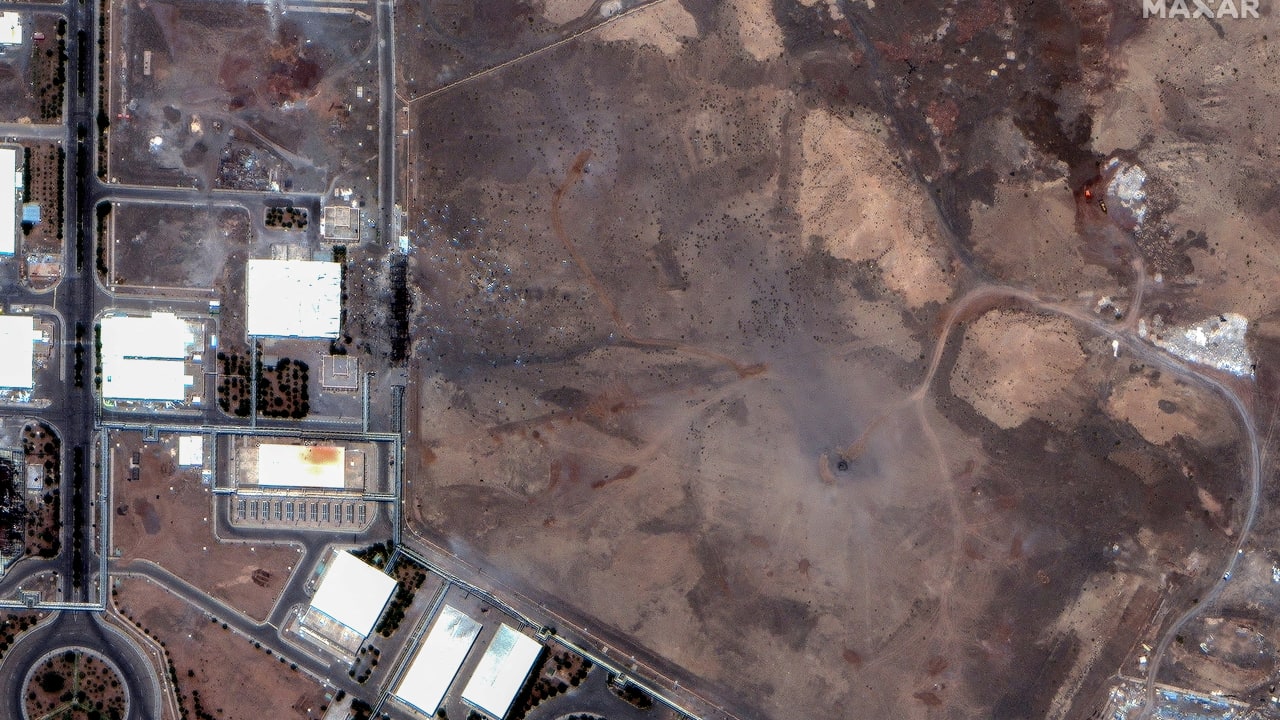
IDF Chief Spokesperson Brig.-Gen. Effie Defrin on Wednesday insisted that Israel’s and America’s attacks on Iran’s nuclear program set it back years, despite reports from the US Defense Intelligence Agency (DIA) that it was only hindered by a few months.
“The program has been set back years,” Defrin said.
He told a press conference, “We fulfilled all of the goals of the operation, even more than expected.”
Defrin added that regarding all the specific impacts of Israeli and US strikes on the myriad of different components of the Iranian nuclear program, he “trusts IDF intelligence and the air force, as they proved themselves as precise in recent weeks.”
Next, he said, “The estimate is that we substantially damaged the nuclear program... we set it back years. I repeat: It has been set back years.”
Further, Defrin paraphrased IAEA Director-General Rafael Grossi, saying that there was an Iran before this Israeli operation, which was close to breaking out to a nuclear weapon, and there is now an Iran after the operation, which is far from obtaining an atomic bomb.
Grossi’s actual quote in an interview with FOX News late Tuesday night was, “There is one Iran before June 13 and there is one now. [The difference between them] is night and day.”

In that interview, it was also repeated that all of Iran’s major nuclear sites had been significantly damaged. Grossi said that some of the specific losses would make weaponizing uranium very hard for Iran for an extended period.
Defrin also took a victory lap on slowing down Iran’s ballistic missile program substantially, as well as setting the stage for striking the Islamic Republic at a time when previous Israeli operations already neutered its proxies during the 20-month Israel-Hamas War.
The DIA report in question is a serious one, but it is also just one of many perspectives within the 17 agencies of the US intelligence community, with the CIA yet to weigh in.
Iran or IAEA may need to dig through rubble of Fordow
Virtually all experts also believe that until Iran, the IAEA, and/or any third parties dig through the rubble of the Fordow nuclear site, which is buried under a mountain and which was struck by the US’s 30,000 bunker buster bombs, no one will know conclusively how badly Tehran’s nuclear centrifuges were damaged there.
Defrin’s statement also indicated that whatever the status of some of Iran’s enriched uranium, which may have been moved from its pre-war locations, is, the sum total of the attacks set Iran back years.
Israel's previous premature announcements on Iran's nuclear sites
This, regardless of whether the enriched uranium was destroyed or buried by bombing elsewhere, or if it is still being tracked. It is unusable without other nuclear program components that have been destroyed, he believes.
Israeli officials have made such statements before.
For example, when another nuclear facility at Natanz was destroyed in July 2020 and when former Iran nuclear program founder and chief Mohsen Fakhrizadeh was assassinated in November 2020, multiple top Israeli officials told The Jerusalem Post that the nuclear program was set back years.
In both cases, the program was delayed by around a year and possibly more in various ways, but the Islamic Republic eventually recovered and even surpassed its 2020 level of advancement, given sufficient time.
The big question all officials are now waiting on is whether Iran will agree to a new nuclear deal with extended limitations or try to reconstitute its nuclear program and reignite the nuclear standoff.