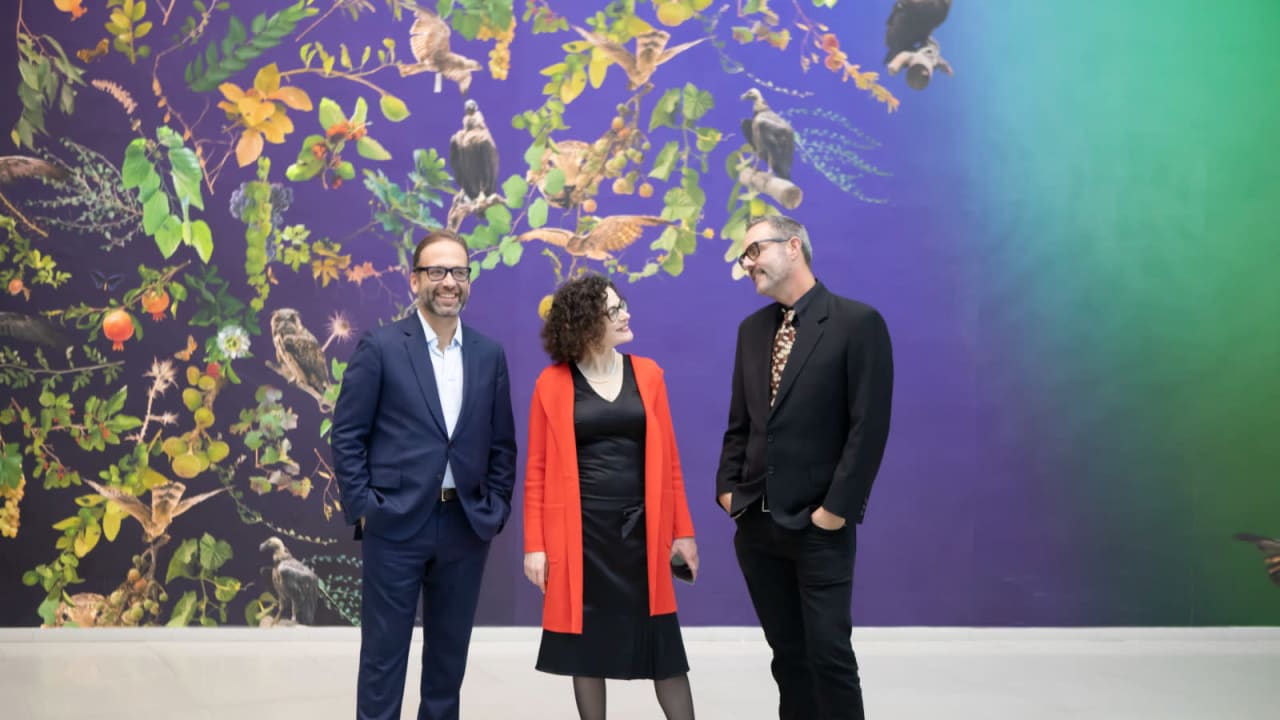
The “Plan(e)t” exhibition, which is currently on display at the University Gallery of Tel Aviv University, has been shortlisted for the UMAC International Award for Best Exhibition at a university museum for 2021. This is the first time an exhibition at a university gallery in Israel has been shortlisted for the prestigious award. Along with Tel Aviv University, the list includes two of the world’s leading universities: Harvard University in the United States and Aarhus University in Denmark. The winner will be announced in September, and the award ceremony will take place at the annual conference of the International Museum Council (ICOM).
ICOM is the global organization of museums. The organization was established in 1946 as part of the United Nations Educational, Scientific, and Cultural Organization - UNESCO. UMAC is a department in the council that is responsible for promoting the museums, galleries, and collections that operate in universities. In 2016, the UMAC Award for Best Exhibition at a university museum was established.
“It is, of course, very gratifying,” says Dr. Tamar Mayer, chief curator of the Tel Aviv University Gallery. “I am always asked if we have a ‘collection.’ Well, we have the most brilliant collection of minds on our campus. As someone who specializes in curating, science at Tel Aviv University is an amazing resource for artistic creation, and we work in close collaboration that has no equivalent in Israel. “We work with 1,000 square meters of exhibition space, which is the size of a small museum. There is no university in Israel with a gallery of this size. UMAC’s announcement is a recognition of the collaborative and groundbreaking work that is being done in our gallery between artists – both Israeli and international – and between scientists.”
Plants are the stars of the “Plan(e)t” exhibition and are presented as complex creatures that make a crucial contribution to our survival on Earth. Although the exhibition was introduced before the outbreak of the corona pandemic, it developed during the pandemic and took on new meaning in its wake.
“We opened the exhibition in January 2020,” says Dr. Sefy Hendler, director of the University Gallery. “Thousands of visitors came, and then the corona pandemic broke out in Israel - and we had to close the exhibit. The plague has forced us to rethink man’s dominance in the ecosystem and the devastating effects he can have on the system as a whole. The exhibit examines our undisputed place at the top of the pyramid and asks whether we should strive for a more balanced and considerate perception of man on the planet - specifically in the plants that enable our existence here.”
Through a series of projects that combine research and artistic endeavor, the exhibition offers an original perspective on the encounter between flora and fauna, which share the same territory. The subtitle of the exhibition, “Plants Think, Thinking Plants,” expresses the underlying logic at its essence: Plants are “thinking” creatures, so we must also refine the way we think about them.
The works of art that constitute “Plan(e)t” perceive the plant as a cultural embodiment of the complex relationship between power and sustainability. Most of the works were created for the gallery space, and most developed and even grew during the months of the exhibition. For example, due to the Ministry of Health’s ban on gatherings in enclosed spaces when corona broke out, the “Garger” (pollen) project was established in the sculpture garden of the gallery - a product of collaboration between landscape artist and landscape architect Relli de Vries and Dr. Dafna Langgut of the Laboratory of Archaeobotany and Ancient Environments. De Vries’s outdoor project simulates a garden growing from an archeological site - and recreates the plants that grew in King Herod’s gardens, as revealed in Dr. Langgut’s research.
The Plan(e)t project also includes a groundbreaking collaboration between the gallery and the theater art department, as part of which three theater productions are staged: Shakespeare’s “A Midsummer Night’s Dream,” Edward Albee’s “The Goat or Who’s Sylvia?”, and a play based on Franz Kafka’s short story, “A Report to an Academy.”