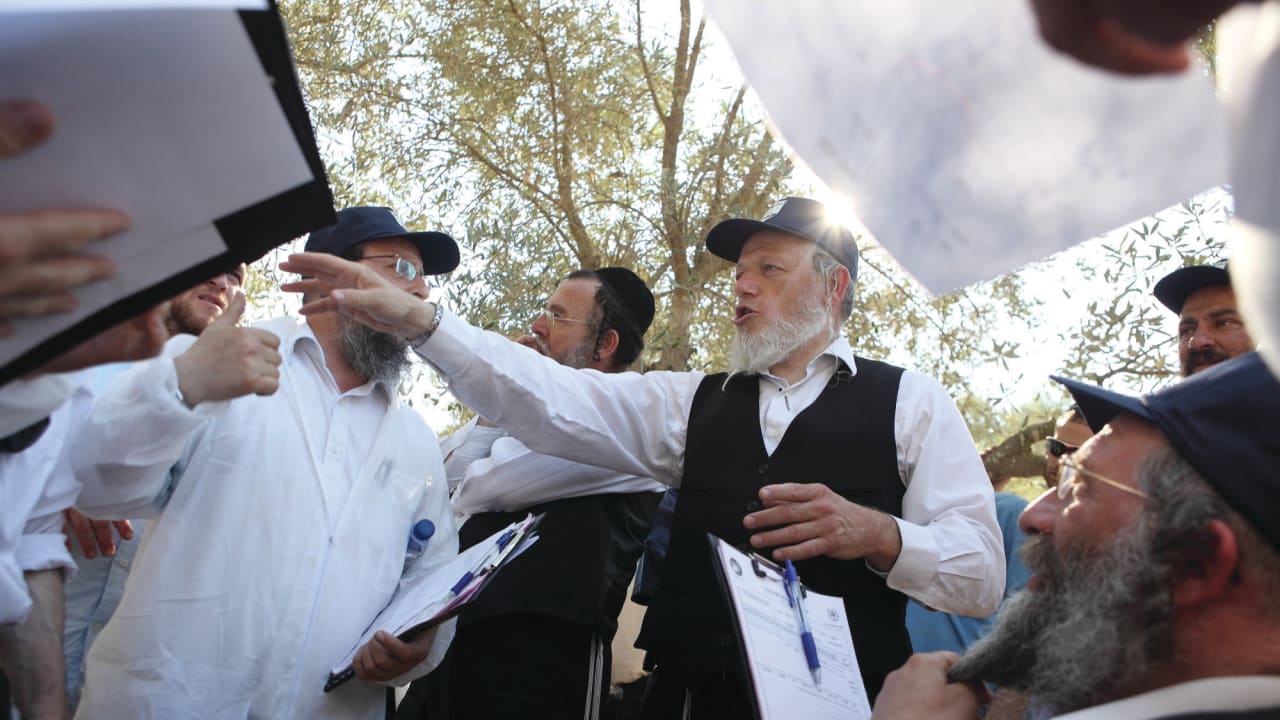
One of the most disturbing Israeli scandals of all time was the case of Yehuda Meshi-Zahav, the founder of the ZAKA emergency service, a leader of the ultra-Orthodox community, and winner of the Israel Prize, who was accused by dozens of people of sexual assault, many of whom were children at the time they were attacked.
His case is the subject of the well-researched and deeply disturbing documentary series that aired recently on KAN 11 and which became available on Netflix in Israel on Friday.
Meshi-Zahav was accused of multiple assaults in an article in Haaretz in 2021, shortly after he accepted the Israel Prize, and he tried to take his life when he knew that his arrest was imminent, just weeks after he had received the Israel Prize. It was a dramatic, almost unbelievable fall from grace. Haaretz reported that the police knew of at least 20 assaults he had committed as early as 2013 but declined to pursue a case against him. Once the Haaretz story broke, every media outlet reported on his case, and more allegations surfaced. He denied the accusations in his suicide note, calling them libel. But his attempt failed, and he lingered for over a year, unconscious, before he died in a Jerusalem hospital in 2022.
The documentary, which follows the reporters who broke the story, Aaron Rabinowitz and Shira Elk, presents detailed evidence against him, including interviews with many victims. It paints a picture that is a sadly familiar pattern from other cases of serial sexual predators, such as Britain’s Jimmy Savile, who used their status and power to intimidate victims into remaining silent for years. The documentary makes a strong case that Meshi-Zahav would have been found guilty had the case gone to trial and that his suicide deprived his victims of closure.
To say that this is a difficult series to watch is an understatement. The series features interviews with many who admired him and were disillusioned following the allegations, and also details his life as an ultra-Orthodox activist and ZAKA founder. But as I watched the four-part series, I found myself wishing it were a movie or that it were only one or two episodes. It was just so horrific to hear the testimony of the victims and to learn how many powerful people and institutions were involved in covering up this abuse for so long. But thinking about his victims, I felt obligated to watch it, and I hope it helps make people more aware of sexual predators and how hero worship can blind people to evil.

Recommendations that leave a heavy impression
If you’d prefer a series that is dark, but fictional, try Dept. Q on Netflix, which is a remake of a Nordic noir series. Dept. Q is based on a book by Danish writer Jussi Adler-Olsen, but is set in Scotland. Matthew Goode, who is much more relaxed and playful than he was in The Good Wife, plays Carl Morck, an ornery detective who is brilliant but constantly at odds with his bosses. He is given an assignment no one wants: to open a unit specializing in cold cases. He is put in a basement bathroom with thousands of case files, in a scene that is reminiscent of the early episodes of The Wire.
Naturally, he can’t work alone, and he’s given an assistant, Akram (Alexej Manvelov), to help sort through the files. Akram is a civilian worker in the IT department, but it turns out he is a Syrian refugee who worked for the police there, and he is a gifted investigator itching to get back in the game. This is a clever way to diversify the unit, and his very different perspective from Carl’s and eagerness to succeed make for a comic, effective counterpoint to Carl’s surliness and cynicism.
The first case they take is very strange, and part of the plot involves a person who is kidnapped and held prisoner for a long time, which may be upsetting given the hostage situation in Gaza. But there are so many twists in the early episodes that you will likely be entertained despite this disturbing element. This is the perfect series for those Slow Horses fans who want something to watch while waiting for the new season.
If you’d like something a little lighter, Netflix also features the popular Israeli series Asfur, which ran about 15 years ago and has developed a cult following. It’s a comedy-drama about four Jerusalem working-class heroes and features a cast full of Israel’s top comic actors. It was created by Hanan Savyon and Guy Amir, who played two of the leads and who went on to have great success with the movies Maktub and Forgiveness. Asfur is about Moti (Shalom Michaelshwilli of the Mah Kashur trio, who is currently starring in the popular movie Saving Shuli-San), who lives in an abandoned bus on agricultural land on the outskirts of Jerusalem that he inherited from his grandfather, who affectionately called him “Asfur,” which is Arabic for bird. He picks up odd jobs, like washing corpses for a burial society, but basically lives on the margins of society, hanging out with his two buddies, played by Amir and Savyon, who are even more aimless than he is, and Itzik (Oz Zehavi), a mechanic in debt to loan sharks.
The plot gets going when Moti discovers he owes a debt of NIS 750,000 to the municipality, because of fines on the land that have accumulated interest. The city is planning to repossess the property, which they can then sell to developers. An insurance agent is also involved in a scheme to buy the land from Moti at a fraction of its price. The insurance agent is dating Shir (Efrat Dor), a beautiful lawyer Moti had a passionate affair on a trip to India. The four friends try to figure out how they can help Moti hold onto the land, while having various romantic entanglements and trying all kinds of scams.
In season two, the plot thickens, and they end up in various parts of Europe, involved in drug deals and crossing paths with Mossad agents and an Islamic group. Gal Gadot, in her pre-Wonder Woman days, has a role in the second season as the Israeli owner of an Amsterdam coffee shop, who helps them get in touch with drug smugglers, and she’s sassy and confident. You have to really like the main quartet to want to hang out with them for so many episodes, but those who do will enjoy Asfur, which combines comedy, capers, and social commentary.