
The High Court of Justice ruled unanimously on Thursday that the Knesset’s controversial vote to appoint attorney Michael Rabello as state comptroller was invalid and that new elections must be held.
In its ruling, the court stated that a “fundamental defect occurred in the secrecy of the ballot” that requires the annulment of the vote and the holding of a new election. The ruling was made through a unanimous vote by a five-judge panel.
By law, the process for electing the state comptroller must be done through a secret ballot to keep the integrity of the vote intact and remove political pressure from the appointment.
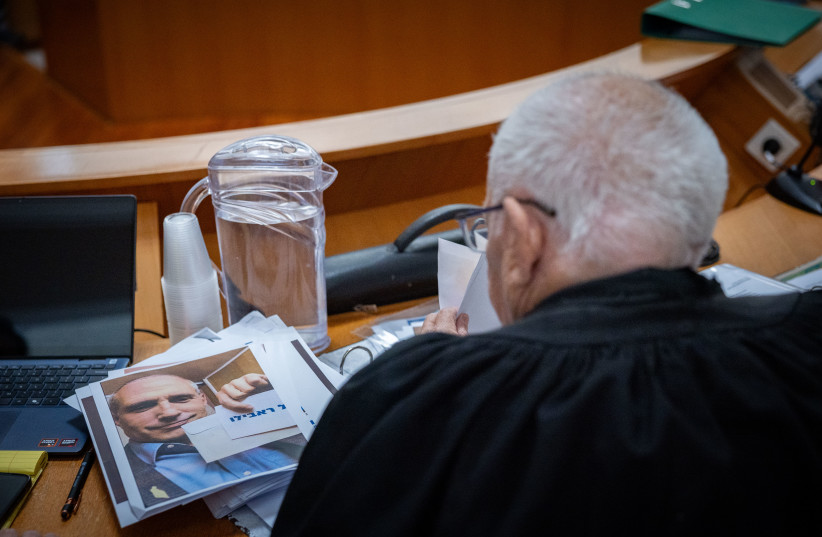
During the vote in June, Prime Minister Benjamin Netanyahu’s ruling Likud party had reportedly ordered its lawmakers to document themselves casting their vote for Rabello – who is also Netanyahu’s personal attorney – as a way to place pressure on them.
The High Court’s decision to hold the revote came just days before Rabello was due to begin his term; therefore, starting Sunday, there is expected to be no sitting state comptroller, as there has been no mention of an extension of the term of current comptroller Matanyahu Englman.

On Wednesday, the High Court froze Rabello’s entry into office after considering petitions seeking to overturn the Knesset vote that elected him.
Rabello was elected on June 3 after a disputed two-round Knesset vote. In the first round, retired Supreme Court justice Yosef Elron received 60 votes, and Rabello received 57, leaving both candidates short of the required 61-vote majority.
Knesset will hold a new vote after Rabello elected state comptroller, disputes over secret ballots
A second round was then held. Opposition lawmakers alleged that coalition MKs had been asked to photograph or film their ballots behind the curtain, despite the requirement that the state comptroller be elected by secret ballot.
The vote was halted and restarted, after which Rabello defeated Elron 61-57.
A series of petitions followed, including those from Yesh Atid and the Movement for Quality Government in Israel. The petitioners argued that documenting votes turned the secret ballot into a loyalty test and could have prevented MKs from voting freely.
The court previously proposed that the Knesset hold a new vote in order to resolve the dispute. After Knesset Speaker Amir Ohana rejected that proposal, the court issued a conditional order requiring the Knesset, Rabello, Likud, and Netanyahu to explain why the result should not be annulled.
Rabello, the Knesset, Likud, and Netanyahu have opposed the petitions.
They argued there was no proof that MKs were instructed or coerced to document their ballots and that no explicit rule barred lawmakers from voluntarily recording their own vote.
Rabello has also rejected claims that his longstanding professional ties to Netanyahu, Likud, the Prime Minister’s Office, and ministers should disqualify him from the role. He has argued that any specific conflict of interest can be addressed through an arrangement once he enters office.
Chairman of the Israel Bar Association Amit Becher called the High Court’s ruling for a revote “a victory for democracy, a defeat for those who destroy it.”
He added that the annulment of the state comptroller election marked “a huge achievement for the rule of law.”
“Once again, it has been proven that victory belongs to those who consistently defend the independence of the gatekeepers and their commitment to the state, not to the king,” he said.
'Ballot secrecy is not a technical detail,' organizations welcome the decision
The Movement for Quality Government also welcomed the decision, while underscoring the importance of conducting a secret ballot vote for the state comptroller.
The group stated that the High Court had “defended one of the fundamental principles of democracy.”
“Ballot secrecy is not a technical detail, but the heart of free elections: it is what allows every member of Knesset to vote according to their conscience, without pressure and without coercion.”
The organization also added that the role of the state comptroller is to serve as the public’s watchdog over the government and that it was “unacceptable” for the person responsible for oversight to be elected through a process that violated the law.
The Yesh Atid Party, which filed a petition to the High Court, welcomed the decision as well.
Opposition leader Yair Lapid stated, “Our petition saved not only the dignity of the Knesset, but also the institution of the state comptroller. We will continue to safeguard the rule of law and ensure that the State of Israel remains a democracy.”
Other opposition party leaders sharply criticized the government for its conduct.
Former prime minister Naftali Bennett, who leads the Together Party, stated that disrupting the process of electing the comptroller was “outright criminal conduct.”
He said that after the upcoming general elections, “We will restore professionalism, competence, and proper governance to all parts of the Israeli government.”
Democrats Party leader Yair Golan called on all opposition parties to unite around one state comptroller candidate before another vote in the Knesset is held.
Meanwhile, ministers and members of Netanyahu’s coalition condemned the High Court’s ruling. National Security Minister Itamar Ben-Gvir accused the High Court of trampling on the Knesset.
There was also a picture of MK Hanoch Milwidsky (Likud) circulating in which he took a selfie while holding up the ballot with Netanyahu’s attorney’s name on it during the vote.
He responded by criticizing the High Court’s ruling, arguing that it was “just a promo” of what was expected to take place in the upcoming general elections.
It is still unclear how the Knesset Speaker will respond to the High Court ruling regarding holding the revote after he previously rejected the last proposal to redo the elections.
Lapid stated that if Ohana and Netanyahu choose not to conduct another vote on the comptroller, the next government after the elections would hold it.
Sarah Ben-Nun and Yonah Jeremy Bob contributed to this report.