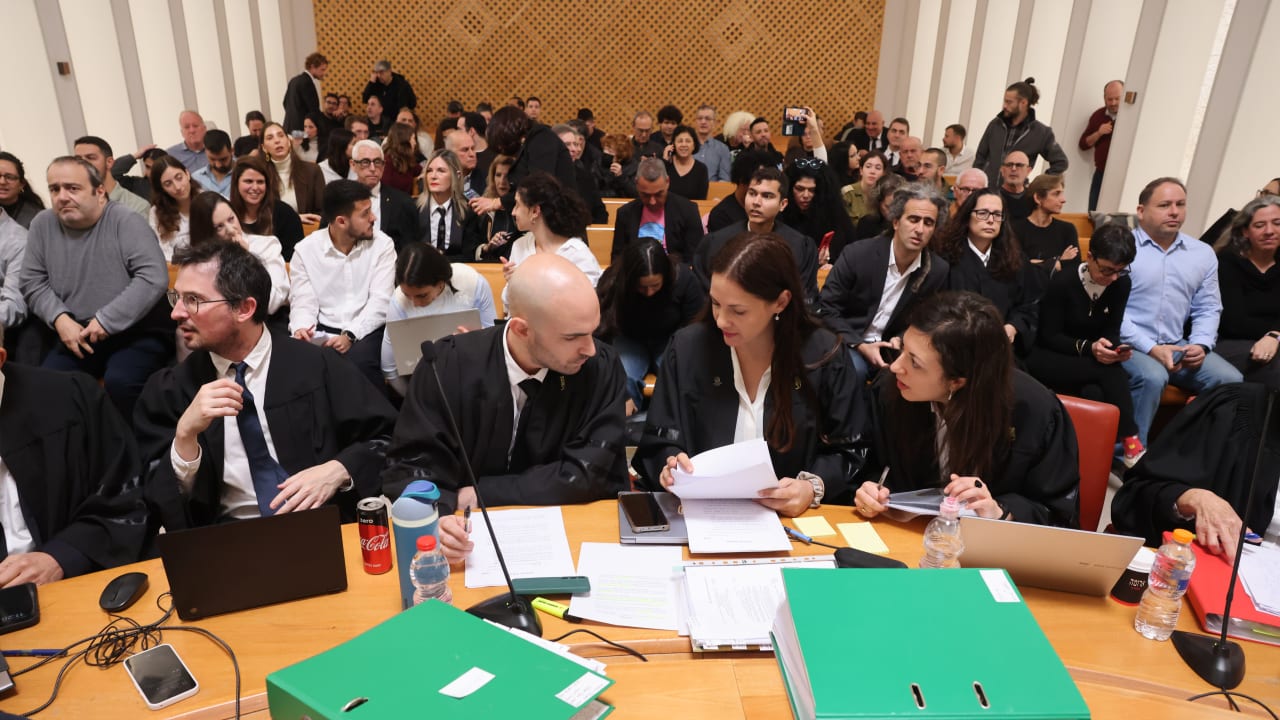
A packed hearing – the first in the case – was held at the Supreme Court in Jerusalem on Wednesday on petitions challenging the government’s decision to shutter Army Radio, with the justices weighing questions of legal authority, procedure, and the broader implications for freedom of expression ahead of elections.
The hearing was held before Justices Dafna Barak-Erez, Alex Stein, and Yechiel Kasher.
At the core of the dispute is whether the government had the authority to order the station’s closure – and, if so, whether the decision-making process met legal standards – alongside concerns about public interest and the role of independent news media during an election period.
The judges said they would consider all arguments, including the timing of the decision, and issue a ruling at a later date.
The government decided in December to shut down the 75-year-old military broadcaster, citing the recommendations of a professional committee, after Defense Minister Israel Katz had pushed for the move for several months.

The decision included two operative directives: an immediate halt to the assignment of new military positions to the station, and the initiation of a process to transfer existing personnel to other posts within the IDF, alongside preparations for severance arrangements for external contractors.
The decision was slated to take effect on March 1, but its implementation was frozen by an interim court order.
Ahead of Wednesday’s hearing, five petitioners consolidated their challenges against the move. Notably, the attorney-general’s office – which would ordinarily represent the government in such proceedings – has taken the position that the decision was made without proper authority and warned that it poses a dangerous precedent in the current legislative and political climate.
The government, for its part, has argued that the decision falls squarely within its authority, that efforts to close Army Radio long predate the current administration, and that continued public funding of a news outlet that, in its view, repeatedly contradicts official state policy is unjustified.
During the hearing, Stein pressed petitioners on whether they were arguing that the government lacked authority altogether, or that the authority existed but the procedure was flawed, urging them to clearly situate their claims on one side of that divide.
Representing the Movement for Quality Government, attorney Ori Hess argued that the decision was not grounded in factual data – a defect that, he said, invalidates the decision in and of itself.
Attorney Amir Basha, appearing on behalf of the Union of Journalists, contended that the committee whose recommendations underpinned the decision was convened hastily and failed to take public opinion into account – a factor he said was critical given the nature of the station.
“The news operation itself is at the heart of the matter,” Basha said, distinguishing it from other forms of military broadcasting.
Legal distinction between closing station and limiting funding
Stein suggested there may be a legal distinction between fully shuttering the station and limiting its funding. Attorney Yael Grossman of the Israel Press Council responded that Army Radio’s unique history and standing mean that public-interest considerations must be weighed when assessing the legality of its closure.
Representing the Army Radio workers’ union, senior attorney Boaz Ben-Tzur described Israel’s public broadcasting landscape as resting on two pillars – KAN Reshet Bet and Army Radio.
“This decision amputates one of those two,” he said.
Ben-Tzur also cited the government’s own rationale, which raised concerns that political considerations could influence the station during wartime. “Is that a justifiable basis?” he asked, arguing that the decision suffered from “a series of defects.”
He further referenced a precedent from the early 2000s involving an attempt to shut down educational television, in which the court held that such a move required primary legislation passed by the Knesset.
Representatives of the attorney-general’s office urged the court to issue a conditional order, requiring the state to formally justify its actions. Attorney Aner Helman emphasized that the broader context – including the approach of elections – could not be ignored.
“Months ahead of elections – where we are now – is exactly when the public needs exposure to the widest possible range of reliable and diverse information about candidates and public figures,” Helman said.
Likud MK Tally Gotliv, who a day earlier argued in a Knesset committee that Army Radio should not be permitted to broadcast political content because it is state-funded, was present at the hearing.
At one point, a woman in the audience interrupted the proceedings, shouting at representatives of the attorney-general and accusing Barak-Erez of a conflict of interest. Barak-Erez clarified that she had not served at Army Radio, as the woman was escorted out of the courtroom by security.
Keshet Neev contributed to this report.