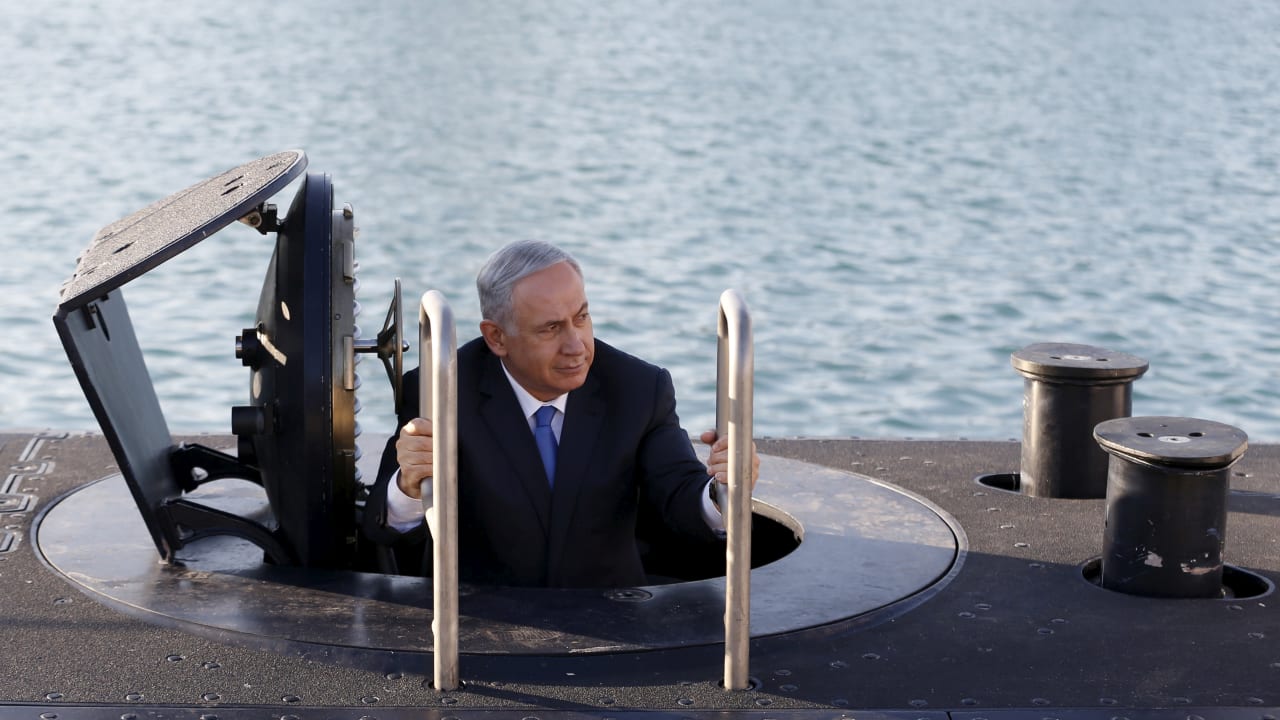
A state investigation committee has revealed severe systemic failures in Israel’s defense procurement processes, determining that political leaders made critical security decisions without proper oversight and endangered the country’s safety through chaotic handling of sensitive weapons deals.
The five-member committee, headed by retired Supreme Court President Asher Grunis, published its findings Sunday on what has become known as the Submarine Affair, a procurement scandal involving naval vessels purchased from Germany between 2009 and 2017.
The report identified deep-rooted problems in how Israel’s government approaches multibillion-dollar defense acquisitions and manages strategic relationships with allied nations.
The published report addressed only systemic issues. The committee will next hear from those who received warnings and their witnesses before issuing findings on individual responsibility.
According to the investigation, Israeli governments avoided establishing clear security policies for years, instead making ad hoc decisions that failed to consider broader strategic needs. The committee found that “in a democratic state, responsibility for the security of the state and the management of security risks lies with elected officials, the political echelon,” but noted that despite this responsibility, political leaders failed to fulfill their duties.
The report states that governments “made specific decisions instead of setting policy and strategy, and have ignored the overall picture of security needs in a way that has jeopardized the security of the state.”
The committee emphasized that defense decisions must follow an orderly process in which professional and political considerations are properly weighed to ensure choices reflect actual security requirements rather than outside influences.
Cabinet members themselves acknowledged their limited role in the process. The committee found that “despite its responsibility, the cabinet does not shape the force structure,” with members describing themselves as functioning merely as a rubber stamp for decisions made by the defense establishment.
Chaos in weapons sales and strategic decisions
Particularly troubling was the handling of weapons sales by allied countries to third parties. The investigation determined that this sensitive strategic issue was managed in chaos, without regulated procedures, insufficient documentation of contacts with foreign entities, and without Israel presenting a unified position.
The committee noted that “conversations and conclusions with foreign entities were not documented,” and stated that government representatives, including ministers and prime ministers, are responsible for documenting and disseminating information about such contacts.
The National Security Council came under sharp criticism for failing in its advisory role and overstepping its authority. The committee clarified that the council is designed to assist government decision-making and that its staff members should not implement decisions, including procurement activities or managing relationships with commercial entities.
The Israeli Navy also faced severe censure for deviating from accepted conduct norms over many years. According to the findings, the navy coordinated positions with commercial entities, presented manipulative data to decision-makers, and conducted contacts with political leaders in violation of military orders. The committee recommended that the military’s chief of staff investigate the navy's organizational culture and update regulations governing officers' contacts with political leadership.
Among those who received warning letters from the committee are Prime Minister Benjamin Netanyahu, Mossad chief and former National Security Council head Yossi Cohen, and former Defense Minister Moshe Ya’alon.
According to details provided to the High Court of Justice, Netanyahu and Cohen allegedly authorized Germany to sell submarines to Egypt while concealing this decision from the defense establishment, despite serious security implications.
The committee issued thirteen recommendations to prevent future failures, including establishing a binding process for force building in which the government would rank threats and the military would develop corresponding multi-year plans. It also called for the creation of a permanent professional committee to advise political leaders on force-structure issues.
In its conclusion, the committee noted that similar problems had been identified in previous reports by public committees and state comptroller investigations, but recommendations were not always implemented. The report emphasized that proper decision-making processes for security matters go beyond administrative efficiency. After the devastating Hamas attack of October 7, 2023, the committee declared that such processes constitute an existential necessity for Israel’s survival.
The Grunis committee was established in early 2022 by the government of Naftali Bennett and Yair Lapid.