
The Knesset’s Internal Affairs and Environment Committee has commenced action to ban the operations of brothels, the governing body announced on Sunday.
Committee chairman MK Yitzhak Kreuzer said that prostitution exists in the State of Israel and will not disappear without being properly addressed. In February 2025, Justice Minister Yariv Levin announced that a once-temporary law, which prohibited the consumption of prostitution, introduced in July 2020, became permanent.
The law made it illegal for individuals to purchase sex, with penalties ranging from administrative fines to criminal charges. These efforts were cited as efforts to combat human trafficking within Israel.
"There are authorities that deal with it, and there are those that ignore it, and in many cases, the phenomenon only worsens,” Kreuzer stated, adding that the topic was discussed following a request from Israeli NGO, Task Force on Human Trafficking and Prostitution.
Moriah Rodel-Silfan, CEO of the organization, said in a statement that authorities can either ignore the issue or approach it head-on for a solution. She called on local authorities to act to eradicate the issue.
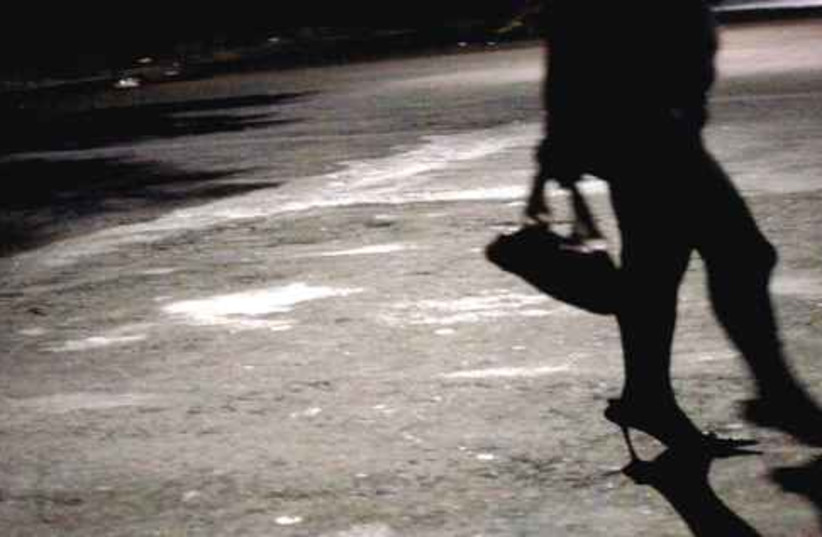
Sex workers in Israel
Lior Rosenbaum, a representative of the headquarters to combat trafficking of women, added that failing to act on the issue would only allow it to grow. Rosenbaum praised the Tel Aviv municipality for its successful fight against prostitution, resulting in the closure of brothels and discreet operations in the city.
Deputy Mayor of Jerusalem Adir Schwartz told authorities in the Knesset that in Jerusalem, prostitution is largely concentrated on youth from the Haredi community, noting municipal plans and efforts to reduce prostitution.
Health Ministry representatives added that sex workers in Israel are not largely “street” workers, and outside enforcement would be needed to combat efforts.
Maya Baron, Director of the Extreme Risk & Trauma Field at Israeli NGO ELEM, focused on youth in distress in Israel, noted the difference between prostitution in men and women in a statement. “Women engage in prostitution in discreet apartments, while men are on the street. Opening the doors of local authorities and acquiring the appropriate knowledge will enable assistance and response."
During the meeting, MK Adi Aziz, among others, questioned police representatives about police raids on brothels and discreet apartments. She stated that raids were often not conducted in helpful manners to girls impacted; she cited a lack of social workers involved in the matter to assist survivors during the investigation and help them navigate alternative housing and rehabilitation.
Police representatives responded, stating that additional brothels would soon be closed through administrative orders, as well as additional efforts to be made in rehabilitation for survivors in cooperation with the Social Affairs Ministry.
Survivors testified in Knesset, including D. McCullough, who emphasized local authorities' role in combating prostitution. “The prostitution industry is not only a crime but also an industry, and if it has no way of making money, it will not operate. The local authorities have the power to strangle the prostitution industry economically, and that is enormous power,” McCullough told Knesset representatives.
“If the brothel is masquerading as residential apartments, then the apartment is not operating according to its purpose, and therefore the brothel needs to be closed, and the more you close, the less profitable it will be for pimps to open in the city. Every brothel that is closed saves a lot of women and girls,” they added. “A brothel that closes saves the ugly spots from your city, so you should close them."