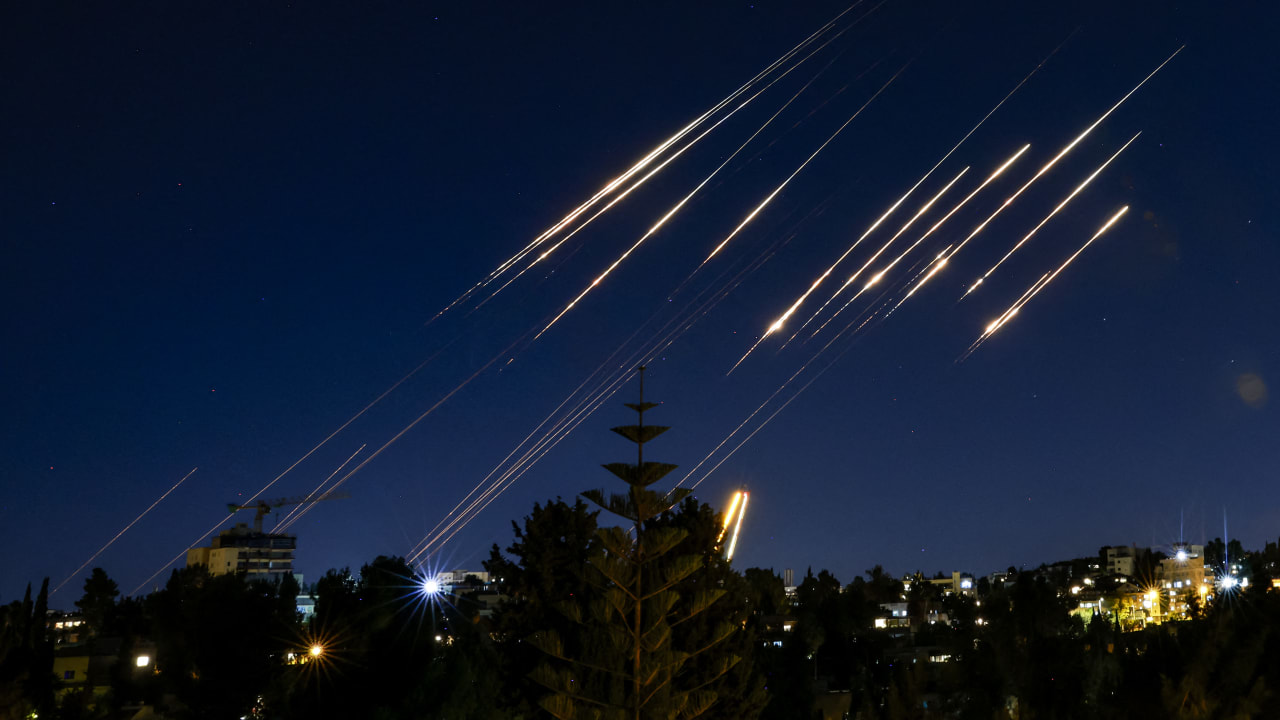

It has been a year of highs and lows, of triumphs and tragedies. As 2025 draws to a close, it has once again been a monumental year for Israel and the Jewish people. Some of these stories changed the region. Too many changed the way Jews around the world look over their shoulders, but they have all profoundly changed our lives in one way or another. So let’s light the fire, sit down with a warm mug of cocoa, and take a brief look at some of the major headlines that hit our newspaper over the past 12 months.
The Gaza ceasefire
By the time the Gaza ceasefire came into effect at noon on Friday, October 10, 2025, Israelis had been through more than two years of war, with little sign of its end or the return of the remaining hostages held by Hamas. When the ceasefire deal was finally signed in Egypt after days of intensive talks in Sharm el-Sheikh, this time felt different.
US Special Envoy Steve Witkoff and Jared Kushner, operating with the authority of US President Donald Trump, pushed both sides toward something that had eluded months of diplomacy. The Israeli cabinet ratified the deal on the Thursday evening, and by Friday noon the ceasefire was in place.
Within days, 20 living Israeli hostages were home. Hamas, under pressure, began collecting the remains of those who would not return alive. The IDF withdrew to a line in the sand, awaiting to see whether the ceasefire would hold; but so far, with minor violations, it has.
Prime Minister Benjamin Netanyahu called it a “momentous development,” framing the ceasefire as the fulfillment of a central war aim – that of bringing home all the hostages, living and dead. It was one of the few moments in 2025 when the country celebrated together, as two years of pent-up emotion were finally released.

Days later, Trump arrived in Jerusalem and declared the ceasefire “the historic dawn of a new Middle East,” praising Netanyahu as a wartime leader of exceptional resolve. Israelis focused on what mattered most, ticking off each name of the hostages as they returned home. There was also closure for the family of fallen soldier Hadar Goldin, whose remains had been held in Gaza since 2014, as his was among the bodies returned. As of this writing, only the body of Ran Gvilli remains in Gaza.
It was not the official end of the war. But it was, unmistakably, a pause that changed the year.
Netanyahu and the pardon that stopped the country
On November 30, Benjamin Netanyahu did something no sitting Israeli prime minister had ever done. He formally asked for a presidential pardon while still insisting on his innocence in his trial for corruption. The request, delivered discreetly by his lawyers to the President’s Office, sent a shock wave across Israeli society.
Procedurally, it was straightforward. The Justice Ministry would gather opinions, and President Isaac Herzog’s legal team would review them. The process is still ongoing.
In a recorded message, released shortly after the submission, Netanyahu claimed that the move was a sacrifice. The investigations had dragged on for nearly a decade, the trial for six years, with no end in sight. A recent court decision requiring him to testify three times a week, he argued, crossed from accountability into impossibility. No other citizen, he said, could be expected to lead a country at war under such conditions.
Netanyahu insisted that national unity demanded an end to the trial, even if he believed acquittal was inevitable.
Then came Trump’s Knesset address. In a freewheeling speech that veered from his daughter Ivanka’s conversion to Judaism to Miriam Adelson’s fortune, Trump publicly urged Herzog to pardon Netanyahu. “Cigars and champagne. Who the hell cares about it?” he asked Israeli lawmakers, to a round of applause.
What the outcome of Netanyahu’s request will be is still unknown. But the prime minister took a big leap by asking Herzog to essentially end the saga once and for all.
The Bibas family funerals
One of the most painful sights this country has endured came in February. Hope had long since left Israelis that the Bibas family members were all alive and would be reunited one day.
On February 26, thousands lined the roads as Bibas family members were brought to their final resting place at Tsohar Cemetery in southern Israel. Orange, the color of the two boys’ hair, illuminated buildings and monuments across the world. Argentina declared two days of national mourning.
Shiri, Ariel, and baby Kfir were buried together near the graves of Shiri’s parents, who were murdered on Oct. 7. Husband and father Yarden Bibas had been released from captivity earlier that month after 484 days in Gaza captivity. He stood at the graveside and spoke words that broke a nation’s heart.
“Mi amor,” he said, recalling the first time he had used the phrase, when Shiri told him never to say it unless he truly meant it.
The Bibas’s story had haunted the country from the earliest days of the war. The images of a young, vibrant family torn from their lives and delivered into evil shook the world.
Some stories can define a year because of what they change, others because of what they reveal. The Bibas funerals once again brought to the fore the wickedness that is Hamas. It was a moment when even those standing on the streets in support of the terror group had no words that could justify the murder of a family. The Bibas family tragedy is symbolic of our national wound that will not heal quickly, if ever.
The Iran-Israel War: Twelve days that ended an era
Finally, there is an Iran war to talk about. After years of name-calling, threats, and proxy warfare, which have all nearly starved the Iranian people, Iran and Israel at last have a skirmish to be referred to (in the meantime) as “the war.”
Israel’s surprise strike on Iranian military and nuclear facilities marked the beginning of what quickly became known as the 12-Day War. Mossad operatives and Israeli air power targeted senior Iranian military figures, IRGC commanders, and nuclear scientists in a blitzkrieg that shook Iran and left Israel in charge of Tehran’s skies. Air defenses were damaged. Nuclear facilities at Natanz, Isfahan, and Fordow were hit.
Iran responded with force and volume: More than 550 ballistic missiles and in excess of 1,000 drones were launched toward Israel, striking civilian centers, a hospital, and strategic sites. The United States intercepted attacks and, days later, bombed Iranian nuclear targets. Iran fired back at a US base in Qatar. For nearly two weeks, the Middle East held its breath.
By June 24, under American pressure, a ceasefire was reached. Iran’s nuclear program was set back significantly, according to reports at the time. Iran suspended cooperation with the IAEA, and, as of this writing, is still attempting to replace its arsenal of lost weapons and rebuild its nuclear facilities.
For Israel, the war marked the end of a five-decade shadow war. The threat it had warned about for decades was finally confronted openly. For Iran, the cost was devastating, and the warning signs are there for round two to begin in 2026.
The Bondi Beach attack
On December 14, during a Hanukkah celebration at Bondi Beach, Australia, two gunmen opened fire. By the time the barrage ended, 15 people were dead, including 10-year-old Matilda Bee, and dozens were wounded.
The attackers, a father and son of Pakistani descent, had pledged allegiance to Islamic State. An ISIS flag was found in their car. Homemade bombs were also discovered, and the cost of life could have been so much worse.
Four heroic civilians confronted the gunmen. Three of the civilians were killed, and one, Ahmed al-Ahmed survived.
Australian authorities have come under severe criticism since the attack, with many people claiming they were warned so many times that a tragedy like this was coming if steps were not taken to protect Australia’s Jews. This was the country that witnessed crowds gather on October 8, 2023, and chant “Gas the Jews.”
Prime Minister Anthony Albanese, when he attended a memorial vigil a week later, was booed by mourners who know their community had been left exposed and endangered by weak politics.
In Israel, the terror attack was seen as part of a widening pattern in the rise of antisemitism.
As 2026 dawns, the reality is painful. The West can no longer guarantee safety for its Jewish population, and that lesson lingers on after the last Hanukkah candles have been extinguished.
Eurovision and the politics of a song contest
By 2025, the Eurovision Song Contest had become many things. Neutral was no longer one of them.
Throughout the year, repeated efforts were made within the European Broadcasting Union to exclude Israel from the competition due to the Israel-Hamas War. Votes were delayed. Countries threatened to withdraw. Eventually, in December, the EBU decided not to bar Israel, instead backing new rules aimed at curbing political manipulation of voting.
Israel stayed. So the Netherlands and Spain left. Ireland announced it would neither participate nor broadcast the contest. Slovenia invoked the Ukraine-Russia War to explain its ethical opinion. Spain’s prime minister endorsed the boycott.
But Germany declared there would be no Eurovision without Israel.
A song contest, which is designed to transcend politics, is now a tool for political warfare. Israel, which came in second in 2025, argued it was facing a coordinated smear campaign. Critics cited civilian casualties in Gaza, relying on figures provided solely by Hamas.
Israeli leaders welcomed the decision to allow Israel’s presence and participation. President Isaac Herzog spoke of culture and connection. Foreign Minister Gideon Sa’ar accused boycotting countries of disgrace. Culture Minister Miki Zohar thanked Europe for standing firm. However, a tone and a precedent has been set, and the issue is sure to come up year after year.
Eurovision expert Paul Jordan called it a watershed moment, and he was right, just not in the way anyone hoped. In 2025, music became conditional on politics, not art to be enjoyed.

The MAG affair: Law, war, and a system under strain
Few episodes in 2025 were as frankly bizarre as the fall of Israel’s military advocate general.
On October 31, Maj.-Gen. Yifat Tomer-Yerushalmi, the IDF’s highest legal authority, resigned after admitting she had approved the leak of a classified surveillance video to the media. The footage, aired months earlier, showed an incident at the Sde Teiman detention facility that quickly became one of the most explosive legal and moral flashpoints of the Gaza war. The allegations were serious, and the political backlash was immediate. Unfortunately, the consequences rippled far beyond one officer’s career.
Tomer-Yerushalmi said she authorized the release in an attempt to counter what she described as false claims that the IDF systematically covered up detainee abuse. In her resignation letter, she stressed that even in war, there are lines that must not be crossed, and that the army’s duty to investigate itself was not a weakness but a moral obligation. That argument did not survive Israel’s political reality.
Defense Minister Israel Katz accused her of spreading “blood libels” against IDF soldiers. Prime Minister Benjamin Netanyahu called the publication of the video one of the most damaging public relations blows Israel had ever suffered. The legal debate was quickly overwhelmed by a larger question: Who was doing more harm to Israel – those who committed alleged abuses or those who exposed them?
Then the story took a darker turn. Days after her resignation, Tomer-Yerushalmi briefly went missing along the Tel Aviv coastline, prompting a serious search. Her phone disappeared, only to be found later by civilians. She was arrested, released to house arrest, and soon after was hospitalized following an apparent suicide attempt, later confirmed by police.
By December, she had been discharged and was out of custody. The damage, however, lingered. The affair has left a bitter taste in Israelis’ mouths as legal affairs and the behavior of those in power once again came into the spotlight.
Qatargate: Follow the money, squint at the motive
Every Israeli political year produces at least one scandal that crystallizes its anxieties. In 2025, that scandal was Qatargate, an affair that exposed the intricacies among foreign influence, media manipulation, and the prime minister’s inner circle.
The story first broke on February 10, when Channel 12 reported that several of Netanyahu’s closest advisers, among them Jonatan Urich, Yisrael Einhorn, and Eli Feldstein, had been employed, directly or indirectly, to promote Qatari interests inside Israel’s political and security establishment. What followed was a flood of revelations.
Investigators alleged that Feldstein worked for an international lobbying firm contracted by Qatar to push favorable coverage of Doha’s role in hostage negotiations, while undermining Egypt’s position. Urich, a senior political adviser, was suspected of facilitating payments and helping obscure their Qatari origin. The police would later trace funds back to Doha. Netanyahu himself was questioned, and opposition figures called the affair everything from a security failure to outright treason.
Arrests, releases, re-arrests, court reversals, and Supreme Court rulings followed in dizzying succession. Even Israel’s judicial hierarchy appeared split, with district courts repeatedly overturning magistrate decisions. By summer, investigators had traveled as far as Serbia to question Einhorn.
Then, just this week, Feldstein broke his silence. In a KAN interview, he described how “The first and biggest task that I had after Oct. 7 was erasing the concept of [Prime Minister Benjamin] Netanyahu’s responsibility from the public discourse.” Feldstein claimed he did not know the money originated in Qatar and acted out of fear of losing his job.
Ronen Bar, Shin Bet turmoil, and a new chief of staff
In our humble opinion, the head of secret security services should never really become public figures while they are in the job. In theory, their power lies in their invisibility, but in Israel things work slightly differently.
Former Shin Bet chief Ronen Bar’s story effectively began long before the year itself. In an all-staff memo issued days after Oct. 7, 2023, he did something rare in Israel’s security culture: He took personal responsibility. “The responsibility is mine,” he wrote, acknowledging the failure to thwart Hamas’s attack. Investigations, he said, would come later. For now, there was war.
In a recording revealed months later, Bar vowed that Israel would hunt down Hamas’s leaders “in every location,” describing the effort as Israel’s “Munich moment.”
By March 2025, however, Bar found himself at the center of a political storm. Netanyahu announced his intention to dismiss him, citing a lack of confidence during an “existential war.” The cabinet voted to fire Bar amid reports that the Shin Bet was probing Qatargate. Bar’s support for a state commission of inquiry into Oct. 7 reportedly deepened the rift.
The attorney-general warned that the dismissal required oversight. The Supreme Court froze it. Affidavits alleged that Netanyahu had pressured Bar to monitor protest leaders and demanded personal loyalty over court rulings in a constitutional crisis. The security chief of Israel was suddenly arguing his case in public, not behind closed doors.
In late April, Bar ended the standoff himself, resigning effective June 15 and again citing responsibility for Oct. 7. The chapter closed quietly, but not cleanly.
On October 5, 2025, David Zini assumed the role of Shin Bet director. He inherited an agency more scrutinized than ever and scarred by a year in which even those tasked with guarding Israel’s security found themselves drawn into political battles.
Maccabi Tel Aviv in Birmingham: Football, fear, and a fan ban
In November, a simple soccer match in Birmingham became one of the year’s most unexpected cultural flashpoints and a symbol of how deeply prejudice and anti-Israel sentiment has seeped into Britain. When Maccabi Tel Aviv was set to play Aston Villa in a UEFA Europa League game on November 6, British authorities banned the club’s fans from attending the match outright, citing security concerns and potential clashes.
West Midlands Police labeled the game high risk, based on current intelligence and references to previous incidents involving Maccabi supporters abroad, invoking a 2024 incident in Amsterdam where authorities acknowledged what was effectively a pogrom to seek out and harm Jews. British police decided it was the fault of the Maccabi fans, and they were the ones causing violence.
British Prime Minister Keir Starmer publicly called the ban “the wrong decision,” saying the role of the police was to ensure tat all football fans can enjoy matches safely.
The controversy did not end with the kickoff. A parliamentary committee later demanded answers from the police over the evidence used to justify the ban, alleging that parts of the intelligence cited from Dutch authorities were inaccurate or fabricated.
It is an oft-repeated mantra that politics should have no place in sports. But when police use evidence of a Jew-hunt and turn that around to blame Israelis for violence and prevent them from attending a match, there is a larger issue at play.
The saga is still ongoing, and British police chiefs have been called to Westminster to explain their actions in early 2026.
<br><strong>Germany deploys Arrow, then buys more</strong>
The Jerusalem Post was in Germany earlier in December to witness the deployment of the Israeli-made Arrow 3 air defense system at Holzdorf Air Force base with top Israeli defense officials.
“It is an amazing historic moment when Israeli air defense technology protects Germany, despite the distant history of the Holocaust,” Defense Ministry Director-General Amir Baram said.
Germany had bought the defense system a couple of years before, and its deployment was followed by news of another deal when the German Bundestag approved an expansion of the Arrow 3 defense system contract with Israel.
Germans are buying weapons from Jews. Mad world, isn’t it?
The election of Zohran Mamdani
A local election with global ramifications. Zohran Mamdani’s election as New York City’s new mayor was big news for the city’s Jews and those far beyond the borders of the Big Apple. Mamdani, a democratic socialist with a record of fierce criticism of Israel and vocal alignment with anti-Zionist activism, did not win because of foreign policy but mainly because of his economic manifesto. But for many Jews in New York, his victory symbolizes the normalization of antisemitic rhetoric that once lived on the fringes of politics.