Conspiracy theorists might be enjoying themselves, but if this is the Deep State, the characters are proving shallow.
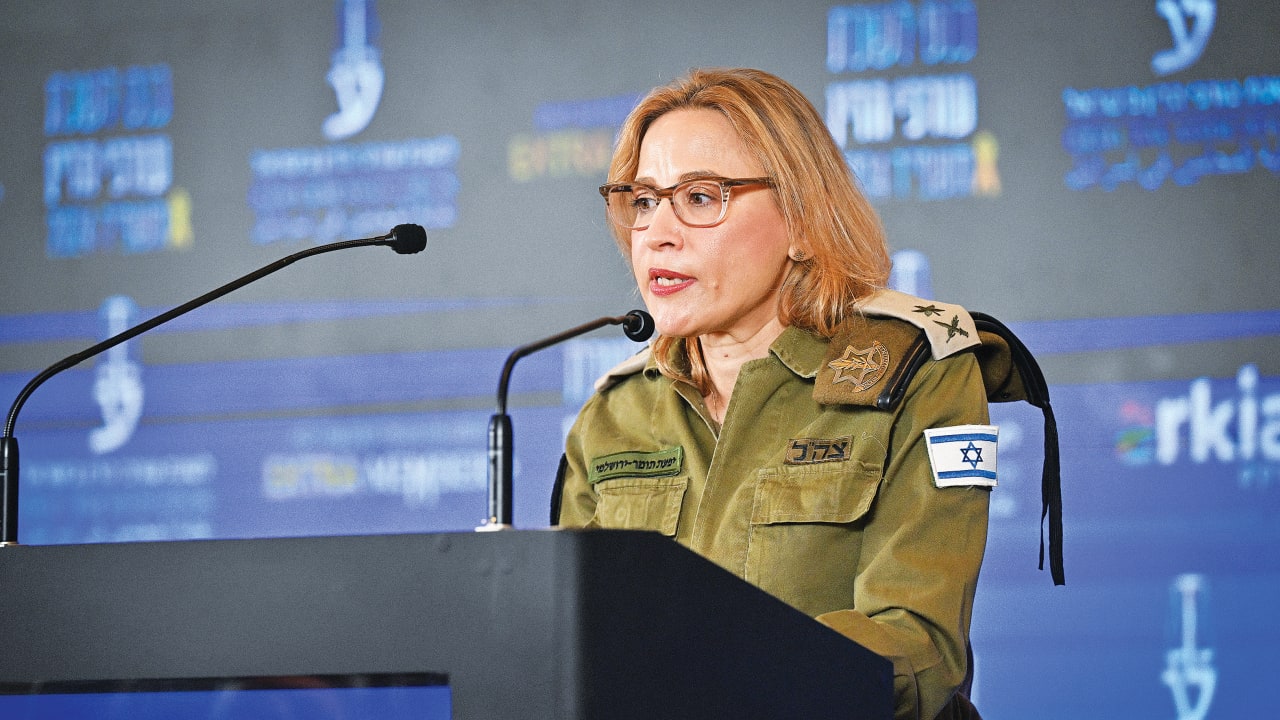
Maj.-Gen. Yifat Tomer-Yerushalmi, the former military advocate-general (MAG), is the highest-ranking woman currently in the IDF, but this week I found myself singing Gilbert and Sullivan’s “I Am the Very Model of a Modern Major-General,” which includes a comic list of the eponymous officer’s lack of qualifications for the job. I needed the light relief.
The “MAG Affair” (“Parshat Hapazarit” in Hebrew) provided much pre-courtroom drama since it exploded last week, when the IDF announced Tomer-Yerushalmi was going on leave. Two days later, she announced she was resigning, while Defense Minister Israel Katz said he was firing her after four years in the position.
Tomer-Yerushalmi admitted that in August 2024, she approved the leak of a video, apparently heavily edited, which purportedly backed the charges in what is known as the “Sde Teiman Affair.” This refers to incidents of alleged abuse, including sexual abuse, at the camp established to house prisoners and detainees from Gaza being held for their suspected roles in the October 7, 2023, invasion and mega-atrocity, and the consequent Israel-Hamas War.
The video led to what Prime Minister Benjamin Netanyahu called “perhaps the most severe public relations attack the State of Israel has experienced since its establishment,” using the word “pigua,” which is usually reserved for a terror attack. The unauthenticated video was seen by millions globally on news broadcasts and social media, fueling the pro-Hamas rallies around the world. There have also been claims that Israeli hostages held in Gaza received especially brutal treatment after their publication.

The arrest of reservist guards at Sde Teiman by masked military police led to a political backlash, with some far-right MKs demanding access to the facility where they were being held.
The affair comes against the backdrop of the massive ongoing rift over the government’s proposed judicial reform, which Tomer-Yerushalmi, in uniform, has publicly criticized.
According to a KAN News report, Tomer-Yerushalmi claimed she had ordered the leak in an attempt to “fend off false propaganda directed against military law enforcement authorities.” Many on the Right accused her of being more concerned with the rights of the Nukhba terrorists than with those of IDF soldiers and reservists.
KAN quoted her as writing in an office WhatsApp chat, “Now we’re taking this into our own hands.”
The leak soon turned into a flood of disturbing allegations regarding a “cover-up.” Outgoing Attorney-General Gali Baharav-Miara ordered an investigation, but rather than allowing a Shin Bet (Israel Security Agency) probe, she allowed Tomer-Yerushalmi to investigate her own staff.
Tomer-Yerushalmi, surprise, surprise, told the attorney-general’s office, the Knesset law committee, and the High Court that it had not been possible to find the source of the leak.
Activists on both sides made accusations about Tomer-Yerusalmi's disappearance
On Sunday, the country was riveted by reports that Tomer-Yerushalmi was missing after her car, with what seemed to be a suicide note, had been found on a coastal cliff. During the search, left-wing and right-wing activists threw around all sorts of accusations, with prominent judicial reform protester Shikma Bressler posting on X: “... there should be no doubt, the same ideology that brought about Rabin’s murder [exactly 30 years ago] also pushed the military advocate-general to her death.” She deleted the post when Tomer-Yerushalmi contacted her husband.
The potentially tragic situation quickly turned into a farce as more questions surfaced. It was not clear why Tomer-Yerushalmi was not in custody – or at least under house arrest – despite the severity of the allegations of the leak and cover-up. Other citizens have been detained for weeks in recent high-profile cases such as the “Qatargate Affair.”
Even stranger, Tomer-Yerushalmi was allowed to keep her phone, with possible incriminating evidence, which then conveniently disappeared. There are suspicions that her apparent near-suicide was staged to provide a plausible excuse for the loss of the phone.
According to the transcript of her interrogation, cited by the N12 news site, when asked about her phone, Tomer-Yerushalmi reportedly replied: “I have no idea. I might have dropped it into the sea.”
Incidentally, although I appreciate the value of leaks as much as any other journalist, I find the amount of material being published from police interrogations disturbing. Someone is providing the information for a reason.
In yet another plot twist, it’s not only the phone that’s missing, so is the major witness – although he is not at the bottom of the sea but back in Gaza. On Monday, KAN 11’s Hadas Grinberg revealed that the terrorist at the heart of the affair had been released as part of the recent deal enabling the return of the last 20 live hostages.
Although he is the presumed victim in the case, he had not filed charges and was not questioned to give his version of events. It is unlikely he will appear in court, thus depriving both the prosecutors and defending attorneys a chance to cross-examine him and making it almost impossible to get to the truth in the case. All five reservists on trial reject the charges of abuse.
THE “MAG AFFAIR” blew up – after some 16 months – almost by chance when a member of Tomer-Yerushalmi’s office underwent a routine polygraph ahead of a career advancement. The woman revealed the existence of a MAG office WhatsApp chat that discussed the incident, and admitted having handed over the video to an N12 reporter on orders of the military advocate-general.
Former IDF chief military prosecutor Col. Matan Solomosh, and several other members of the Military Advocate General Office, have also been detained for questioning.
Some are putting this down to the “Zini Effect,” the impact of the new Shin Bet head David Zini, whose recent appointment as a replacement for Ronen Bar was furiously opposed by State Attorney-General Baharav-Miara. Zini, and new IDF chief-of-staff, Eyal Zamir, are trying to bring a new tone to the organizations they head, both of which were seriously damaged by the events of October 7.
One of the most disturbing aspects of the affair is how someone like Tomer-Yerushalmi was appointed to the IDF’s top legal post in the first place. She didn’t order the leak because she was inexperienced or naive. As a friend of mine likes to quote, “stupidity is not a defense.”
The MAG Affair reminded me of the almost-forgotten Liora Glatt-Berkovich case. In 2003, Glatt-Berkovich, who worked in the Tel Aviv District Prosecutor’s Office, leaked the story to Haaretz that then-prime minister Ariel Sharon was being investigated for corruption.
She reportedly claimed that she did it because her son was about to go into the army, and she was worried that the country might go to war if Sharon was reelected. (Given the disastrous Disengagement from Gaza carried out under Sharon in 2005, her fears now seem ironic.)
Under a plea bargain, Glatt-Berkovich received a suspended eight-month jail sentence and a NIS 10,000 fine, and amazingly kept her name as a legal expert.
This week, mass arrests were made in what’s being called the Histadrut Affair – concerning alleged corruption at the highest levels of the national labor union and several municipalities. It rivaled the MAG Affair for media attention and did nothing to restore public confidence. The investigations have not been exhausted – but I’m exhausted trying to keep up.
A Jerusalem Post editorial published on Tuesday stated, “This newspaper holds four positions at once. First, abuse of a detainee, if proven, is a crime and a moral failing that must be punished by law. Second, unauthorized disclosure of sensitive evidence by a senior official, if proven, is a serious breach that also warrants legal consequences.
“Third, leaders and influential voices bear responsibility to lower the temperature, not raise it, because mob rhetoric makes justice harder. Fourth, the judicial system and police seem to be treating people who allegedly committed the same crimes differently, according to their political affiliation.”
A major task of the new Military Advocate-General will be restoring faith in the office. We cannot afford to have a major general who is the fodder for comic jokes. Unfortunately, Tomer-Yerushalmi might have given the phrase “taking the law into your own hands” a whole new meaning. Ditto, “playing devil’s advocate.”