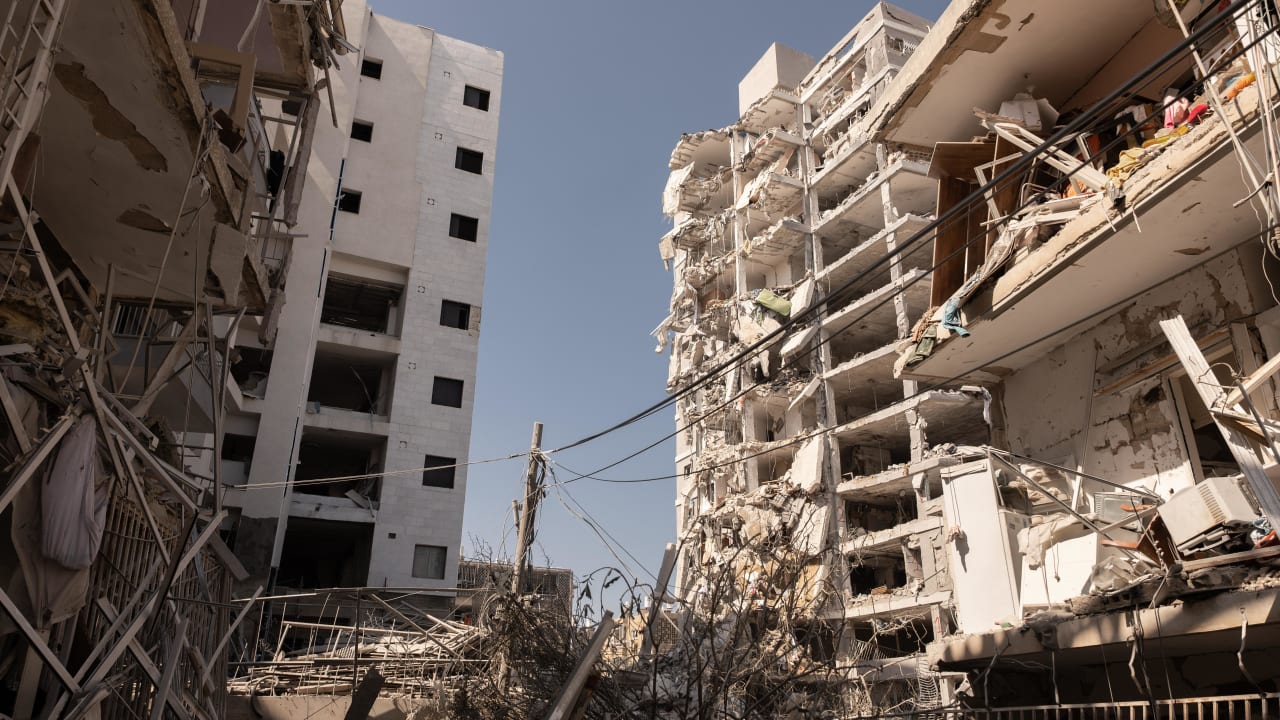
In June, Israel initiated Operation Rising Lion to target Iran’s nuclear and military sites.
This declared emergency situation began on June 13, ended on June 24, and included various measures regarding civilian limitations and challenges, such as the dearth of proper and accessible bomb shelters and the lack of clarity on compensations, as well as disorganization when it came to evacuations, the State Comptroller’s Office found in a new report published on Wednesday.
State Comptroller Matanyahu Englman blamed the situation on the lack of a single operational authority to direct government offices on how best to handle the situation. The survey by the comptroller for this report took place from June 13 to July 14.
“The information gleaned from surveys conducted and visits made by the Comptroller’s Office indicated a massive miscalculation between civilian needs and government preparation,” the report reads.
The hardships experienced by civilians fell into two major categories: specific people whose homes were harmed and general damages from the war.

Unclear compensation for missile attack damage, not enough bomb shelters
The comptroller’s visits, including to missile fall sites, hospitals, and evacuee hotels, began on June 15. During the visits, he interviewed victims, emergency staff, and government authority figures. A hotline to the ombudsman was opened the following day, on June 16.
Two days later, the office had set up a presence in evacuee hotels, which hosted people from Bat Yam, Petah Tikva, Ramat Gan, Beersheba, Rishon Lezion, Rehovot, Holon, and Bnei Brak. The information that the office representatives handed out to people was both technical, regarding their damaged possessions and homes, and bureaucratic, helping them navigate the system.
“Many felt helpless after feeling like they fell between the cracks and that they themselves didn’t have the strength to figure out where they needed to go and who the right address for their needs was,” the report says.
The comptroller received 700 complaints between June 13 and July 14 alone, tallying to 303 cases. Of them, 51.7% were resolved or taken on by the Comptroller’s Office.
The government authorities that notched up the most complaints were the Israel Tax Authority (ITA), specifically its units on Compensation Fund and Property Tax, and the municipalities of Bnei Brak and Bat Yam.
Of the complaints, 86 concerned the state of shelters that were not up-to-date; 74 were about damages; 40 were about public service, such as the management and treatment of complaints; and 27 were about treatment and management of evacuations.
Bat Yam tallied the most complaints (47), followed by Bnei Brak (40), Petah Tikva (23), and Beersheba (19). Just over half were filed by women (55.1%), as compared to men (44.9%).
Per the ITA’s Compensation Fund, if a civilian experiences a direct hit to his or her home in a war context, making it unlivable, the fund has the authority to order them to evacuate and to provide them with rental funds for the required period of time. All of these calculations are done with the input of engineers and building planners.
However, the government, which issued a decision on the matter on June 18, failed to appoint an overall manager to deal with everything related to damaged homes.
Local authority heads noted that a lot of the responsibilities fell to them, such as coordinating with hotels, and that they were to be retroactively compensated. This led to major financial gaps, as well as broader disorganization, since no protocol was set for choosing which civilians would be evacuated to which hotels.
Just one day earlier, the comptroller had written to Finance Minister Bezalel Smotrich, recommending that a government mechanism to handle the issue be set up as soon as possible.
The report noted that during a visit to a particular evacuee hotel in Jerusalem, the civilians only saw that the rooms were unfit for use after they had already stepped off the bus. They were moved to a different hotel, but that one lacked proper protection from bombs, and its shelter was not fit for wheelchair-bound individuals.
It was also unclear to the civilians when they would have to leave the hotel, making it impossible for them to organize alternative setups. This affected everything from technical challenges to mental health, and it created an emotional-psychological burden and a feeling of disorientation, as well as a lack of a sense of security among the evacuees.
This is the second such report of public complaints related to the war, after the first was published in December 2023.
On a more general plane, the comptroller found a massive backlog in shelter preparation, particularly in border towns, and even more in socio-economically challenged areas.
The Iran attacks highlighted how areas across the country are affected, not just the North and South.
In one case, a woman of Ethiopian background in Jerusalem issued a complaint that where she resides in Jerusalem, extremist haredi (ultra-Orthodox) individuals prevented her and others in her community from entering the shelter during a siren.
In other cases, private individuals simply took over shelters and turned them, effectively, into their private residences.
“As the government was aware of the operation before it launched, the proper move was to prepare not just offensively, but also for civilian casualties and damages, to lighten the load as much as possible,” said Englman.
This report follows one from last week about general civilian operations, where the comptroller found Netanyahu directly responsible for not preparing the home front during his 13 years in office. Englman also issued sharp criticism against Finance Minister Bezalel Smotrich, as well as the Defense Ministry.