Tragedy in the northern Arab town of Tamra, Israel, during the recent war with Iran has highlighted the absence of protective infrastructure in Arab communities within Israel. On June 15, four women from the same family lost their lives when a missile struck their home, reigniting long-standing frustrations over unequal access to public shelters.
For more stories from The Media Line go to themedialine.org
Nearly half of Arab citizens lack access to bomb shelters, and many Arab towns have no public shelter infrastructure at all. Official statistics indicate that more than 60% of Arab municipalities lack a single public bomb shelter. This glaring disparity has left entire communities vulnerable during times of conflict.
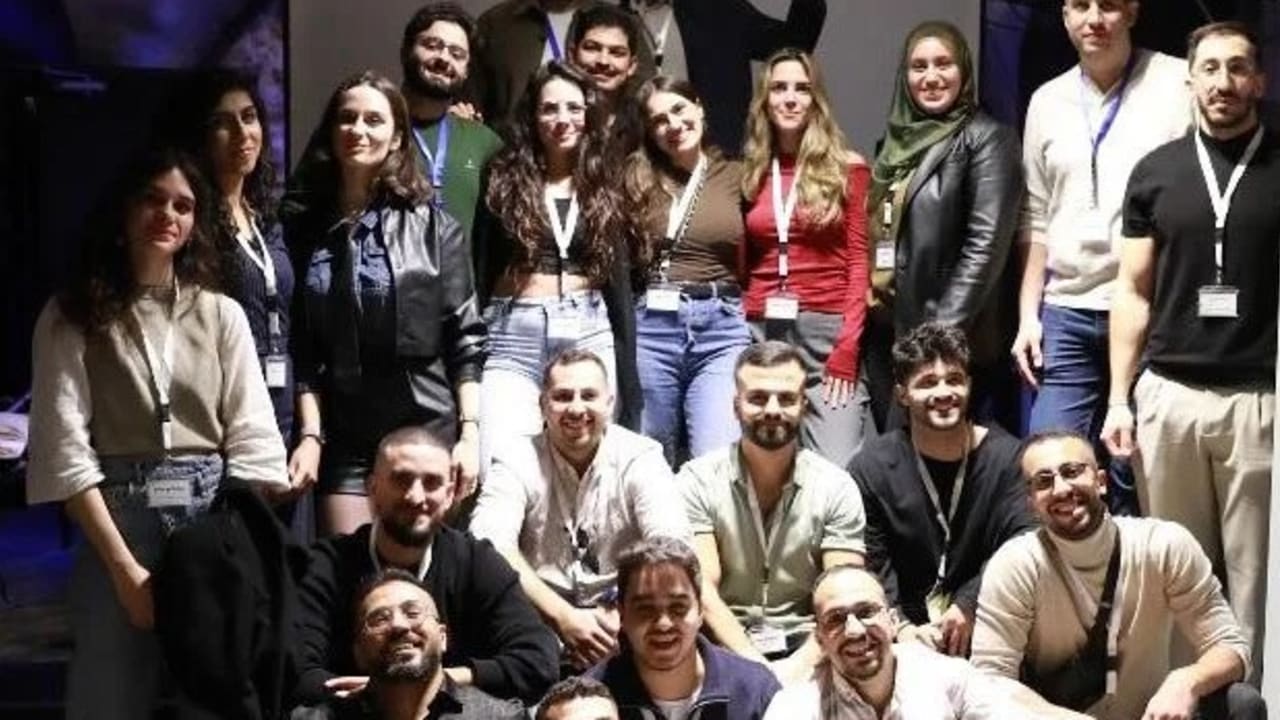
From this devastating moment, a remarkable initiative has emerged: Harmony SOS, an emergency shelter locator developed by Arab citizens of Israel to provide real-time access to safe spaces during missile attacks. In less than 48 hours, what began as a local response evolved into a platform that could save lives across the country.
“Harmony SOS was born out of urgency. When the missile attacks began, it became clear that the Arab towns and villages across Israel were completely unprepared,” Mahdi Kabaha, an Arab Israeli software engineer, told The Media Line. “Especially after the disaster in Tamra, we decided to take action instead of crying and complaining.”
Kabaha hails from the village of Barta’a, which spans both Israel and the West Bank. He co-founded Harmony SOS with Basel Murad, a lawyer from the northern Arab town of Kafr Manda, now based in the United States.

They were later joined by Basel Boulos, a Nazareth-based software engineer who volunteered to build the app. Another key contributor was Nadine Rohana, also a software engineer, who helped gather volunteers and develop the platform’s initial structure.
The mobile-responsive platform uses GPS to identify the three closest shelters—marked in green for public, yellow for private, and orange for protective capsules. Each listing provides contact details and directions, along with information on whether pets are allowed and whether it is family-friendly.
The site went live in just seven hours. By the end of two days, the team had verified more than 1,100 shelters. Now, the platform lists more than 1,400. It is available in Arabic, English, and Hebrew—a deliberate choice made by the founders.
“Because of solidarity,” Kabaha explained. “We believe that in a time of war, missiles will not distinguish between Jews and Arabs. Even though we weren’t given access to Arabic on other platforms, we wanted to send a message of solidarity—that everyone should have access to safety.”
The original Harmony SOS website launched before the app to meet the urgent need for shelter information. Volunteers from Arab communities across Israel helped build the initial database and provided key back-end support.
Even in its early days, the platform’s impact is clear. Kabaha recalled a woman who received a missile alert while on the road to Acre. Using Harmony SOS, she found a shelter in Tamra and took cover.
“We believe we reached 35,000 users in the first 48 hours of the campaign,” Kabaha said. “People have shared stories of finding safety because of Harmony. That’s how we know it works.”

Boulos told The Media Line that the team prioritized usability in the interface. “We made sure everything worked smoothly because people were panicking. No logins, no extra steps—just a simple tap and go,” he said.
Providing legal, beauracratic support to victims of Iran missile attacks
The initiative also provides free legal support for those whose homes or businesses were damaged in the war.
“If people have had their homes or buildings damaged, they need urgent advice on how to fill out state forms for compensation,” Murad told The Media Line. “Many Arab citizens never receive compensation because they don’t know how to apply or miss the 14-day deadline. We offer this support for free.”
Today, Harmony SOS is growing beyond emergency response. With Murad working from the US, the team is preparing to expand internationally.
“There is a lot of potential in our community, and we are breaking stereotypes,” Murad said. “We truly hope this will be just the beginning of expanding our network abroad and continuing to generate tools that help people globally.”
Kabaha said the team intends to develop the app into “a sustainable and scalable platform.”
“It should work not just in wars, but in natural disasters like hurricanes and earthquakes anywhere in the world,” he said.
Murad added, “This model works. We brought people together and increased Arab networking in Israel and beyond. That’s powerful.”
For now, the project is mostly volunteer-funded.
“We’ve been reaching people, but unfortunately, it hasn’t been enough since we have a lot of expenses,” Kabaha said. “Five people donated—five of them are volunteers. We’ve been doing all this from our own money.”
Boulos noted that the focus of the project isn’t financial return. “If I saved just one life, all the sleepless nights were worth it,” he said.
Kabaha agreed: “Harmony SOS showed what’s possible when people come together with purpose. We believe this is just the beginning.”