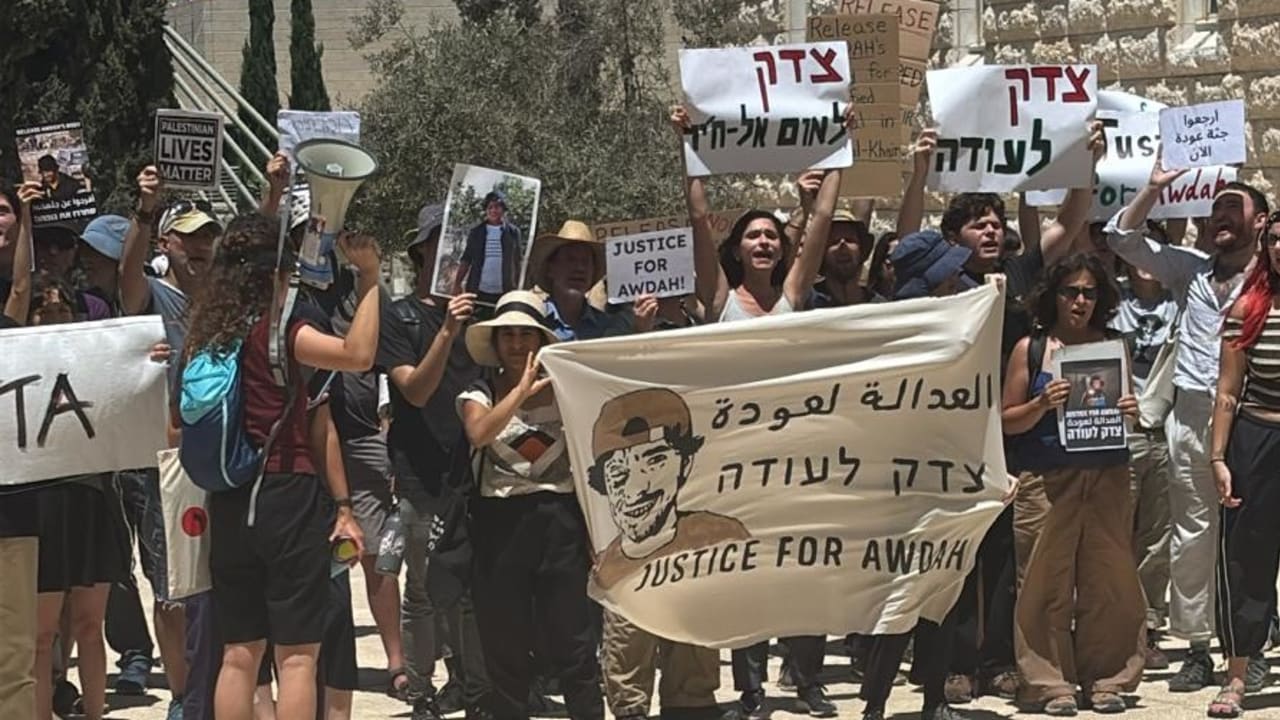
The body of Palestinian activist Awdah Hathaleen has been released from military custody, allowing for proper burial and mourning, after the court dismissed the opposition, sources told The Jerusalem Post on Thursday.
Hathaleen’s family fought to retrieve his body after he was shot dead by an extremist Israeli settler, Yinon Levi. His remains had been held for over a week, as Israeli forces arrested Palestinians in the community, leaving Levi free from arrest for hours. Levi was eventually detained, but was quickly released, according to Israeli media.
Residents said that on Tuesday, the excavators involved destroyed water pipes, cutting off half of the village’s water supply.
Videos from July 28 show Levi brandishing a gun as he advances toward a group of Palestinians before shooting indiscriminately in their general direction multiple times and killing Awdah Hathaleen. The incident occurred on Umm al-Khair’s territory, into which Levi and an Israeli minor had crossed, where they operated an excavator, damaged infrastructure and trees in the village, and tried to sever the main water pipe leading to it.
Hathaleen and other activists tried to stop the destruction, which was when the deadly shooting took place. Another video from the scene, filmed after the shooting, shows Levi speaking with Israeli soldiers and police officers and pointing at certain residents of the village, who were then arrested.

Umm al-Kheir, one of the villages of the Masafer Yatta area in the South Hebron Hills of the West Bank, has been a frequent target of settlers from nearby illegal outposts, who have been filmed harassing and attacking Palestinian herders and their livestock.
Activists have been trying to raise awareness of Masafer Yatta’s plight for years. Last year, the Oscar-winning documentary No Other Land, co-directed by a team of Israeli and Palestinian activists, made headlines for its up-close and personal documentation of what’s happening in Masafer Yatta. The documentary included footage filmed by Hathaleen.
Military checkpoints set up to reduce flow of masses to funeral procession
Sources told the Post that despite the body’s release, military checkpoints were set up to reduce the flow of masses to the funeral procession. Sources told the Post that restrictions of this type were an attempt to limit funeral attendance, against an agreement to allow full attendance. Sources close to the victim say that the agreement was made late Wednesday, for the funeral to be open to everyone, but was blocked by the military and police to prevent attendance.
In a post on Instagram by friends of the deceased, the women of the village ended their hunger strike, but the “abuse of the community continued until the very last moment. Contrary to the agreement made with Awdah’s family, the army set up four checkpoints around the village of Umm al-Khair to prevent his relatives and friends from accompanying him on his final journey.” The post also claims that the IDF had blocked funeral access as well as the road to the mourning tent. The post also claimed that his body was “held as a bargaining chip against the family regarding the conditions of the funeral.”
Hathaleen’s death and the subsequent events that kept his family from retrieving his body sparked outrage, with protests continuing even after his release.