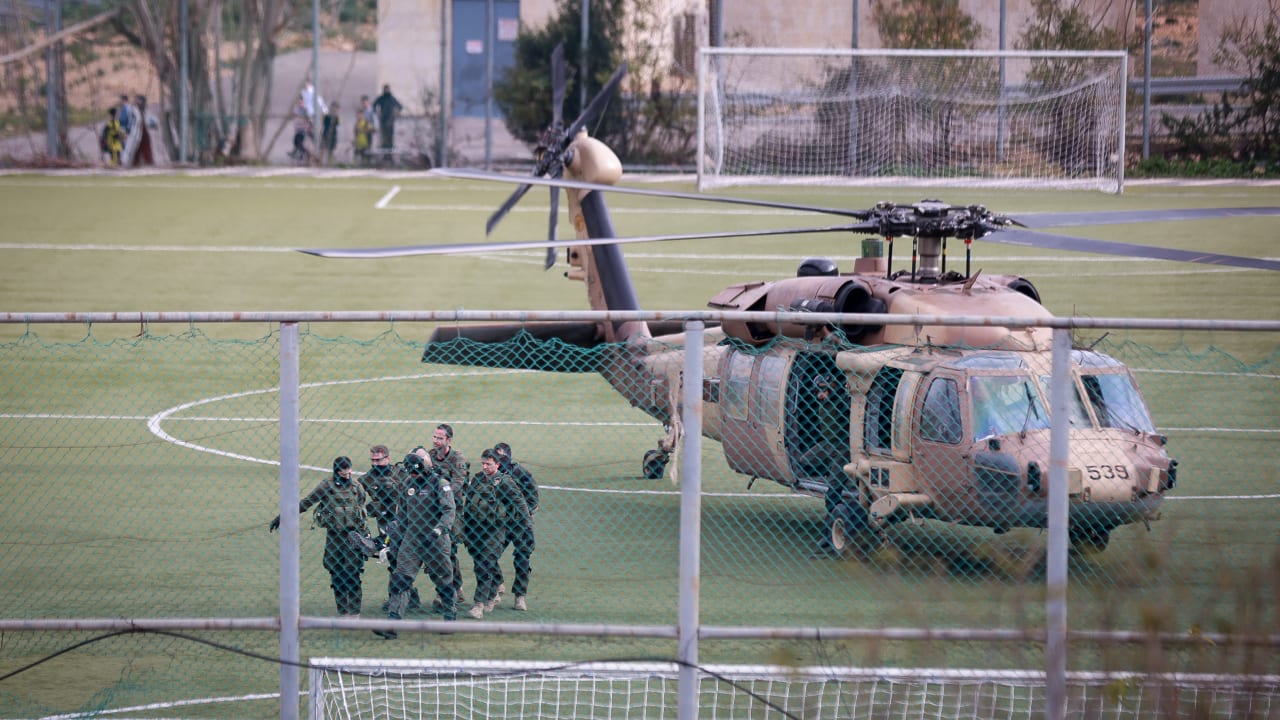
The Knesset Subcommittee on IDF Human Resources held a discussion on Wednesday focusing on medical care for wounded IDF soldiers, with an emphasis on those with head injuries, in which it revealed the immense difficulties families of the wounded face.
During the meeting, Inbal, the mother of Ido Nehamad - who was shot by a sniper a year and a half ago and remains unconscious - criticized the systems responsible for her son's care. "Ido went through 8 hospitals. Sheba Hospital didn't agree to accept him - they said he had no rehabilitation potential," she said. "This is a scandal."
Inbal described how her son had been moved "from hospital to hospital like a sack of potatoes," adding, "I'm here to speak on behalf of those who still can't speak for themselves.
"Ido is still fighting for his life. There are some very important things that, sadly, will no longer help Ido, but I hope they'll help others. Ido has been through eight hospitals, 10 brain surgeries, and dozens of other operations on his body," she continued.
'An outrage, hell on earth, a scandal'
Inbal described their experience as "hell on earth," as many hospitals refused to help them.

"Sheba Hospital refused to admit him because they said he had no rehabilitative potential. It's an outrage that a hospital would tell a soldier, 'You have no place here,'" she said.
"We ended up at Beit Loewenstein, which doesn’t provide medical treatment but rather rehabilitation services, so we had to leave countless times to go to other hospitals. Every hospital has its own protocol and conditions for accepting patients — where else does something like this happen?
In disbelief, she asked, "Why should I have to look abroad for solutions for an IDF soldier who fought to protect the country?" stressing that "it’s your [the hospital's] job to care for Ido the way he cared for us. You should be willing to do everything for him, even for the smallest chance that he might wake up."
Smadar, the mother of Oz — another soldier with a head injury — added: "When there's a medical crisis, someone needs to get under the stretcher and carry the weight — and that someone is the Health Ministry, which sets the benchmarks.
Regarding the Health Ministry's lack of support, she asked, "Where are they in this entire process? I see complete helplessness when it comes to dealing with head injuries. If we don’t bring in the Health Ministry to coordinate everything from the top down, nothing will change."
The committee chair, MK Elazar Stern, emphasized: "With head injuries, we’re seeing much wider gaps than with other types of injuries. We know this from the families. This is an issue that concerns all of us — and we are trying not only to be aware of the distress but to actively promote solutions that will ease the burden on families dealing with head trauma."