Former US ambassador Dan Shapiro, who served two terms in Israel during the presidency of Barack Obama and remained in the country for some years afterward, is now in frequent demand in order to discuss the agreement Obama reached with Iran in which Iran agreed to limit its nuclear program. Iran did not keep its word, and Obama, who has been out of office for eight-and-a-half years, is still bearing the backlash – more so since US President Donald Trump’s recent triumph in Iran.
Shapiro, who is fluent in both Hebrew and Arabic, is also sought by Israeli media outlets.
Locally, the person most in demand is Amos Yadlin, a former Israel Air Force major-general, a former Israel military attaché in Washington, a former head of IDF Military Intelligence, and one of eight pilots selected to carry out the June 1981 operation against Iraq’s Osirak nuclear reactor. He is also a former director of Tel Aviv University’s Institute for National Security Studies.
Not only media outlets in Israel, the US, and elsewhere are interested in his views and analyses, but also the diplomatic community in Israel. Last Friday, Yadlin gave a briefing on behalf of MIND Israel to 30 representatives of foreign embassies in Israel. He presented the strategic rationale behind the operation, the objective of the campaign, and its regional implications. He also discussed possible scenarios that will emerge from the present conflict.
MIND Israel is a professional group of consultants that provides services to national security institutions.

■ FEW ISRAELI dual nationals were happier in the predawn hours of Sunday morning than Marc Zell, who heads the Israel branch of Republicans Abroad. In an interview on KAN Reshet Bet, soon after the announcement of the American airstrike on Iran, Zell said that he was sure that all 700,000 American citizens who live in Israel were proud of President Trump, whether they voted for him or not.
Americans and Israelis praise Trump and Netanyahu
■ AMERICAN CITIZENS living in Israel were not the only ones who heaped praise on Trump this week. Israelis of all political stripes had only good things to say about Trump and Prime Minister Benjamin Netanyahu for their joint efforts in reducing the danger of Iran’s ability to produce nuclear arms, which for so long has threatened the stability of the Middle East, and which also posed a threat to the world at large.
Even Israel’s best-known public relations executive and quasi diplomat, Ran Rahav, who in the past has been extremely critical of Netanyahu, posted a long WhatsApp message in Hebrew, English, and Arabic, in which he not only complimented the two leaders but said that both were deserving of the Nobel Peace Prize.
Did the right people in Scandinavia get the message?
The 2009 Nobel Peace Prize was awarded to then president Obama for his “extraordinary efforts to strengthen international diplomacy and cooperation between peoples.” At that time, Obama had not really done anything that could be considered as groundbreaking or historic, beyond being the first person of color to be elected president of the United States.
Trump, whether one likes him or not, delivered the goods, and, at least in one respect, so did Netanyahu. Whether their efforts will eventually bring peace to the region is anyone’s guess. There are still other issues at play. But it cannot be denied that, between the two of them, they changed Middle East history.
■ EVEN SO, and despite what Israel and the world owes to Trump, to compare him to Alexander the Great, who conquered Persia, the country today known as Iran, is somewhat over-the-top. Trump gives executive orders from the comfort of the Oval Office or the Situation Room. Alexander the Great was personally engaged in the exploits of his army.
Yes, Trump deserves the Nobel Peace Prize, but without the comparison to Alexander the Great. He deserves it in his own right.
If he gets it, he will be the fifth American president to receive it. The others were Theodore Roosevelt, Woodrow Wilson, Jimmy Carter, and Obama.
If Netanyahu is also selected to be a recipient of the Nobel Peace Prize, he will be the third Israeli prime minister to be conferred with the prestigious award. The first was Menachem Begin in 1978; and the second was Yitzhak Rabin in 1994.
There were two other recipients together with Rabin: Shimon Peres, who at the time was foreign minister, after having previously served as prime minister, and Yasser Arafat, the head of the Palestinian Liberation Organization. Peres again became prime minister following Rabin’s assassination in 1995, and later served as the ninth president of Israel.
Apropos Netanyahu, though secular, he is the grandson of an Orthodox rabbi, which may account for his recent bowing to religious practice. A couple of weeks back, he attended Sabbath services at Jerusalem’s Great Synagogue; and this week, with a tallit (prayer shawl) draped over his shoulders, he visited the Western Wall and offered prayers for the well-being of IDF soldiers and for that of President Trump.
Haifa mayor furious with government and media
■ IT’S NATURAL for electronic media to immediately contact the mayor of any town or city suffering a ballistic missile attack. Most of the mayors provide an update on the number of residents killed or wounded, and the damage to buildings, including those that were totally destroyed.
But Haifa Mayor Yona Yahav was furious with the media and the government. “Only when something like this happens are you interested in Haifa,” he fumed, following a serious attack on Saturday. “The rest of the time, journalists ignore us, and the government ignores us – a city of 300,000 people, and we’re ignored!”
Arabs and Bedouin being attacked by Jews
Haifa’s Arab community is also bearing the brunt of the reason for sudden recognition. Anyone speaking Arabic is immediately set upon by nearby Jews, and even when such people produce a press card that indicates that they are working for Makan 33, the Arabic-language station under the KAN umbrella, it doesn’t stop people who begin shouting that the journalists are working for Al Jazeera, which has been banned in Israel.
The same goes for Beersheba. A Makan journalist, who happens to be a Bedouin, said he had gone to Soroka Medical Center to report on the damage there, after it was struck last week by a very powerful Iranian ballistic missile. He knows a lot of the hospital staff, several of whom are Bedouin, whom he greeted in Arabic. Even though Soroka serves all residents of the region, and at the time, Bedouin and other Arab patients, including Palestinians, were in the hospital, the journalist was physically attacked by Jews.
It should be remembered that Bedouin were among both the victims and heroes on October 7, 2023. Not only are they citizens of Israel, they also serve in the army. Yet those who live in unrecognized villages suffer discrimination and lack state services such as electricity and water. Needless to say, they have no shelters, and when missiles are fired, the experience is terrifying for them.
Part of the antipathy toward them is due to the fact that they are Muslim Arabs, and since October 7, there is heightened anti-Arab feeling among certain sectors of the Jewish population.
It should be noted that irrespective of how law-abiding and loyal to the state Bedouin and other Arabs may be, the word “Nakba” cannot be erased from their lexicon, because it is part of their history. When Jewish history is distorted, major Jewish organizations rise on their hackles and cry “Antisemitism!” Antagonisms might be defused if Arabs were permitted to maintain their historic narrative, without being penalized for using the word “Nakba,” which means catastrophe.
Censorship tightens
■ DURING THE Second World War, there was a slogan in the UK that “Loose lips sink ships.” An updated version now prevails in Israel, where Iran attempts to recruit spies by offering people from low-income families attractive sums of money for specific information. The initial requests are fairly innocent, becoming less so as each mission is successfully completed. Some of these recruits have been intercepted and arrested by police, but others may still be operating on behalf of Iran. This is one of the reasons that censorship has been tightened.
During the Yom Kippur War, censorship was also very tight, but photographs that appeared in foreign publications could be published in Israel, once they had first been published overseas.
One memorable instance was a photograph of Israeli prisoners of war in Syria, with their eyes blindfolded and their hands tied with wire. These photographs were initially not published in Israel out of concern for the feelings of wives and mothers of the captured soldiers. But once they appeared abroad, they could be published by any Israeli newspaper. In fact copies of that particular photo were distributed by the Foreign Ministry to reporters writing for media outlets abroad. This was prior to the Internet and the digital era, in which there were no cellphones for instant transmission of photographs to almost any place around the globe.
Today’s censorship rules, introduced by National Security Minister Itamar Ben-Gvir and Communications Minister Shlomo Karhi and enforced by the police and the Government Press Office, are mainly in response to footage that has appeared on Qatar-owned Al Jazeera, a media outlet currently banned in Israel.
However, international news agencies that are permitted to operate in Israel include Al Jazeera among their clientele. In addition, as opposition leader Yair Lapid pointed out, anyone with a cellphone can videotape sites that have been severely damaged or destroyed by Iranian ballistic missiles and post the videos on social media platforms, from which they can be downloaded by Al Jazeera or anyone who is interested.
In addition, placing a gag on foreign media is tantamount to putting obstacles in the path of Israel’s public diplomacy efforts. When images of destruction are shown on Al Jazeera, they are not viewed as Israeli propaganda but as genuine news.
Power outages
■ POWER OUTAGES, the loss of accessibility to the Internet and a bunch of other inconveniences gave Israelis cause to think about the extent to which we depend on electricity in our daily lives.
Electricity-related discoveries were made for centuries, but it was not until the 19th century that use was made of electric light. Although Thomas Alva Edison, arguably one of the greatest and most prolific inventors of all time, is credited with bringing light unto the masses, he was in fact preceded by Humphrey Davy, whose experiments with the carbon arc led to electrically lighting up commercial buildings in the early 1870s.
But it was not until June 10, 1923, that a Russian-born hydraulic engineer pressed a button on Allenby Street, Tel Aviv, and literally electrified the Holy Land. The man in question was Pinhas Rutenberg, who, in addition to his professional abilities, was also a talented politician who had persuaded the British Mandate authorities to allow him to build hydroelectric plants. It helped that he had the support of Winston Churchill, whom he met personally.
Reliance on electricity increased, as did reliance on electrically powered devices. One can only imagine the dismay of 8,000 Negev families this week when they found themselves without electricity for the better part of half a day.
Although 1925 is not a milestone anniversary year for electricity in Israel it would have been fitting, all things considered, for the Israel Electric Company to have organized some kind of tribute to Rutenberg. Take note, IEC CEO Meir Spiegler; the ball is in your court.
Synagogue renoveated in memory of fallen soldier
■ AMONG THE towns and cities in which Iranian missiles caused harm and grief is Ramat Gan, which on another level is honoring the memory of fallen soldier Idan Kenan by renovating the synagogue in which he was raised and educated. The comprehensive renovation project is under way.
A native son of Ramat Gan, Kenan was killed in combat during the intense battles against Hamas. A dedicated soldier in the Nahshon Battalion (90th) of the Kfir Brigade, Kenan fell in battle in northern Gaza on Saturday, November 16, 2024. He was 21 years old.
In a final message to his grandmother before his death, he wrote: “It is a privilege to die for this nation.”
Serving as a sniper, he fought in Shejaia, risking his life to protect his fellow soldiers. His commanders and comrades described him as a courageous, principled, and devoted fighter, one who led by example, encouraged others, and always lifted the morale of those around him.
At home, the synagogue was more than a place of worship for Kenan—it was a foundation of identity, faith, and belonging. He regularly attended Shabbat services and Torah study, and the synagogue played a key role in shaping his moral and spiritual character.
In what they regard as the most meaningful measure of remembrance, the Kenan family – together with the nonprofit organization Lizkor Lanetzach – has launched a renovation initiative to transform the synagogue into a vibrant community center. The project will include new seating, upgraded lighting, accessibility improvements in the women’s section, and the construction of a new Holy Ark, all aimed at creating a warm, inclusive space for the entire neighborhood – just as Idan always experienced it.
“Eshel Avraham was the place where Idan grew stronger, more connected with his identity, and where he found purpose,” said his mother, Adi Kenan. “We want the synagogue to continue to radiate the same warmth and sense of belonging it gave to Idan – a place of love, connection, and acceptance. That’s what Idan would have wanted.”
Gershi Kornitzer, CEO of Lizkor Lanetzach, added: “Idan represented an entire generation of young Israelis who held a weapon in one hand and values in the other. Honoring his memory in the synagogue that shaped him is a deeply meaningful tribute. We are proud to take part in a project that will illuminate the lives of future worshipers – just as Idan lit up the lives of everyone around him.”

Gottesman Family Supporting Foundation donates money to Israel Sci-Tech Schools
■ THE NAME Gottesman has been associated with philanthropic causes in Israel since long before the establishment of the state. It’s not certain that all the Gottesman donors are related to each other, but whether they are or not, they certainly live up to their name, which means God’s man. And so, in the image of God, they do loving-kindness through their financial resources.
Paula Gottesman and her late husband, Jerry, were particularly keen on directing their philanthropy to educational projects, and that’s what she has continued to do.
In response to the harm that closed schools are doing to students, especially final-year high school students who were preparing for their matriculation exams (known as bagrut in Hebrew), the Jerry and Paula Gottesman Family Supporting Foundation has made another generous donation of $500,000 to Israel Sci-Tech Schools, Israel’s largest independent charter school network.
This critical support will go to schools in the North, where people who were displaced by the war across the Lebanese border have begun to return home, but have not really adapted to yet another change in their lives.
The foundation has previously adopted and supported schools in underserved towns such as Afula, Ramle, and Kiryat Shmona, enhancing accessibility to high-quality education in these areas.
The network of Israel Sci-Tech Schools was founded in 1949 and caters to students of all faiths and denominations.
Since October 7, 2023, the network has lost over 130 alumni, students, and staff, including Yossi Hershkovitz, a beloved school principal who fell in reserve duty in Gaza. Three of the hostages still in Gaza, two of whom are believed to be alive, are also part of the Sci-Tech network.
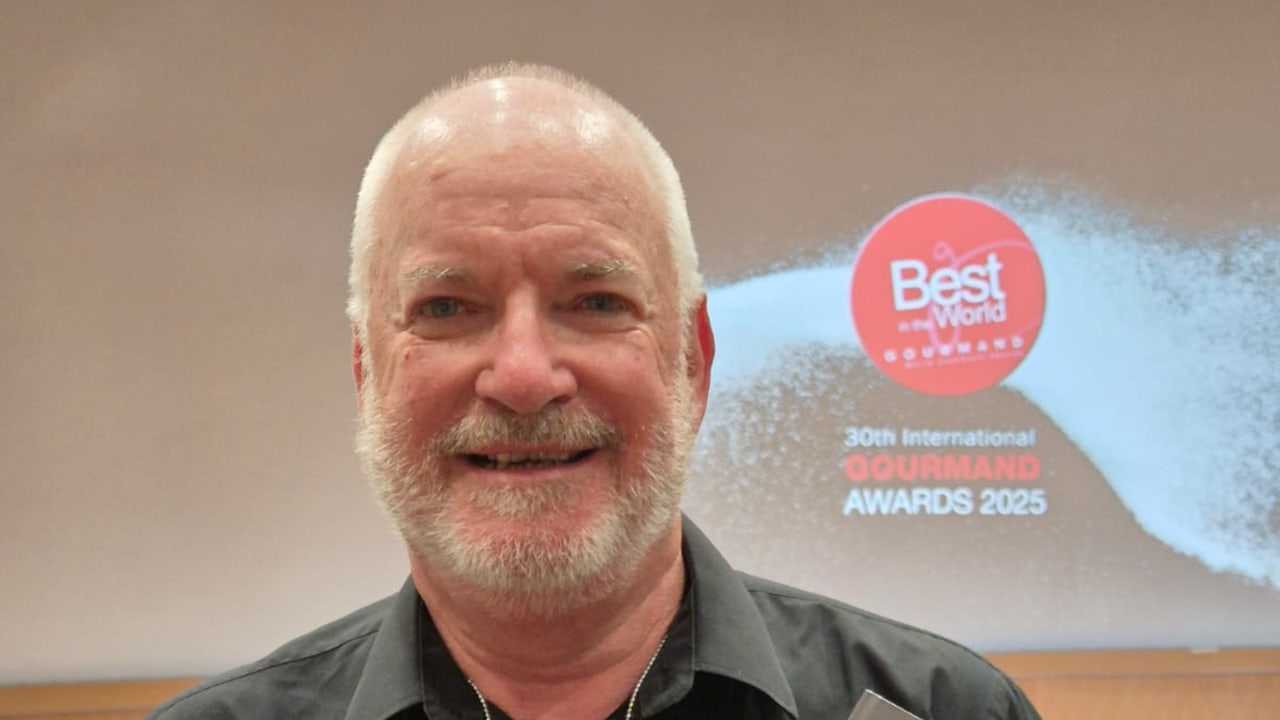
■ SERIAL PRIZEWINNER Adam Montefiore, the veteran wine writer for The Jerusalem Post, has done it again. Early this year, Montefiore was nominated for a prize in the Gourmand awards, which some people have dubbed the Cookbook Oscar. Actually, he came away with not only one prize but two.
His book Domaine du Castel: The Biography won the prize as Best Northern Hemisphere Wine Book, and his book Golan Heights Winery won the prize of Best World of Wine Book of the Year. These awards come within the context of vineyard diplomacy, in that readers learn not only about Israeli wines, but something about Israel that goes beyond what they read in news headlines.
■ ALTHOUGH he has been a radio personality for more than half his lifetime, Menashe Amir, the veteran Farsi-language broadcaster on Radio Reka, the foreign-language station of the Israeli Broadcasting Corporation, who also monitors and analyzes news from Iran, has seldom been as much in the limelight as in recent days. Almost every current affairs anchor of KAN Reshet Bet has been seeking his views and explanations, as have some of the print media journalists.
Amir, 85, has warned repeatedly against telephoning relatives in Iran, because this could endanger their lives.
Israeli singers of Iranian background, Rita and her niece singer, actress, and dancer Liraz Charhi are of Iranian background and have a vast following in Iran, despite the fact that they are Israeli. The two sing in Farsi, and Rita was actually born in Iran. She came to Israel with her parents when she was eight years old. Charhi was born in Ramle.
Antisemitism in Australia
■ SOME PEOPLE simply can’t contain their hatred. Graffiti on the walls of the stately Melbourne Hebrew Congregation, better known as Toorak Synagogue in Melbourne, has among the messages scrawled on its exterior in blood red: “Iran, use the bomb!” and “Free Palestine!”
The Orthodox congregation, founded in 1841, is believed to be the oldest Jewish congregation in Melbourne. Originally located in the heart of town, it moved to its present location in 1930. The seating capacity in the original structure was 100, as the Jewish community at that time was relatively small in number. The current neoclassical building holds 1,300 seats and is the favored venue for the most significant family celebrations of the rich, the famous, and those destined to become famous.
General Sir John Monash, born June 27, 1865, who became one of the most highly decorated commanders in the Australian Army and later the general manager of the State Electricity Commission of Victoria, and the president of the Australian Zionist Federation, was married in the original synagogue premises, while Sir Zelman Cowen, who was one of two Jewish governors-general of Australia, celebrated his bar mitzvah in the current building. The funeral of the first Australian-born governor-general, Sir Isaac Isaacs, was conducted in the same synagogue.
Over the years the congregation has been guided by some very impressive spiritual leaders. The current chief minister of the congregation is Rabbi Shlomo Nathanson, who, like his predecessors, was born abroad. Nathanson is originally from the US and has been living in Australia with his family since 2008. The first Australian-born rabbi, noted historian, Rabbi Dr. John Levi, who is now 91 and retired, was ordained in 1960 and served in Melbourne’s Temple Beth Israel Reform Synagogue.
The Herzogs visit patients and medical staff
■ THE EMERGENCY situation has put a blight on events at the President’s Residence, leaving President Isaac Herzog and his wife, Michal, free to travel the country to view the destruction wrought by Iranian ballistic missiles, to talk to people who have lost their homes, and to those who have been hospitalized as a result of injuries sustained from shrapnel or from being trapped in a collapsed building or in a safe room that was not strong enough to withstand the impact of the missile.
Among the medical centers most recently visited by the Herzogs was the Shamir Medical Center, formerly Assaf Harofeh. Accompanied by the medical center’s general director, Dr. Osnat Levtzion-Korach, the Herzogs toured the state-of-the-art underground emergency hospital, which until Friday was an underground parking lot, and the fortified maternity ward, which was converted from the hospital’s fitness center in response to the ongoing security threats. They also met with patients and medical staff, to whom they spoke about the additional challenges of being treated and working under pressure.
Rambam Medical Center has a permanent, fully equipped underground hospital. Several other hospitals and health clinics also have underground facilities, but these are mostly in converted car parks. Laniado Hospital is in the process of building a permanent underground hospital.
The large number of wounded soldiers and civilians has put a spotlight on the need for additional hospitals and clinics, as well as for properly trained medical staff at all levels of the medical profession.
greerfc@gmail.com