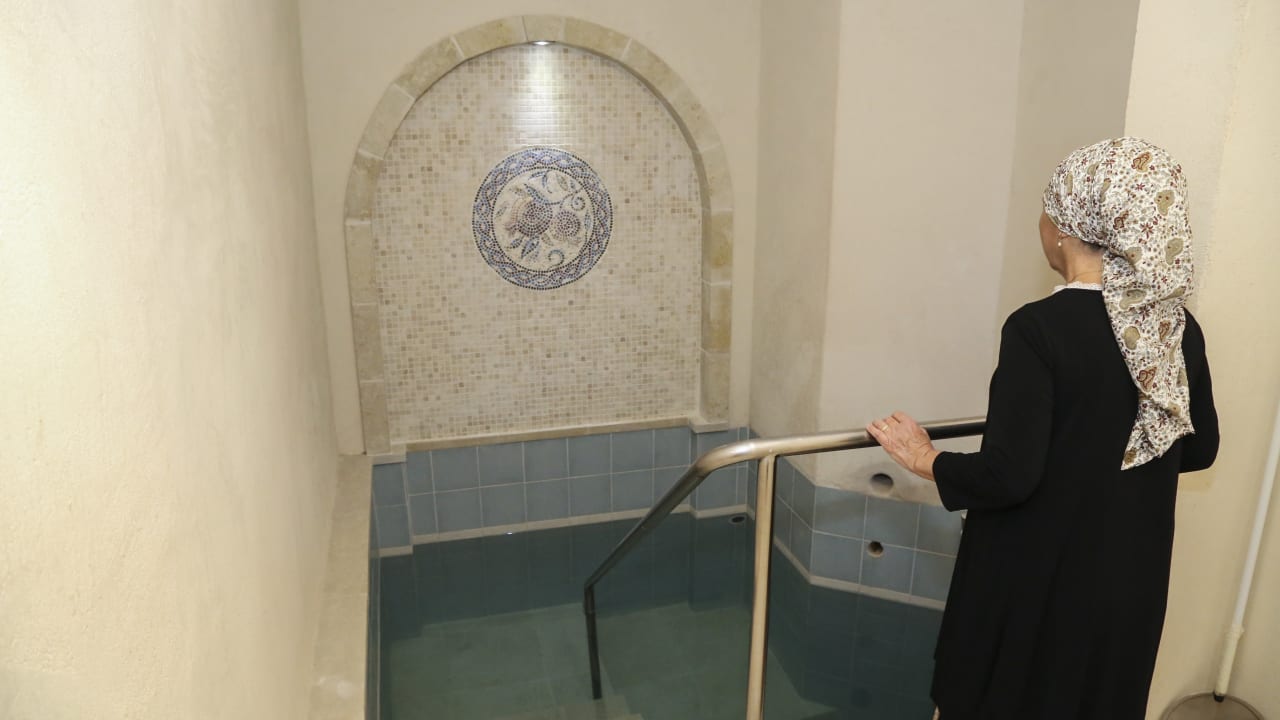
Amid the closures among the dangers of the war, ITIM – The Jewish Life Advocacy Center, an NGO that works to improve the services and treatments of Israel’s religious establishment – is working to keep mikvaot open and accessible all day for women, as nighttime use has become more problematic due to the Iranian missiles.
With non-essential businesses and centers closed, mikvaot, or religious ritual baths, have become essential and increasingly difficult to access because religious law dictates that they only be used for ritual baths after sunset.
“We have sent a letter to the chief rabbis requesting that this be permitted across the country from the moment a state of emergency is declared,” said ITIM director Rabbi Seth Farber.
“In the present conflict, we are living in a reality where most attacks on our territory occur during the evening and nighttime hours, and a courageous ruling is needed to allow the mikvaot to open during the daytime hours,” he added.
In a letter dated Monday and addressed to chief rabbis Kalman Ber and David Yosef, ITIM raised the issue of opening mikvaot during daylight hours, as well as burial for those with no legal religious designation in Jewish cemeteries.

Halacha, or Jewish law, dictates that women performing the mikveh ritual act do it after sunset. Over the past few days, the missiles launched from Iran have begun mostly during nighttime hours, preventing many women from being able to go to the mikveh.
Additionally, thousands are alone at home, some with children, while their husbands are away in reserves, “which only serves to heighten the challenge and the sense of desperation and anxiety that all Israelis are feeling right now,” wrote ITIM.
Issue arose after October 7
This isn’t the first time the issue has come up, either. Around the October 7 Hamas massacre attacks, the issue of mikvaot arose due to widespread closures, and ITIM made a similar request.
This resulted in a religious ruling by then-chief rabbi Yitzhak Yosef permitting women to perform the ritual during the day, and even with special guidelines if it is done on Shabbat, after they had received approval from a local rabbi.
Farber said, “Already in the early days of the war, we turned to… Yosef with a request to allow women across the country to immerse in the mikveh during the day, and he issued a ruling in line with this request.”
ITIM explained in the Monday letter, “This is a very important ruling, but unfortunately, it was not implemented in a comprehensive way.”
It said that many municipalities don’t have a set community rabbi for such things, and their replacements aren’t readily available, leaving many women stranded.
Additionally, due to the sensitivity of the subject, many women didn’t feel comfortable turning to a local rabbi and explaining their situation, which severely cut the communication needed to make these changes, adding to process’s the built-in awkwardness.
As well, there are some religious councils that didn’t recognize and respect Yosef’s ruling to allow women to go to the mikveh during the day.
ITIM, therefore, requested that all religious councils be directed to open the mikvaot and to rely on the women’s accounts that they had actually gone.