
Likud published its full primary list for the 26th Knesset elections, scheduled for Tuesday, October 27, with several ministers and MKs placed in unsafe, borderline, and unrealistic positions in the hierarchy.
Likud is projected to receive 20-25 seats based on polls published in the first two weeks of August. The party held 36 seats in the 25th Knesset, dissolved in July, including four MKs who were elected under Foreign Minister Gideon Sa’ar’s New Hope-United Right Party.
Economy and Industry Minister Nir Barkat, who has been critical of Prime Minister Benjamin Netanyahu’s leadership, ranked 24th, after reserved places on the list are taken into account. Barkat, however, may fall victim to Netanyahu’s authority to swap candidates against reserved slots, which allows the prime minister to push rivals, including Barkat, down the list.
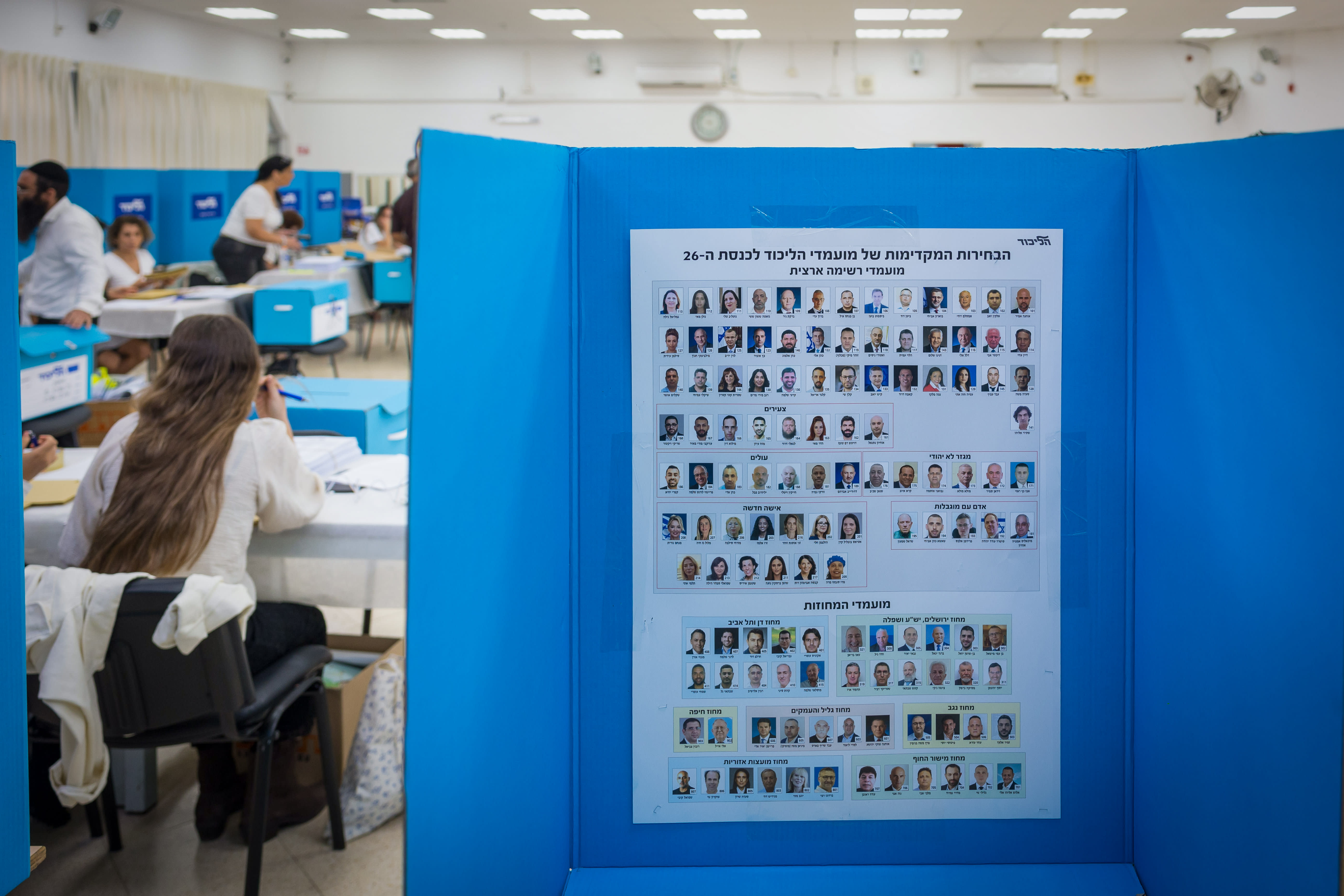
Barkat hired private investigators to attend primary election locations to monitor suspected voter fraud, sources familiar with the matter told Walla on Monday.
Innovation, Science, and Technology Minister Gila Gamliel placed 25th on the list. Gamliel is the third-highest-ranking woman on the list, after Transportation Minister Miri Regev and MK Tally Gotliv.

Gotliv, a firebrand reportedly targeted by pro-Netanyahu factions hoping to push her down the list, placed 20th, making it likely she will be re-elected, but she is not in as safe a position as she may have hoped. Regev placed 8th and is almost guaranteed a spot in the next Knesset.
Three current ministers finish below 35th on Likud primaries list
Agriculture and Food Security Minister Avi Dichter, Environmental Protection Minister Idit Silman, and Women’s Advancement and Social Equality Minister May Golan all finished outside the top 35, once reserved spots are accounted for.
Pressure is growing among senior Likud officials on Netanyahu to use the “swap” provision approved before the primaries to move Dichter into a realistic position on the party slate. This message is now being conveyed to Netanyahu primarily because of Dichter’s status as a former Shin Bet (Israel Security Agency) chief and concerns that Likud could enter the election without a senior security figure in a realistic position.
Dichter was pushed outside the realistic range in the primaries, and the result has raised concern among senior Likud officials. Following the retirement of Yoav Gallant, Dichter is considered the most prominent security figure among the party’s senior members, and Likud officials believe his presence on the slate has electoral importance in an election campaign in which security issues are expected to play a central role.
Additionally, MK David Bitan has been placed 22nd on the list. Bitan, one of Netanyahu’s main opponents from within Likud during the 25th Knesset, is also borderline for re-election, but still in a strong enough position to remain an MK, despite efforts to remove him politically.
Foreign Affairs and Defense Committee Chairman MK Boaz Bismuth placed 23rd, placing him in a borderline position for the election based on polling.
MK Ze’ev Elkin placed 32nd, and Avichay Boaron placed 35th, making their likelihood of entering the Knesset tenuous.
Nine other MKs placed below 35th on the list – Hanoch Milwidsky, Nissim Vaturi, Shalom Danino, Eli Dalal, Keti Shitrit, Ariel Kallner, Eti Atiah, Osher Shekalim, and Sasson Guetta.
Likud satisfied with primary results, party says
Meanwhile, Likud said Netanyahu was “very satisfied” with the results and that the party will take a “big victory” in the elections.
“This is the only way to prevent a leftist government of [Gadi] Eisenkot, Yair Golan, [Avigdor] Liberman, and the Arab parties,” Likud added.
The primaries turnout reached 53.5%, with 75,177 members voting at 501 polling stations across 107 locations.
Some senior party officials reportedly expected a higher turnout due to the significance of the limited number of realistic places in the election.
Anna Barsky and Liat Ron contributed to this report.