
The UN General Assembly and Security Council elected five judges on Wednesday to serve nine-year terms at the International Court of Justice (ICJ), beginning on February 6, 2027, and ending in February 2036.
The judges elected were Mahmoud Daifallah Hmoud (Jordan), Dapo Akande (UK), François Alabrune (France), Phoebe Okowa (Kenya), and Rena Lee (Singapore).
Two of the judges, Hmoud and Okowa, are already serving on the court after being elected in 2025 to fill vacant seats. Both have now been elected to full terms. The other three will join the court for the first time.
The elections were held through separate votes in the General Assembly and Security Council, with each candidate required to secure a majority in both bodies.
For Israel, however, the elections represent more than a routine change in the court's composition. Several of the newly elected judges have previously been involved in legal proceedings concerning the Israeli-Palestinian conflict. The Jordanian judge, in particular, made serious accusations against Israel following the October 7 Hamas attacks.

"The résumés of the newly elected judges to the court in The Hague are troubling and raise questions," Israeli Ambassador to the UN Danny Danon said.
"Will a judge who incorrectly determined, one month after the October 7 massacre, that Israel was committing genocide be able to impartially handle the case against it? Will a judge who advised in legal proceedings against us act professionally and without bias in the pursuit of justice?" he added.
According to Danon, "Today's election in the General Assembly is another example of the UN's structural bias against the State of Israel."
Jordanian judge previously accused Israel of genocide
The figure drawing the most criticism from Israel is Jordan's Hmoud, who has served on the ICJ since May 2025.
Before joining the court, Hmoud served as Jordan's ambassador to the UN, legal adviser to the Jordanian Foreign Ministry, and a member of the UN International Law Commission, which he chaired in 2021.
Throughout his diplomatic and legal career, Hmoud was involved in presenting Jordan's positions before international legal institutions on matters concerning Israel. These included the 2004 proceedings on Israel's security barrier and the 2024 proceedings concerning the legal status of Israel's presence in the West Bank and east Jerusalem.
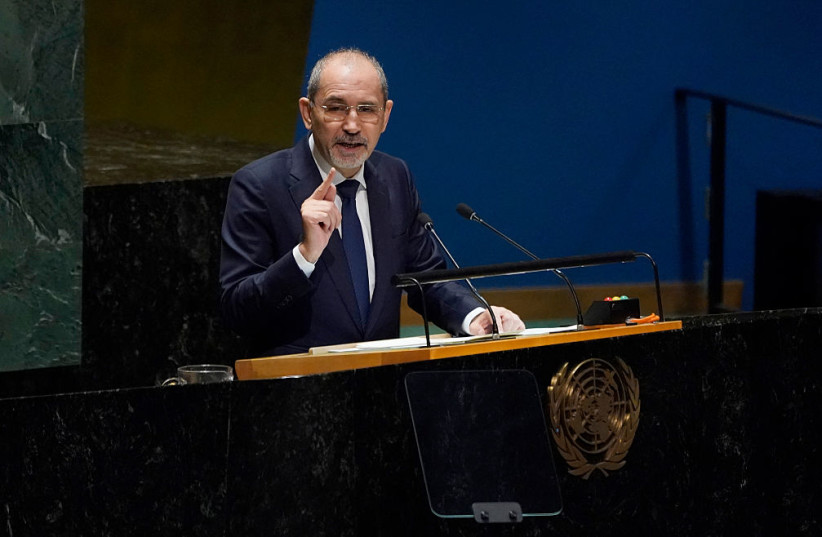
In October 2023, just weeks after the Hamas attacks, Hmoud addressed the UN Security Council and accused Israel of committing war crimes and violating international law.
During an October 30, 2023, meeting, he argued that the Security Council's silence was allowing Israel to act without accountability and accused it of harming civilians in the Gaza Strip.
Hmoud continued to level serious accusations against Israel as the war progressed, describing its actions as "ethnic cleansing" and "genocide."
These statements are now at the center of Danon's criticism, raising questions about whether a judge who previously accused Israel of serious violations of international law can impartially adjudicate a case involving allegations about Israel's conduct.
Another judge whose appointment has raised questions in Israel is Okowa of Kenya, a professor of international law at Queen Mary University of London.
Okowa, who has served on the ICJ since November 2025, previously served on the UN International Law Commission and has represented countries in international legal proceedings.
In February 2024, Okowa was part of the legal team representing Namibia in advisory opinion proceedings before the ICJ concerning the legal consequences of Israel's policies in the Palestinian territories, including east Jerusalem.
In those proceedings, during which dozens of countries presented their positions, the court ruled in July 2024 that Israel's continued presence in the Palestinian territories was unlawful.
The proceedings in which Okowa participated concerned an advisory opinion, not South Africa's genocide case against Israel. The distinction is legally significant, although both cases examined Israel's conduct under international law.
Danon specifically cited Okowa's previous involvement, questioning whether a legal expert who represented a country in proceedings concerning Israel could examine its case impartially.
Another newly elected judge with experience in legal proceedings involving Israel is Akande, a professor of international law at the University of Oxford and a member of the UN International Law Commission.
Akande has extensive experience representing states before international courts and providing legal advice to governments.
Among other roles, he served as legal counsel to Japan in the proceedings that led to the ICJ's 2024 advisory opinion on Israel's policies in the West Bank and east Jerusalem.
New judges bring extensive international legal experience
The two remaining judges have broad backgrounds in international law and diplomacy.
Alabrune, currently Paris's ambassador to the Netherlands, previously served as legal adviser to the French Foreign Ministry and represented France in international proceedings.
His work has included cases involving the Genocide Convention, including proceedings concerning Russia and Ukraine, as well as Myanmar.
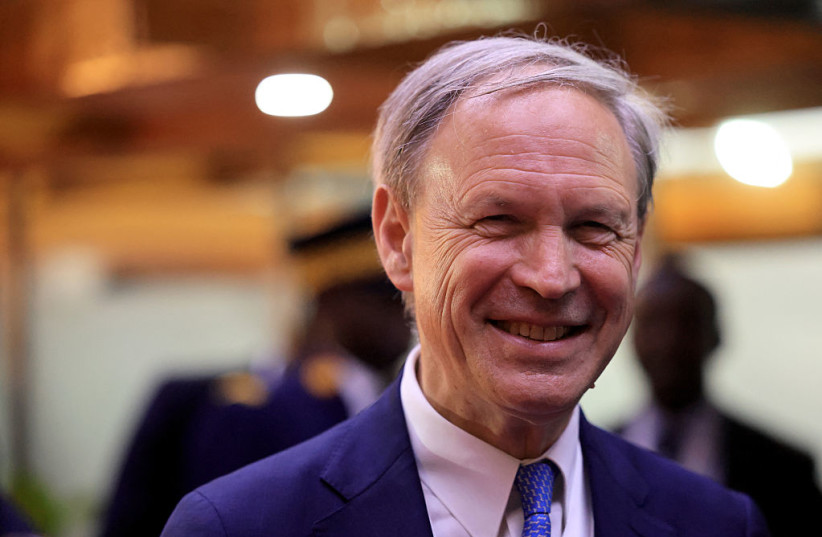
Lee, Singapore's ambassador for international law, has extensive experience in maritime law, international arbitration, and multilateral negotiations.
Between 2018 and 2023, she chaired the international conference that led to the adoption of the UN agreement on protecting biodiversity on the high seas.
She is also the first Singaporean national to be elected to the ICJ.
The ICJ is the UN's principal judicial body. It consists of 15 judges elected to nine-year terms and has jurisdiction over disputes between states, as well as the authority to issue legal advisory opinions to UN bodies.
South Africa genocide case could continue for years
In December 2023, South Africa filed a case against Israel, alleging that its military operations in the Gaza Strip violated the Genocide Convention.
Israel rejects the allegations, maintaining that it acted in self-defense following the Hamas attacks.
Throughout 2024, the ICJ issued several provisional measures in the case but has not yet ruled on whether Israel committed genocide.
The proceedings are expected to continue for several more years.
Under a decision issued in May 2026, South Africa has until November 2027 to submit its reply to Israel's arguments, while Israel may file a further response by May 2029.
The timetable means that the judges elected this week could be part of the panel hearing the next stages of the case, potentially including the final ruling if it is delivered during their terms.
However, ICJ judges are required to act independently rather than as representatives of their countries.
Article 17 of the court's statute also places restrictions on judges participating in cases in which they were previously involved as lawyers, legal advisers, or in other capacities specified in the statute.
Whether such restrictions apply to an individual judge depends on the circumstances of the particular proceedings.
This distinction is especially relevant to Okowa and Akande. Both participated in the advisory opinion proceedings concerning the Palestinian territories, but those proceedings are separate from South Africa's genocide case.
Their election therefore does not, in itself, establish that they are legally barred from participating in the case against Israel or provide grounds to determine in advance how they would rule.
In a statement following the elections, Danon criticized the court's new composition and questioned its ability to hear Israel's case independently.
"The new judges in The Hague: One absurdly accused Israel of war crimes a month after the October 7 massacre, while another advised in legal proceedings against us," the ambassador wrote.
"Five judges were elected at the UN to the International Court of 'Justice,' which is expected to continue hearing the false case against Israel."
Danon added that "The election of judges who have already taken positions against Israel casts a heavy shadow over the court's ability to hear our case impartially."
For Israel, the composition of the court is more than a technical matter.
The proceedings initiated by South Africa concern one of the most serious allegations that can be brought against a state under international law, and the eventual ruling could affect Israel's diplomatic and legal standing for years.
The election of five judges to terms extending through 2036 ensures that the new members will help shape the court's decisions over the coming decade.
The central question remains whether the professional experience and previous positions of some of the judges concerning Israel will influence their consideration of the parties' arguments, or whether the distinction between their former roles and their obligation to judge independently will allow the court to continue hearing the case impartially.