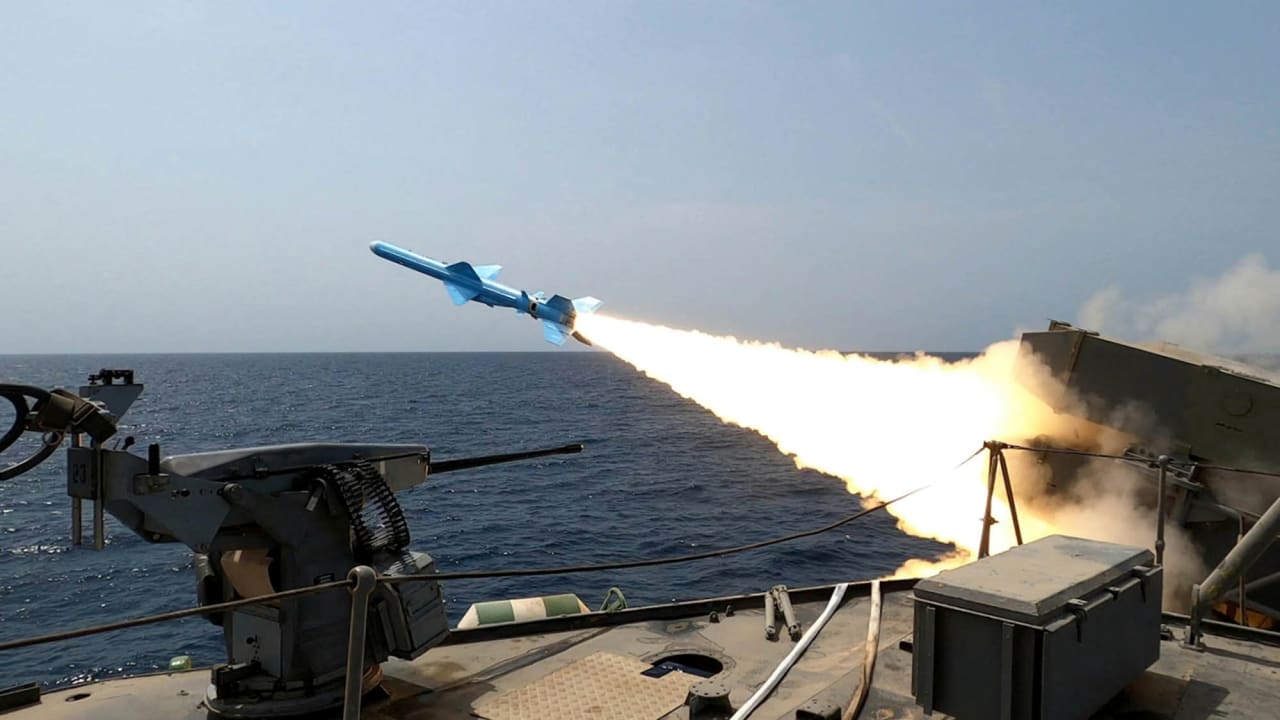
Iran is rebuilding its ballistic missile manufacturing capabilities with aid from China, despite the guidance of United Nations sanctions, CNN reported Wednesday.
In late September, the United Nations reimposed “snapback” sanctions on Iran, aiming to halt and prevent any Iranian operations related to creating weapons with nuclear capabilities.
CNN, citing European intelligence sources, reported that in late October, Iran received shipments containing over 2,000 tons of sodium perchlorate, a so-called “dual-use material” that can be used for innocent purposes or as a key ingredient in the production of ammonium perchlorate.
Ammonium perchlorate is an oxidizer used in a solid fuel propellant to build Iranian ballistic missiles.
While the sanctions list a number of materials banned from being sent to Iran, sodium perchlorate is not listed. CNN reported that experts on the topic said that the failure to ban sodium perchlorate may create plausible deniability for Chinese suppliers who sell the chemical.

Cargo ships carrying the materials reportedly travelled with tracking systems turned off in what Western intelligence sources claim is an attempt to obscure their movement as they travelled back and forth between Chinese and Iranian ports.
A spokesperson for China’s Ministry of Foreign Affairs told CNN that the ministry was “not familiar with the specific situation,” asserting that China “consistently implements export controls on dual-use items in accordance with its international obligations and domestic laws and regulations.”
Iran replenishing weapons stores
It is suspected that Iran is attempting to replenish what was destroyed and expended during the 12-Day War in July.
During the war, Iran launched hundreds of ballistic missiles towards Israel, depleting much of what weapons stores they had left following previous Israeli strikes targeting storage facilities and missile launch sites.
In retaliation, Israel destroyed the majority of Iranian nuclear facilities and weapon stores with the help of the American military.
Jeffrey Lewis, director of the East Asia Nonproliferation Project at the Middlebury Institute of International Studies, told CNN that the 2,000 tons of sodium perchlorate are enough to create 500 ballistic missiles.
Lewis postulated that “Iran needs much more sodium perchlorate now to replace the missiles expended in the war and to increase production,” continuing to state that he expects Iran will continue to receive large shipments of materials as it tries to rearm.
Rebuilding manufacturing facilities
Iran has already begun rebuilding its missile manufacturing facilities.
The report included satellite imagery from Planet Labs PBC that showed what appeared to be two Iranian solid propellant plants from above. Multiple buildings that were destroyed by Israel were under construction, including buildings that previously housed mixers used to turn sodium perchlorate into solid rocket fuel.
Israel targeted the mixers during the 12-Day War because they are one of the most important pieces of machinery used in producing fuel powerful enough to launch missiles that potentially contain nuclear capabilities.
Iran has previously obtained the heavy-duty fuel mixers from China.
China attempts to block UN sanctions
China, in collaboration with Russia, attempted to block the reinstatement of UN sanctions against Iran in September.
The Chinese Ministry of Foreign Affairs spokesperson reaffirmed the Iranian-Chinese alliance to CNN, stating that “China is committed to peacefully resolving the Iranian nuclear issue through political and diplomatic means and opposes sanctions and pressure.”
Representatives of Iran, Russia, and China penned a joint letter accusing the sanctions of being “legally and procedurally flawed,” according to Reuters.
Reuters and the Associated Press contributed to this report.