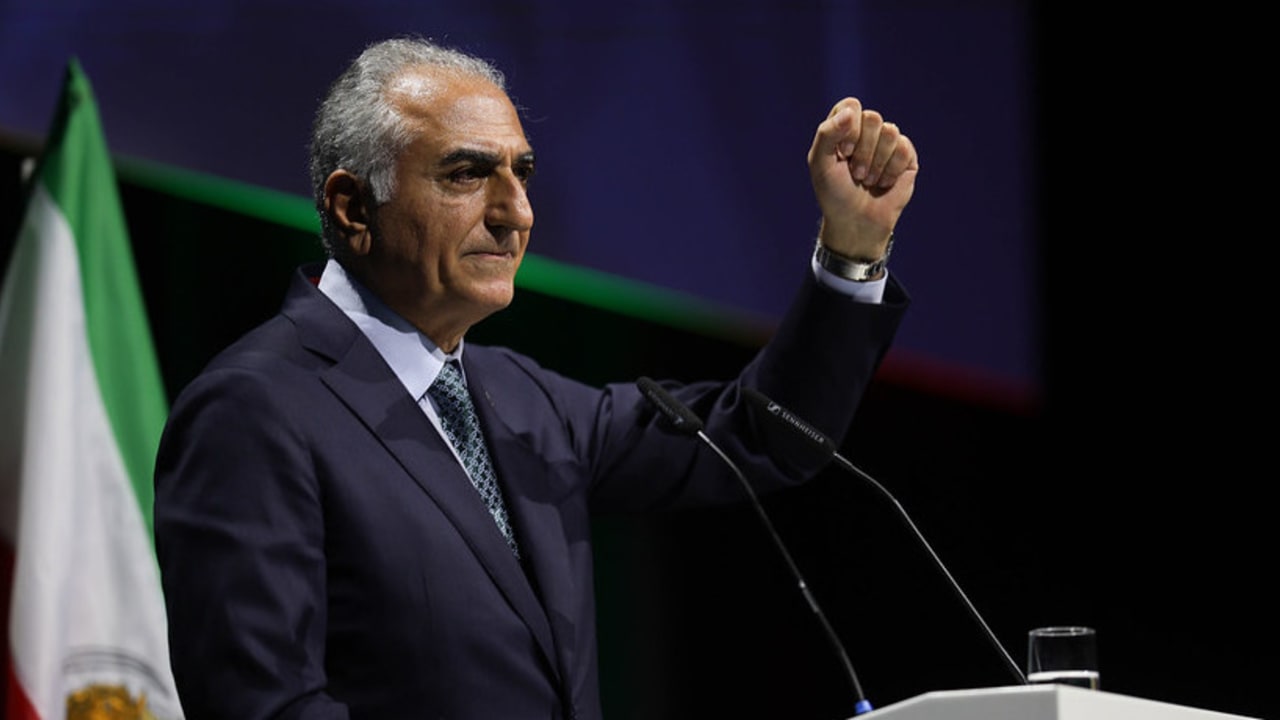
Iranian Crown Prince Reza Pahlavi declared that “a united opposition” to the Islamic dictatorship of Iran was finally coming together as he convened the largest and most diverse gathering of Iranian opposition forces in Munich on Saturday.
The Convention of National Cooperation to Save Iran brought together over 500 attendees representing what Pahlavi called “the broadest and most diverse coalition of Iranian opposition forces ever assembled.”
The Munich convention represented an unprecedented moment of unity among Iranian dissidents not seen in the 46-year rule of the ayatollahs’ regime.
Attendees spanned the ideological spectrum, from Left to Right, and included monarchists and republicans, as well as individuals from different religious, linguistic, ethnic, and tribal backgrounds. Political organizations, prominent dissidents, entrepreneurs, academics, artists, and athletes all participated in what organizers described as a historic convergence against the Islamic Republic.
Attendees and speakers included Tayeb Azmoudeh, Iranian wrestling champion; Mahab Mehrabi, sister of political prisoner Mahmoud Mehrabi; Anshan Khosravi, a leader of the Bakhtiari tribe; economic journalist Moloud Hajizadeh, and political activist Vahid Bahmani.

A particularly poignant moment resulted when political prisoners from Greater Tehran Prison sent an audio message announcing their support for the convention and Pahlavi’s leadership of a transition to a democratic and secular Iran.
Victims of the regime’s brutality and family members of those murdered by the Islamic Revolutionary Guard Corps (IRGC) also shared their stories at the gathering.
In his address, Pahlavi painted a striking picture of Iran’s current state under the Islamic Republic.
“This regime has driven Iran’s water, land, air, skies, lives, and wealth to the edge of destruction,” the prince stated, highlighting Iran’s recent environmental issues, including the lack of water.
“Iran’s rivers are dry, its soil eroding, its ground sinking, its air polluted, its skies in the hands of foreign forces, its economy in free fall, its people’s homes without water or electricity; and their lives held hostage to the sectarian delusions of an anti-Iranian regime and its foolish leader.”
The crown prince argued that Iran’s very existence was in greater danger than ever before due to the continuation of the Islamic Republic.
Pahlavi placed particular blame on Supreme Leader Ayatollah Ali Khamenei, stating, “The person responsible for this situation is none other than Ali Khamenei. It is he who, step-by-step, brought our homeland to this point.” He characterized the regime as having “abandoned governance entirely, except for its machinery of repression.”
Five-pillar strategy for change
Building on agreements reached at the first Munich summit five months earlier, Pahlavi outlined the progress of a five-pillar strategy for regime change:
Maximum Pressure on the Islamic Republic: The crown prince noted that the regime was now “at its most isolated and vulnerable,” facing unprecedented international pressure while unable to provide for the basic needs of the people.
Maximum support for the Iranian people: Pahlavi reported increasing readiness from governments, political parties, and public figures to support the Iranian people’s struggle, with concrete solutions being actively pursued.
Maximum defections from the regime: Significant progress has been made in encouraging defections, with activities targeting both general personnel and high-ranking officials. Pahlavi claimed to have developed deep insights into the regime’s internal structures and established communication with elements inside the system.
Maximum mobilization and organization: The Munich gathering itself exemplified this pillar, with the number of collaborating groups nearly tripling in just five months under the Munich convergence framework.
Developing a Plan for Iran’s Future: The Iran Prosperity Project (IPP) has made “remarkable strides” in developing a vision for rebuilding the country post-regime.
Pahlavi also presented a detailed Emergency Transitional Government Plan, proposing two core institutions for the current phase: a temporary executive team and a National Uprising Council, which would serve as a strategic advisory body.
He emphasized that the temporary executive team would dissolve once the transition government was formed, while the National Uprising Council would continue as a provisional legislative body until the first elected parliament convened.
Crucially, Pahlavi reiterated that he does not seek political office, stating: “As I have repeatedly stated, I do not seek political office or position. I want to create a space and structure so that those who wish to serve the nation and restore Iran’s lost greatness can present themselves and their plans in a democratic process to the people’s vote.”
The Munich convention took place against the backdrop of recent controversies surrounding Pahlavi’s participation in international forums.
Earlier this year, he was initially invited to the Munich Security Conference but subsequently disinvited twice, with Pahlavi accusing the German government of influencing the decision.
Pahlavi argued on Saturday that recent military confrontations have exposed the regime’s weakness, particularly noting that the IRGC “handed over Iran’s skies to a much smaller and less populous country” in an obvious reference to the recent 12-day war between Israel and Iran.
He emphasized that “factionalism and division within the regime’s power structure have reached a peak” with senior officials “conspiring against one another and jockeying through intermediaries to present themselves as Khamenei’s successor to foreign and regional powers.”
Despite facing increased threats from the regime, Pahlavi concluded his address with a message of determination and hope.
“Ali Khamenei must know: His regime is crumbling. Many of those around him despise him. A large number of IRGC members are looking for a way to jump ship. And the overwhelming majority of the people detest him and his regime.”
He also announced plans for a campaign website to serve as “a central hub to attract talent, register ideas, report events, present programs, organize activists, and collect funding,” signaling the opposition’s commitment to sustained, organized resistance.
The Munich convention signifies the growing momentum of Iranian opposition politics. Despite many expecting the regime to fall during the June war with Israel, it has taken time for opposition groups to come together and attempt to form a united front.
Whether this unity can translate into effective action inside Iran remains to be seen, but Pahlavi’s message was clear: “Our victory is closer than ever. Believe in your power.”
The crown prince concluded, “We are a great nation. We will reclaim Iran. Long live Iran!”