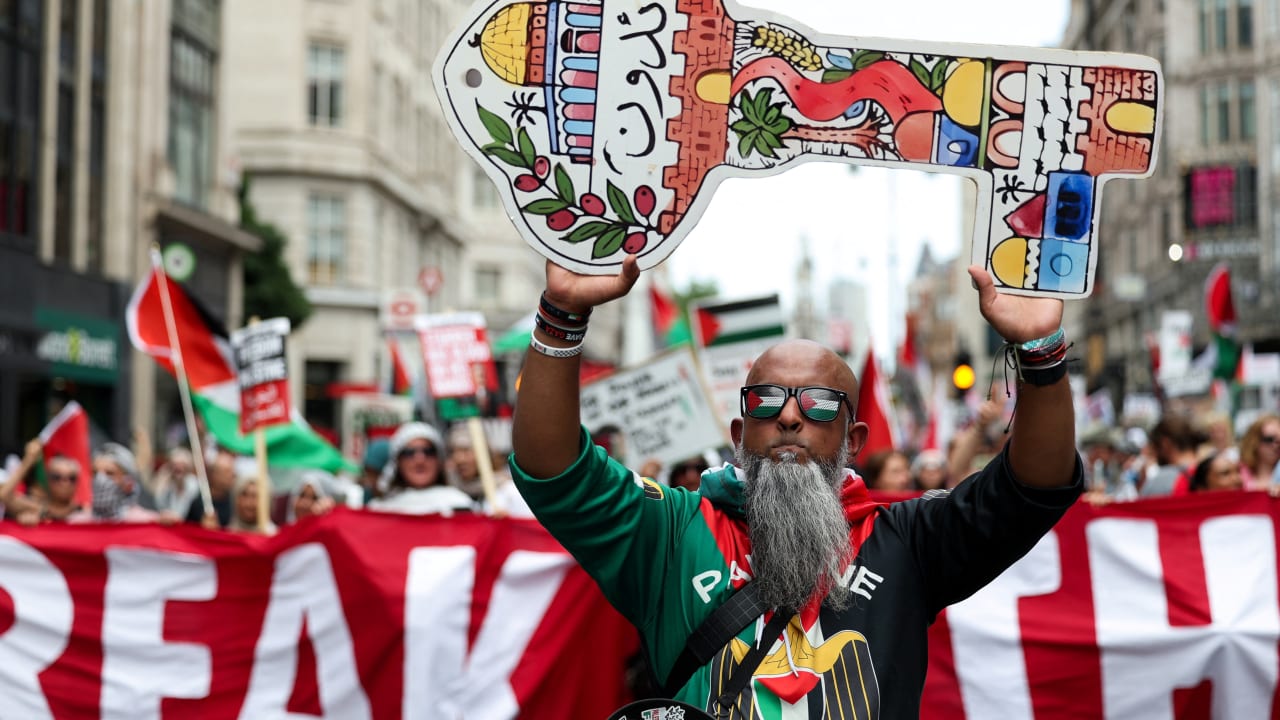
Pro-Palestine protests will be banned from parts of The University of Cambridge's campus for a year after a High Court judge granted an injunction on Wednesday.
A previous injunction was granted in March to prevent protesters from interrupting graduation ceremonies, however its expiry date was set for July 26.
On Wednesday, Kester Lees KC for the university requested Mr Justice Butcher of London's High Court for an extended injunction, which was granted.
"At no stage have the defendants or Cambridge for Palestine disavowed an intention to carry out further direct action on the land" wrote Lees in submissions to the court.
"Indeed, the statements made by Cambridge for Palestine on their social media accounts convey the message that they will continue to carry out direct action until their demands are met."

Limiting protest space
The injunction from March banned protesters from entering or occupying Greenwich House, the Senate House, Senate House Yard, and the Old Schools. The injunction also prevented the protesters from blocking others who wanted to enter these cites.
The Wednesday injunction has expanded to encompass Chestnut Tree Lawn.
Two groups intervened with the case: The European Legal Support Centre (ELSC) and human rights group Liberty.
In written submissions, Grant Kynaston for ELSC said the university had not "adequately evidenced any real or immediate risk" and the injunction would reflect an “increasingly severe approach to enforcing against student protesters [raising] serious human rights concerns."
“The injunction, although facially neutral, is clearly aimed at preventing campaigning and protesting regarding Palestine in particular.
“Nonetheless, this measure is sought at precisely the time when protests against those considered complicit in Israel’s operations in the occupied Palestinian territory are most urgent.”
He added that "these students and staff do not have the time to wait another academic year to speak out on this urgent issue."
In a statement issued on Wednesday, Cambridge Student Union's Sabbatical Officers released a statement saying the injunction robs students of their voice.
"We condemn the University’s decision to take legal action against student protest."
"In an attempt to silence the voices of students, engaged with their ethical obligations, the University continues to pursue excessive legal action that will not only prevent lawful protesting of those gathering for pro-Palestinian efforts, but for any and all political issues, stating within the injunction request that individuals can be legally pursued for acting on listed properties “for the purpose of protest”."
They cited an example of when the university threatened to arrest a graduate who held a Palestinian flag in the Senate House.
"The University cannot affirm the freedom of speech of all individuals in the institution, while actively taking steps to silence certain cohorts of students and staff alike."
"Students have a right to protest. This institution has taught them to have conviction to hold any and all institutions to account in their wrongdoings. The University now has a responsibility to act accordingly."
Shortly after the injunction, the president of the Sabbatical Officers - Augustin Dennis - changed their profile picture on social media to one with a keffiyeh.