
An academic study has challenged how Holocaust historians write about people the Nazis classified as “half-Jews” and “quarter-Jews,” arguing that current language unintentionally keeps Nazi racial thinking in place.
In an article in the Journal of Genocide Research titled “The Nazis and the ‘Racial Jew’: A Blindspot in Holocaust Studies,” historian Harry Legg of the University of Edinburgh said that scholars, museums, and educators still treat the Nazi racial category “Jew” as if it were a normal, self-chosen identity, even when writing about people of partial Jewish descent who did not see themselves as Jewish.
Under Nazi law, these people were grouped under the term Mischlinge and bureaucratically labeled as “half-Jews” or “quarter-Jews,” depending on how many grandparents were recorded as Jewish in community registers. Their sense of identity, religious practice, or assimilation did not matter.
Legg’s key claim is not a new archival discovery about what happened to them, but a critique of how historians still talk about them.
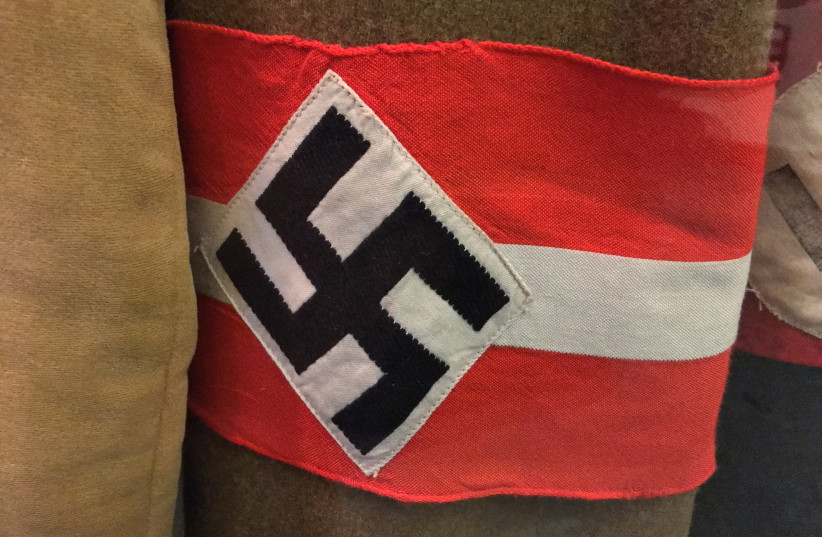
Historians critique use of Nazi terms to identify people with Jewish roots
He showed that in the specialized literature on Mischlinge, scholars usually treat Nazi words such as “Aryan,” “Mischling,” “half-Jew,” and “quarter-Jew” with visible distance, using italics or quotation marks to signal that this is tainted language.
At the same time, the same books and articles often refer to those same people simply as “Jews,” without any similar warning that the word is being used in a Nazi racial sense rather than in its usual religious or ethnic meaning.
According to Legg, such treatment creates a double standard. In the subfield that deals with Mischlinge, he noted, foreign words are typically italicized and often put in quotes to show unease with Nazi terminology, while the English word “Jew” is left unmarked and apparently neutral, even when it is directly imported from Nazi law.
“The disproportionate presence of non-Jewish ‘Jews’ is semantically irrelevant for the authors,” Legg wrote, arguing that explicitly Nazi words undergo careful framing while the word “Jew” quietly carries the burden of Nazi racial categories into contemporary scholarship.
He said that among those counted as “Jews” by the Nazis were observant Jews, secular Jews, converts to Christianity, people from “mixed marriages,” and many with only one or two Jewish grandparents. Some felt strongly Jewish; others did not identify as Jewish at all and were horrified to see themselves redefined racially.
Legg argued that if historians today simply call all of them “Jews,” they erase the experience of those who did not see themselves that way. If they instead describe the group as non-Jewish, they erase those who did. The only accurate label for the entire collectivity, he said, is the historically specific, Nazi-defined category “Jew,” which should always appear in quotation marks in this context.
He also took on a common objection: that non-Jewish “Jews” formed only a small minority and could be treated as an exception. Legg said this approach overlooks a crucial aspect of Nazi ideology. The inclusion of people of partial Jewish descent under persecutory measures was deliberate and ideologically central to Nazi antisemitism, not a clerical mistake. Ignoring them for the sake of simplicity is, in his view, “to omit a key component of Nazi ideology.”
The way historians write about “half-Jews” and “quarter-Jews” has real consequences for how the Holocaust is remembered, according to the article. If the term “Jew” is not marked as a Nazi racial label in these cases, readers may assume that all those targeted shared the same self-understanding and communal ties as Jews who openly lived and identified as such before 1933.
Legg connected this debate to wider questions of identity and law after 1945, noting that postwar societies, including Jewish communities, sometimes adopted heredity-based, almost racial language when talking about people of mixed descent. He pointed out that contemporary arguments about who counts as a Jew, including in Israel, often blur distinctions between Nazi definitions and religious or communal ones.
The proposal at the heart of the study is simple: historians should treat the Nazi word “Jew” the way they already treat the word “Aryan,” with consistent scare quotes and explanation whenever it reflects Nazi racial law rather than a person’s own identity.
Legg is a third-year PhD student in history at the University of Edinburgh, specializing in German and Austrian “full Jews” who did not identify as Jewish in Nazi Germany. He has already published on this topic in several leading journals and will hold a Saul Kagan Fellowship in Advanced Shoah Studies in the 2025-26 academic year.
If his recommendations are adopted, future books, catalogs, and museum panels may look slightly different. But for Legg, that small typographical change around words like “Jew,” “half-Jew,” and “quarter-Jew” would make one big point clearer: that these labels were imposed by the perpetrators, not chosen by the victims.