
Prof. Shari Rabin has shown, for the first time, the breadth of the Jewish experience in the American South since the 17th century, when philosopher John Locke fashioned a treatise accepted by British authorities in which the Jews were identified as potential residents in the Carolinas.
In her book The Jewish South: An American History, Rabin describes the early entry of Jews in the South even before colonial America came into being, examining the reasons why Jews and other groups moved to the area that became North Carolina. When the Jews there found life difficult, a small group relocated to South Carolina.
Throughout her work, Rabin’s special talent has been to find extensive sources relating to Jews. Most pioneering is her description of the Jews’ participation in the Confederate government and army, pinpointing by name the Jewish “rebels” serving in the army.
Pioneering descriptions of southern Jews
Already in the 18th century, sources indicate that Jews owned slaves and did so even after the Confederacy was defeated and its states rejoined the United States. Rabin cites Southern rabbis who preached in favor of slavery. She also notes that there was antisemitism in the Confederate army, and that Jews in the South who encountered antisemitism moved to the North, becoming leaders in American capitalism.
Few Eastern European Jews lived in the South before 1881. After that, they did experience antisemitism, as they were peddlers until World War II. The most tragic event fueled by antisemitism was the 1915 lynching of Leo Frank, a member of The Temple, a Reform Jewish congregation in Georgia.
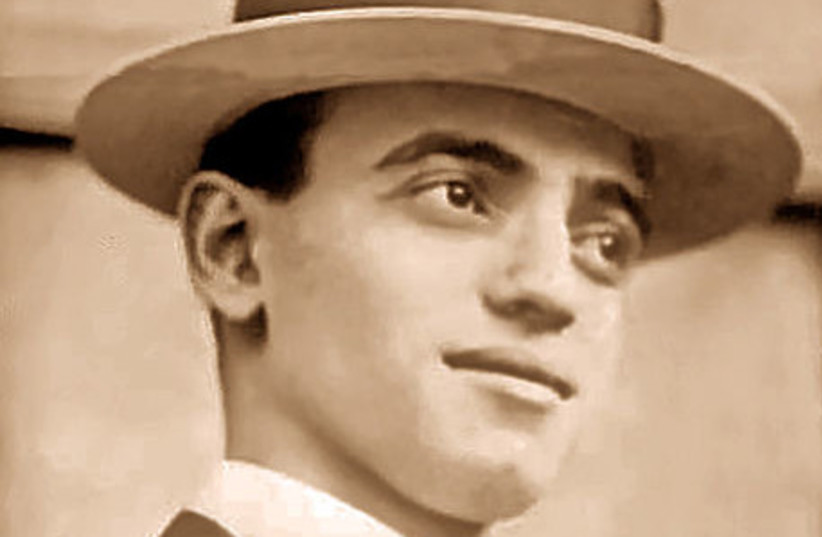
As I was a resident of Atlanta, Georgia, in the 1940s and 1950s, Frank’s lynching was very personal for me. As a teenager, I was forbidden to drive or go with friends to the city of Marietta, where the tragedy occurred.
This restriction was based on my father’s experience as a young boy. On the August morning in 1915, as Frank’s body was still hanging in Marietta and possibly mutilated, my father (then 11 years old) and his younger brother were chased, pelted with stones, and called Christ-killers on their way to school.
RABIN NOTES that she could write her book because pioneering Southern Jewish historian Eli Evans had already described how the Jews made the American South their home, in his book The Provincials (still in print 40 years after it was first published).
These Southern Jews come to life in The Jewish South. An example from the 1850s exemplifies Jewish stereotypes. Former peddler David Steinheimer recalled an exchange with a farmer and his family in rural Georgia in the 1850s: “When I told them I was a Jew, they were astonished; they thought Jews had horns.” Such curiosity could evolve into demonization.
The author covers other aspects of the Southern Jewish experience, such as civil rights activism.
Rabin demonstrates how Jews were invisible. “In 1844, Charleston [South Carolina] Jews complained about a Christmas thanksgiving prayer as they had in 1812, but this time the governor refused to apologize.” He did not think there could be those “who denied the divinity of Jesus Christ.”
The author provides important evidence about Samuel Fleischman, a resident of Marianna, Florida, who was murdered. He was labeled as the “Israelite… an outsider who symbolized the ascendancy of Black citizenship and Northern rule.”
He was described as always seeking to stir up “strife and animosity between the two races.” According to hearsay, Fleischman was bold enough to say, “If the colored people are to be murdered… for every Black man that is murdered there should be three white people killed.”
Rabin notes that “Fleischman had suffered harassment inside his store even before his murder.”
The witness to Fleischman’s murder was a Black resident of the town where the crime took place. The white perpetrator of the heinous crime instructed the Black witness to say that Fleischman was murdered because “the Jew had insulted him.”
This is just one of many examples the author uses to show how despicably Jews were treated in the Reconstruction era after the Civil War.
A major topic that Rabin does not describe is Orthodox Judaism in the South. There is little evidence of Orthodox Jews or synagogues before 1881, except a noted one in Savannah, Georgia, founded before the Civil War.
Orthodoxy grew later in the South, especially in Atlanta and many cities throughout Florida – an example that is rarely touched upon.
Letters from Southern Orthodox Jews, in Yiddish, can be read in the Morgen Journal as early as the beginning of the 20th century. The Southern subscribers, mostly Orthodox, to the Hebrew weekly HaDoar have never been studied.
A fascinating topic of a strictly halachic nature is the documentation of runaway husbands leaving wives as agunot (Jewish women who are “chained” to their marriage). The South was a good place to hide.
Today, there are many Orthodox synagogues and day schools throughout the South, which provide traditional prayer services and Jewish education.
The Coca-Cola Company, whose main office is in Atlanta, wanted its widely sold beverage to be kosher, as well as kosher for Passover. Such documentation is based on a Jewish religious responsa (teshuva) to a question raised in 1935.
The most significant aspect of Rabin’s book is its close reading of sources, carefully crafted by the author. As I sang in my youth: “In Dixie Land, I will take my stand…”
Rabbi David Geffen is deeply committed to Southern Jewish history. With his cousin, he established The Geffen and Lewyn Fund for the Study of Southern Jewish History, at the Rose Archives at Emory University. For more information: geff706851@yahoo.com
- THE JEWISH SOUTH: AN AMERICAN HISTORY
- By Shari Rabin
- Princeton University Press, 2025
- 296 pages; $25