When Spain’s King Ferdinand of Aragon and Queen Isabella of Castile launched their campaign to rid the realm of perceived heretics in the late 15th century, the Spaniards did not stop at persecuting Jews.
Beyond the execution of the gruesome, local autos-da-fé, by the early 16th century, for one, Spanish conquerors over 7,000 nautical miles away were brutalizing another ethnic group – the Mapuche.
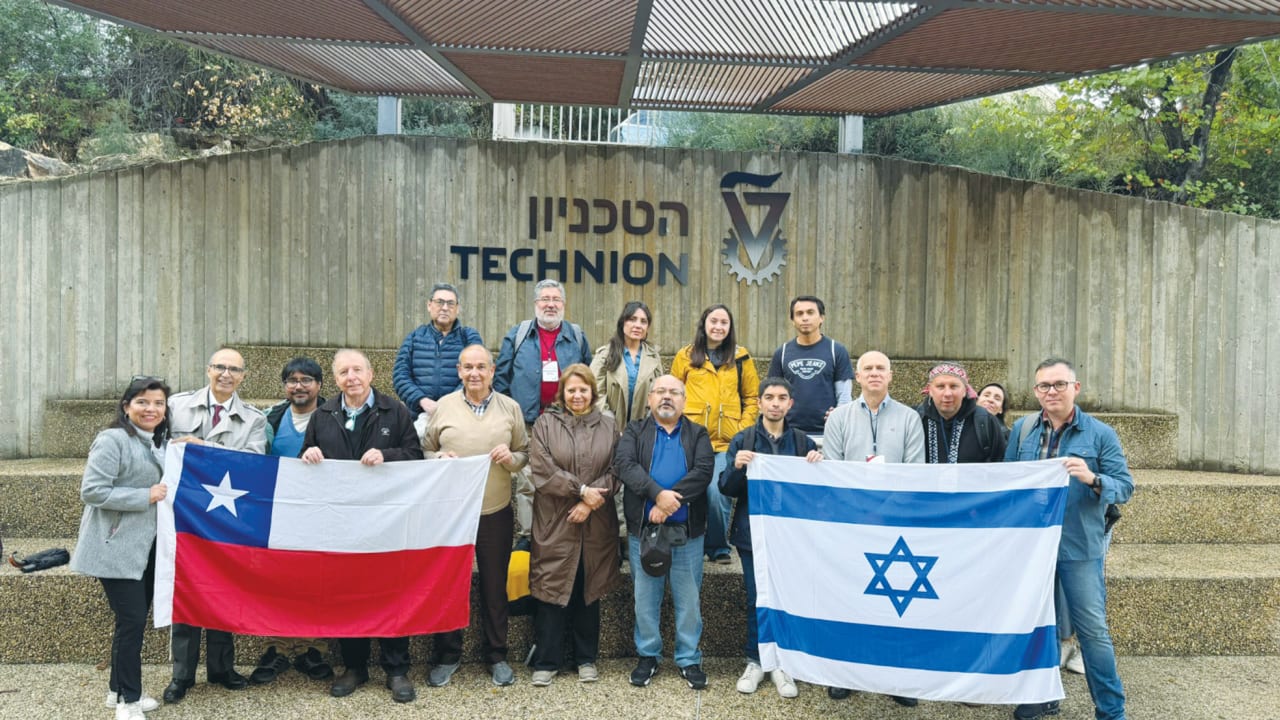
A delegation from Chile, including the current president of a Mapuche community called Kupal Pichinao, Ivan Enrique Pardes Pichinao, recently visited Israel for the first time. He sat down with The Jerusalem Post to discuss why.
“We are the ‘People of the Land.’ ‘Mapu’ means land, ‘che’ means person. We are an indigenous nation that developed in what is now known as Chile and Argentina,” Pichinao said.
Beyond being “intrinsically linked” to the land from whence they come, he said, his people’s worldview is based on respect for and reciprocal ties with nature.

“Our way of life is also deeply rooted in a connection to family, a bond with Mother Earth, and the songs and ceremonies that have been passed down to us from generation to generation,” Pichinao added.
The Mapuches’ history, much like the Jewish one, is riddled with instances of external forces invading, enslaving, and oppressing the local population.
“From the Inca Empire through the Spanish Crown to the modern state,” the Mapuche have had to engage in “constant resistance” to preserve their culture and identity, the leader said.
“Indeed, our community has been historically recognized for its strength and resistance to colonialism. We keep alive a rich culture, with traditions and an ancestral system of organization,” he continued.
They have been victorious overall. Case in point, try as they did, the Spaniards were never able to quash Pichinao’s people.
A strong nation of warriors
When asked if he could share some of the legends pertaining to the community’s heroic figures dating back to those medieval times, Pichinao stipulated that he regarded passing on these stories as a hallowed task.
“As president of the Kupal Pichinao community, I consider it a sacred duty to honor the memory of our weichafe (warriors) and lonko (leaders). They not only resisted the invading [Spanish] forces – they cemented the dignity we breathe today,” he said. “Their stories are not just history.
They are living songs that we pass on to new generations so that the spirit of our nation will never die.”
First and foremost, there was Lautaro, “the strategist of the wind.” Captured by the first governor of Colonial Chile, Pedro de Valdivia, Lautaro was enslaved as a stable boy. Instead of losing heart, he “keenly observed the weaknesses of the Spanish, learned their tactics, and, most importantly, mastered the use of a horse,” Pichinao detailed.
Armed with this knowledge, Lautaro escaped, returning to his people as a toqui (military chief).
“He introduced rotating companies – to avoid exhausting his forces – and ambush strategies that led to our victory in the 1553 Battle of Tucapel. Lautaro taught us that intelligence is as powerful as strength. He is the most iconic figure of our resistance. His legend stems from his ability to turn oppression into knowledge,” Pichinao said.
Then, there was Colo Colo, whose name means “the wisdom of consensus.” Reminiscent of Israel’s conundrum over its internal societal rifts, Colo Colo, at a time of great internal divides, sought a way to bridge the gaps between people.
“This wise lonko prevented a civil war between Mapuche factions by proposing the famous physical endurance log test. Today, his name transcends the battlefield, as Chile’s most popular soccer club is named after him. In sports, Colo Colo’s ‘Mapuche spirit’ is invoked to refer to the fighting spirit and unbreakable will to never give up. He represents the political maturity and judgment that sustains our people,” Pichinao said.
Last but not least, there was the female warrior Janequeo, whose name means “women’s leadership.” According to the Mapuche president, “Janequeo broke traditional norms by assuming military command in the Arauco War, demonstrating the strength of women in our culture. After her husband was murdered by the Spanish, she not only sought personal justice but also organized an army comprised of both men and women.
“Janequeo’s figure is essential in understanding that we are all equal when it comes to defending our land. Her courage is a benchmark of female leadership and strategy that endures to this day,” Pichinao noted.
This is not a story to pass on
The Mapuches’ ancestral language, Mapudungun, is another way by which the community honors, preserves, and conveys its rich cultural history.
“Feytiñma che, ñi dungun mülen is a fundamental proverb in our oral tradition,” the president said. “It means ‘The words of those who have gone before us are still present.’ This saying underscores the immensity of our ancestral legacy. It teaches us that the truth and essence of our ancestors never disappear; they remain alive in the community’s memory.”
That said, in other instances, sounds, rather than articulated words, are used to convey emotions and meaning.
“The Afafán is one of the most important and powerful vocal expressions in Mapuche culture. It is a collective ritualistic shout performed in solemn ceremonies, social gatherings, or moments of great importance. But this is not just any shout – it is a controlled burst of energy that seeks to connect participants with their surroundings and spiritual forces,” Pichinao elaborated.
“The Afafán has multiple functions, depending on the context. Sometimes, it is meant to provide encouragement and strength, and in others, it marks notions of celebration and joy. Further, this yowl, conveyed in unison, has a spiritual dimension, used as an affirmation of one’s identity. The cry is a guttural and rhythmic sound. In Mapuche literature and stories, it is usually represented as follows: ‘Ya-ya-ya-ya-ya!’”
A Mapuche in Israel
As for the reason Pichinao has made his first-ever visit to the Jewish state now, this relates to a deep concern of his regarding what he sees unfolding among members of his own community.
Often encountering images of the Mapuche draped in Palestinian flags with captions hailing Hamas’s assault, Pichinao said he feels that, beyond this forced conflation between two disparate cultures, his people’s cause and identity are, de facto, being hijacked once again by conceited, self-serving foreign powers.
This diminishes what they have fought for over the centuries – to remain the distinct nation that they are – Pichinao said.
“This visit to Israel is due to the work I have been doing with the Israeli Embassy in Chile, where we are collaborating to reduce antisemitism in Mapuche communities,” he noted.
“For many years now, this hatred has been taking root in my people’s hearts,” Pichinao continued. “Mapuche children, adults, and elders are seen at various gatherings carrying flags expressing hate for Israel and comparing totally different conflicts in the same way.
“Unfortunately, nowadays signs can be seen hanging on some restaurants in Mapuche tourist areas that read: ‘No Israelis allowed.’ It is a painful reality that motivates us to act. Together with the embassy, and quietly on our own, we have been working to find common ground between our two cultures,” the president said.
Although he is familiar with some aspects of Judaism, Pichinao’s recent trip to the Holy Land solidified his conviction that the Mapuche share with Jews what he could best describe as a spiritual bond: “Clearly, there is a supernatural connection between our peoples despite the distance between us.”
Pichinao listed numerous similarities he said he found. “We both believe in one God. We both have an ancestral and spiritual bond to the Earth.
“Further, lineage and family are central pillars in our social structure. Respecting our ancestors and preserving the continuity of our bloodline are of the utmost importance to us, as they are to you.”
And it does not stop there. Craftsmanship practices, notable among them artifacts pertaining to pottery, reminded him of creations made back home. Israeli cuisine and, interestingly, musical instruments also resonated with him.
Moreover, much like deeply entrenched AI biases against Jews, Pichinao noted that artificial intelligence displays similar bigotry when it comes to his people.
For instance, an Anti-Defamation League study released in March found that AI models exhibited “patterns of bias, misinformation, and selective engagement on issues related to Jewish people, Israel, and antisemitic tropes.”
“AI has significant biases about Mapuche culture as well. When asked to show an image of a Mapuche woman or man, for instance, the results often show people with features more like those of Native Americans or Canadians than ours. This ‘digital colonization’ renders our true appearance and aesthetic richness invisible,” Pichinao specified.
Perhaps the most common ground to be found between both ethnicities is the approach to land.
“At the heart of our existence – for both Jews and Mapuches – lies the concept of the Holy Land,” the president said. “With that, the protection of our sacred spaces is another core value. We defend the land not only as a resource, but as a spiritual home that faces constant threat.”
Common ground
The work to combat growing antisemitism within the Mapuche community began over two years ago with the former Israel ambassador to Chile, Gil Artzyeli, “with whom we share some of these cultural commonalities,” Pichinao said.
“But we have not publicized this much on social media, due to the high level of online violence faced by those of us who work on these types of initiatives.”
Fortunately, Ambassador Peleg Lewi, the current Israeli envoy to Chile, has decided to continue this wonderful work, he said.
“My trip to Israel has deeply reinforced my conviction about the work we are doing,” Pichinao said. “During my visit to the Israel Museum, as I observed the ancient Hebrews’ history, I could not help but wonder: Who would have imagined that, while this rich history was being built here, more than 14,000 kilometers away, our Mapuche culture was doing exactly the same thing?”
“My motivation today is to continue to discover and highlight our bond. That is why I want to invite the Jewish community worldwide to join and support my pilot project that seeks to eradicate antisemitism in Mapuche communities.”
The project to which Pichinao was referring is the Mapuche-Jewish Fraternity Bond, which he said was “born from the direct observation of the cultural richness and love that both nations share.” Its stated purpose is to foster a profound awareness grounded in respect and mutual understanding.
In order to achieve this goal, this initiative aims to “promote the creation of documentaries, reports, and genuine encounters that allow both peoples to get to know each other without prejudice and to eradicate antisemitism through affection,” Pichinao said.
To this end, he further stated, “I offer my Mapuche community and myself as a bridge for the Jewish world to find a real space for dialogue and peace.
“I am convinced that these two great cultures seek the same things: peace, understanding, tolerance, and love for family. In today’s world, which has become so individualistic and disconnected, this project is key to spreading a message of unity. We are two ancient peoples who, by joining hands, can teach the modern world a great deal about brotherhood,” the leader remarked.
“The most important message I want to convey to Jews and Israelis is that the Mapuche are a people of dialogue, not hate. We are actively working to dismantle the misinformation and antisemitism that is being imported into our communities. Building bridges, promoting mutual respect instead of allowing distant geopolitical conflicts to contaminate our local identity movement – that is what we want.”
For more information on the Mapuche-Jewish Fraternity Bond initiative, contact: kupalpichinao@gmail.com