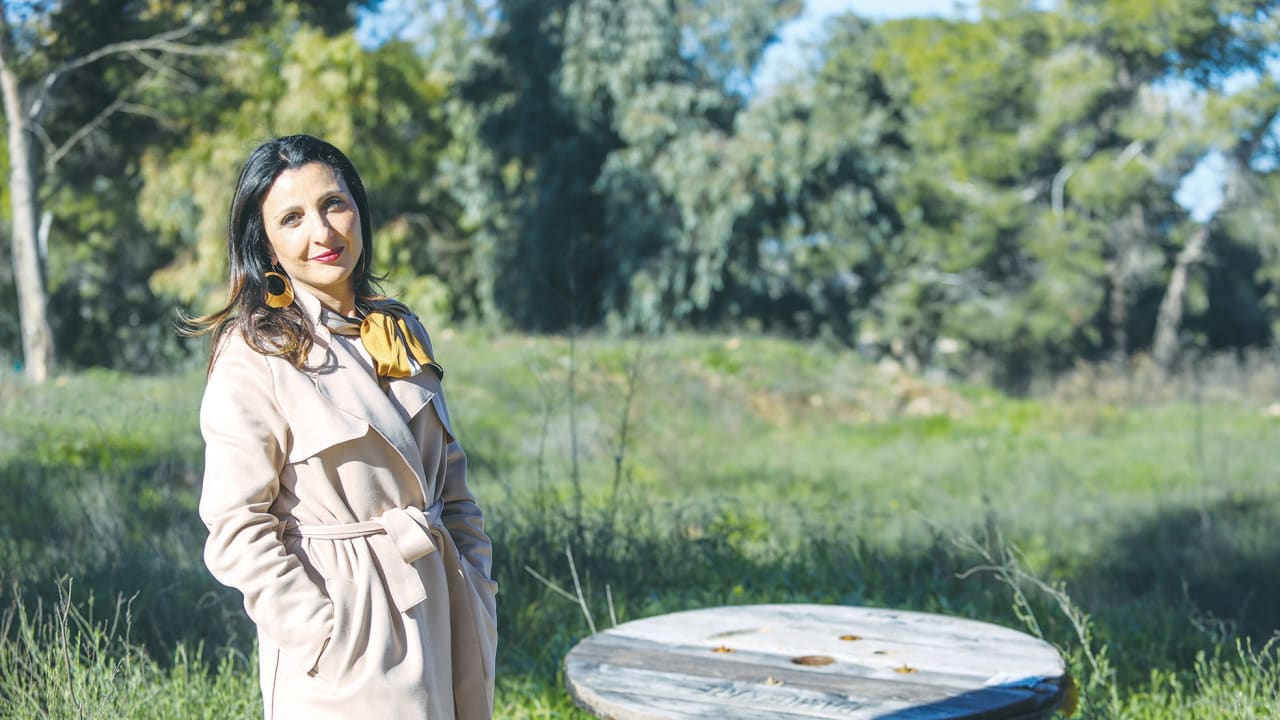
Fleur Hassan-Nahoum speaks with the urgency of someone who sees several crises at once: hostile campuses, regional realignment, war with Iran, the future of Gaza, the stubborn persistence of antisemitism, and the need for stronger women’s leadership. Her answer to all of it is impacted by the same instinct—build something practical and build it now.
For more stories from The Media Line go to themedialine.org
An Israeli politician and former deputy mayor of Jerusalem, Hassan-Nahoum is currently special envoy for trade innovation for the Ministry of Foreign Affairs. When asked why she is pouring her energy into a new platform called Campus Israel, she does not start with technology or tuition tables. She starts with a question: “Why aren’t more Jewish students [from abroad] studying in college in Israel in the many degrees in full English language that we have here?” she recalls wondering.
Her experience with the Abraham Accords sharpened that question. Traveling to the UAE, she saw how natural it was for young Emiratis to look outward for education, and a couple of her friends from the UAE even chose Israel as their destination. Meanwhile, Israel was offering English-language degrees, a buzzing culture of creativity and problem-solving, and campuses where “everybody feels like they want to save the world in one way or another.” Yet Jewish students under pressure abroad were rarely seeing Israel as a full college option.
In Israel, she notes, “you can essentially get a full degree here for less than the price of one year of tuition in America,” and the country’s small size can make internships at top companies more accessible. The problem, as she diagnosed it, was not the quality or affordability of Israeli universities; it was access. “There wasn’t one place where you could find out everything available,” she explains—no central site where degrees were aggregated, explained, and made “clickable” for foreign students. While serving as deputy mayor of Jerusalem, she wrote a position paper sketching a solution. Then municipal life swept her back into its demands, and the idea sat, waiting.
After October 7, the idea no longer felt optional. When asked what changed for her, Hassan-Nahoum returns immediately to the images and testimonies coming not from Gaza but from Western campuses. She saw “the bile, the poison, the indoctrination” spilling out of universities “not just in America, but around the world.” In that environment, Jewish students faced an impossible choice: “either give up their identity or hide.”
That was the moment, she says, to finally build Campus Israel. “Let’s give these kids an alternative.” It would not be for everyone. It would be for the “curious, adventurous kids,” and for those who had “had enough of having to pretend as something they’re not, hide or fight.” What had been an intellectual project now felt like a lifeline.
When she and her co-founder, Lisa Barkan, turned the position paper into a concrete plan, they imagined a digital platform plus a human support system—a “solution” that would make Israeli universities feel as accessible as any American or British campus. But it was still theory until she went back to the source: the students themselves.
In response to a question about how students reacted, Hassan-Nahoum describes a recent trip to the United States. She visited five college fairs at Jewish schools, and her team was “bombarded by questions, by interest, by kids wanting to make appointments.” She says simply, “My vision had been validated.”
Campus Israel, still in its early stages, already functions like a bespoke college counseling service—for Israel. Students can go to the website, book a half-hour session with a director of education, and begin mapping out programs. The digital platform, which she says is launching “any day,” will guide students through their choices online while backing that up with a “real concierge”—a person on the other end who helps with applications, advocates for them with universities, and stays involved once they land.'
'When they land, we help them to acclimatize'
“When they land, we help them to acclimatize,” she says. “We will find internships if that’s what they want. We will build a community of students, and we will make sure that they have meaningful relationships with Israelis.” It is, as she puts it, “soup to nuts, the whole thing.”
On the institutional side, “all the ones that have an international school” are already on board, because Campus Israel is essentially marketing their English-language programs. Some universities offer only postgraduate degrees in English, and for them, the team is designing campaigns aimed at undergraduates abroad who are already thinking about where to study next. In the American system, Hassan-Nahoum notes, a postgrad degree might cost “a quarter of a million dollars”; in Israel, many can be done for “$10,000, $20,000”—“pennies compared” to US prices.
A natural worry follows: If Campus Israel succeeds, does it risk draining Jewish communities abroad of their brightest young people? When challenged to look ahead five years and imagine “tens of thousands” of alumni, Hassan-Nahoum reaches for numbers. In the United States alone, she says, there are about 80,000 to 100,000 Jewish kids who go to college every year. If Campus Israel attracts 5%, that is “four to five thousand a year”—a “critical mass,” but still a small minority.
“We’re not taking all the kids,” she insists. “It’s not for all the kids. Not everybody’s going to travel and live in Israel for three years, even for a semester abroad.” But even that 5%, she argues, would be “a game changer in a number of ways.”
Those who return after three or four years would not just hold degrees; they would carry what she calls the “start-up nation mentality.” In her vision, they become “ambassadors for that relationship,” for Israel and “its ecosystem,” and eventually “the future Jewish leaders of the Diaspora.” Some will never go back at all, having fallen in love, found good jobs, and chosen to stay. That, she says, is a “net brain game”—a brain gain—for Israel.
“There’ll still be plenty of Jewish kids in colleges around the world,” she says. “But the critical mass of 5% is going to make all the difference.” They will be “Israel-anchored, innovation-anchored, problem-solving-anchored,” and that mindset shift, she believes, will redefine Israel-Diaspora ties for a generation.
For now, Campus Israel is rooted in the Jewish community. When asked if that is the whole vision, Hassan-Nahoum describes a phased strategy. She is “starting [by] creating the infrastructure in the Jewish community”—not only for affiliated Jews, but also “non-affiliated Jews” who may be disconnected from organized Jewish life. The first outreach has been to Jewish schools; next come more pluralistic schools, public schools with high Jewish populations, and the many “touch points of Jewish life” like summer camps
But she does not intend to stop there. Eventually, she wants to design academic opportunities for Christian students as well—particularly programs that bring them to the Holy Land for a semester to study archaeology, Bible, biblical Hebrew, and other disciplines that “anchor them in their Christianity here in the Holy Land.” In her view, the same infrastructure that protects and empowers Jewish students could also deepen Christian engagement with the region’s history and text.
The conversation then zooms out, from classrooms to geopolitics. When asked whether the recent regional confrontation involving Iran and its proxies was “worth it,” especially with a possible deal between Iran and the United States looming, Hassan-Nahoum does not hesitate. “I definitely think it was worth it,” she replies. Whatever happens next, she believes the conflict has set the Iranian regime back “very significantly in every way,” citing its rocket launchers, its ballistic capabilities, and its economy, which she describes as “struggling right now.”
She is skeptical of diplomatic optimism. People are “very pessimistic” about the deal, she acknowledges, but she goes a step further: “I’m not sure there’s going to be a deal in the end because the IRGC, … a scorpion is always a scorpion. They will show their faces soon enough.”
Her view of American leadership centers on President Donald Trump. “President Trump is no sucker,” she says. “He understands who he’s dealing with.” She cites recent information that Iranian actors were targeting his daughter, asking rhetorically whether he is “just going to let all this go through.” Her answer is no. She wants to “give President Trump the benefit of the doubt,” arguing that he has “come through the right side of history up until now,” and she hopes that “that’s going to continue to happen.”
For her, the objective cannot simply be containment. “There’s no other way,” she insists, than to “create the conditions so the people of Iran can get their freedom back and can bring down this toxic, murderous regime, and they can live with prosperity and peace in their future.”
Urgent questions closer to home
The war also raised urgent questions closer to home: what happens to the people of Gaza? In response to a question about her support for a Peace Board tied to the relocation of Gazans, Hassan-Nahoum sketches a picture that challenges the official numbers.
Before the war, she says, many Gazans had already concluded that life in the Strip offered no future. She cites what she describes as Gazan media accounts placing the prewar exodus at roughly a quarter of a million people. That figure is broadly consistent with secondary estimates cited before and after October 7, which suggested that about 250,000 young Gazans may have left the Strip since Hamas took power in 2007, driven largely by unemployment, economic hardship, restrictions on movement, and despair over Gaza’s future.
During the war, she says, escape became possible mainly for those who had money or connections. It was “the worst-kept secret,” she claims, that if you had $10,000, “you could get out of Gaza” by paying Egyptian authorities or intermediaries at the Rafah crossing. Multiple international reports have described Palestinians paying thousands of dollars—often $5,000 to $10,000 per adult—to brokers or Egyptian-linked agencies to secure passage into Egypt. She estimates that perhaps 100,000 to 150,000 people left that way; a more cautious published figure, cited in late 2024 by the Palestinian ambassador to Egypt, put the number of Palestinians who had fled Gaza for Egypt at about 105,000.
“What’s left,” she says, “are the people who couldn’t afford it.” A recent poll, she adds, found that 80% would leave if they could. The question is not desire but destination: “Who could take them in?” Not Egypt, in her view, which is “building more and more and more walls to keep the Gazans out.”
Her answer blends humanitarian concern with strategic calculation. She believes Israel and its partners should “give the Gazans the chance to be free from the Islamists that rule their lives, that abuse them, that steal from them, that kill them.” That might mean helping them overthrow Hamas, or helping them leave for places like Qatar, Saudi Arabia, or sympathetic European countries. She seizes on a symbolic gesture from abroad: “I just heard that the mayor of Paris wants to give honorary citizenship to the Gazans. Well, why doesn’t he give them real citizenship and see if they want to go to Paris?”
Ultimately, she argues, Israel must “plan, along with the Americans,” what will happen to Gazans after the war: “Either we help them get rid of their very toxic Hamas that is ruining their lives, or we help them leave.”
From Gaza, the discussion turns to the Gulf. Many observers feared that the Abraham Accords would not survive a prolonged regional war; Hassan-Nahoum sees the opposite. “What’s really incredible and surprising and promising,” she says, is that even through this “really terrible and long regional war,” the accords “are still standing.”
Trade tells the story. In 2024, the first full year overshadowed entirely by conflict, trade between Israel and the UAE went up “in double digits”—around 20%. In 2025, she adds, it rose even more. Much of that increase has been in defense technology, with Israel “very hands-on” in helping the Emiratis protect themselves from Iranian missiles. “They’ve received three times the missiles that we’ve received from Iran,” she notes. “They’ve needed our help.” The alliance with Bahrain, she adds, has been similarly solid.
Saudi Arabia is a more complicated story. Crown Prince Mohammed bin Salman governs a society with “very traditional anti-Israel sentiment,” and Israel and Saudi Arabia were “on the precipice of making peace” when October 7 happened. “If you ask me, arguably, that’s why October 7th happened, when it happened,” she says. “The Iranians knew this, and they wanted to stop this by any means. They derailed that.”
After the attack, she watched the Saudis distance themselves. But “since the Iran war,” she believes “there’s a different story in action.” She imagines a “new region and a new world” emerging “when the Islamic Republic of Iran falls,” with a free Iran trading with Israel as one of its “best friends,” grateful that Israel helped “get rid of the noose around their necks.” In that scenario, she cannot see Saudi Arabia joining any alliance that excludes Israel. A regional bloc linking Israel, a free Iran, Saudi Arabia, and the Gulf states, she argues, would be the natural outcome.
She points to ongoing US efforts to build what she calls IMEC—the Israel-Middle East Corridor—involving India and Saudi Arabia, with India as a “wonderful, honest broker.” The region’s old alignments, in her view, are already shifting.
It is here that Pakistan enters the story as a broker in the current peace negotiations, even though Pakistan and India are archenemies. Hassan-Nahoum remembers her reaction on Indian television: “I said, ‘Why is Pakistan the honest broker here? They’re not honest.’” The clip went viral, she recalls, spawning AI-generated videos of her saying “all sorts of things about people that I didn’t even know from Pakistan.” It was, she says, “a funny, funny story”—and a reminder of how fast words can spin in today’s information wars. “It’s not over till the fat lady sings,” she adds of the broader diplomatic process. “We’re not there yet.”
The conversation circles back to October 7 and whether the dynamics for women in the region have changed since then, in terms of the army or innovation as examples. In reply to the question, Hassan-Nahoum says she does not see a formal change in “status,” but she does see women “in the forefront of the voices of this war.” She points to a recent “horrific account and report” documenting the sexual crimes committed that day against both women and men, with 10,000 pieces of evidence.
“You know me,” she says. “I believe that a brighter future is when 50% of decision-makers are women.” She says she has always encouraged women into politics, business, and innovation, and she “truly believe[s] that if we want a warm regional peace, women have to lead.” She notes that this is not a distant dream: the Saudi ambassador to Washington is a woman, as are key foreign envoys from the UAE—“all incredibly talented women.”
“The future looks more slanted towards female leadership,” she says, and she is determined to “make sure that we’re pushing that forward.” In a region where, in her view, Iran has tried to crush women, “the antidote of that is to empower women.”
Antisemitism threads quietly through all these themes—campus life, mayors’ decisions, regional propaganda. When asked about the case of New York’s mayor, who will be the first in a long time not to attend the Israel Day Parade, Hassan-Nahoum is blunt. “Everybody knew who this mayor was,” she says, “and unfortunately, he won.” In her view, “He is not just unfit to govern. He’s also a bully, and an Islamist sympathizer, a terrorist sympathizer, and a communist in the most important economic city in the world.”
“New York is going to suffer from this guy,” she predicts. “The Jews are, of course, in the forefront of that suffering, but everybody’s going to suffer.” She adds that about a third of Jews voted for him. Whether they have “woken up” or remain “so indoctrinated in this anti-Zionist cult that they can’t see black from white anymore,” she cannot say. But this, she emphasizes, “is what people voted for.” As for the parade itself, she concludes that she “wouldn’t want him there”; if he marched, “he would be a hypocrite. So, it’s best that he’s not.”
Asked what she would say to young people living through this moment, she takes a breath. “It’s very daunting,” she admits. “When you think about it too much, it’s very depressing.” But then she pulls back to a wider horizon. Antisemitism, she says, is “not a new hatred.” Quoting Rabbi Jonathan Sacks, she calls it “a mutating virus.” Over time, it has targeted Jews as a nation, a race, a religion, and as the supposed authors of both communism and capitalism. “We’ve been blamed for everything,” she says.
“It’s one of those recurring hatreds,” she explains, “… it’s like a parasite, it finds where to grab itself to that will be the gripe of the day. It’ll be the scapegoatism of today.” Her advice to young Jews is clear: “People respect people who respect themselves. Be proud of your Judaism.” If they do not know much about it yet, she urges them to “go into a deep dive” and discover “what an incredible heritage and legacy we have, what an incredible people we are.”
“We’re not perfect. Nobody is,” she concedes. “But we’re an incredible people that has been resilient to so many different types of persecution. And it’s only made us stronger. And it’s only made us sharper. And it’s only made us smarter. So, keep going. And that’s where we’re going to go.”