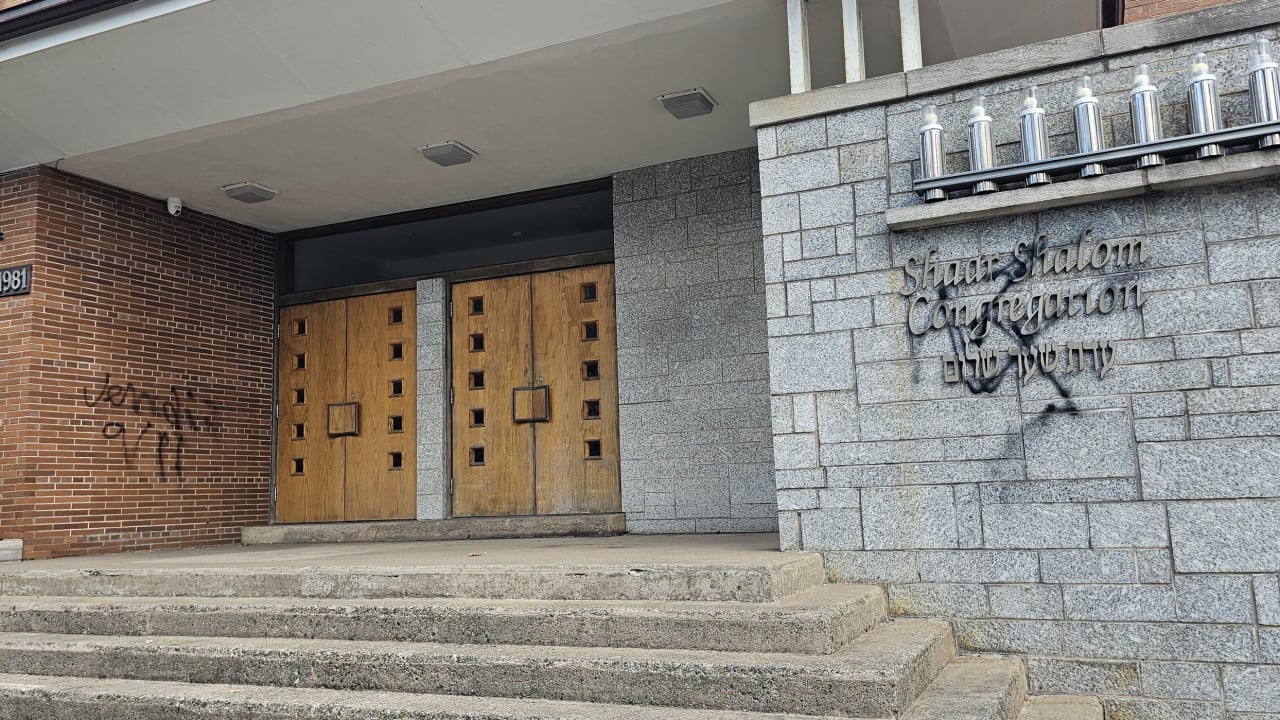
Canada is in the throes of a national crisis of antisemitism, according to B’nai Brith Canada’s League for Human Rights, which has just released its Annual Audit of Antisemitic Incidents for the year 2025.
During 2025, B’nai Brith Canada documented 6,800 incidents of antisemitism. This is the highest volume recorded in the annual Audit since its inception in 1982, and is equivalent to 18.6 incidents, on average, each day.
The total number of incidents increased 9.4% from 2024 to 2025, and 145.6% from 2022, before Hamas’ Oct. 7, 2023, terrorist attacks, to 2025.
The regions of Ontario, the Prairies, Atlantic Canada, and British Columbia experienced significant increases in the number of documented incidents, whereas Quebec and Alberta saw a decline. The majority of the recorded incidents took place online.
Right-wing, neo-Nazi, and accelerationist movements have also surged, contributing to antisemitic incidents in Canada. On social media, Holocaust denial has also gone viral, including the use of Artificial Intelligence (AI) to create false representations of historical events, B’nai Brith found.

Among some of the most notable examples of antisemitism in Canada during 2025 were: the assault of a Jewish man walking in a Montreal park during August, where the attacker threw his Yarmulke into a puddle of water; the desecration of two synagogues in Halifax in December; the vandalism of a McGill University building in November with the words, “Kill all Jews”; and a plethora of student organizations across Canada participating in a demonstration during March that targeted Israel with slogans and placards that contained antisemitic rhetoric.
“Our review of the past year’s antisemitic incidents must be understood as a wake-up call,” said Simon Wolle, B’nai Brith Canada’s Chief Executive Officer. Hate and extremism are a threat to Canadian democracy and civil society, not only to the Jewish community.”
Middle East conflict not primary source of antisemitism, audit author says
Richard Robertson, B’nai Brith Canada’s Director of Research and Advocacy, and the lead author of the Audit, said that while many incidents are connected to the conflict in the Middle East, antisemitism has become so ubiquitous that the conflict cannot be considered the primary source of the phenomenon.
“Conspiracies about Jews and Jewish influence in Canada are no longer only something we see on the radical fringes,” he said. “In recent years, and especially during 2025, it has become clear that antisemitism is increasingly normalized throughout Canadian society.”
Robertson also explained that many self-described “anti-Zionists” are simply employing classic tropes that have traditionally been used to dehumanize Jewish people.
“The fact of the matter is that when it becomes acceptable, and even popular, to demonize Zionists, Jewish communities suffer,” he said.
Wolle called on leaders at all three levels of government across the country, as well as law enforcement agencies, to act now.
“Canada has vast tools at its disposal to address this crisis of antisemitism,” he said. “Our findings support the need for a whole-of-government approach to combating hate, antisemitism, and extremism in Canadian society.”