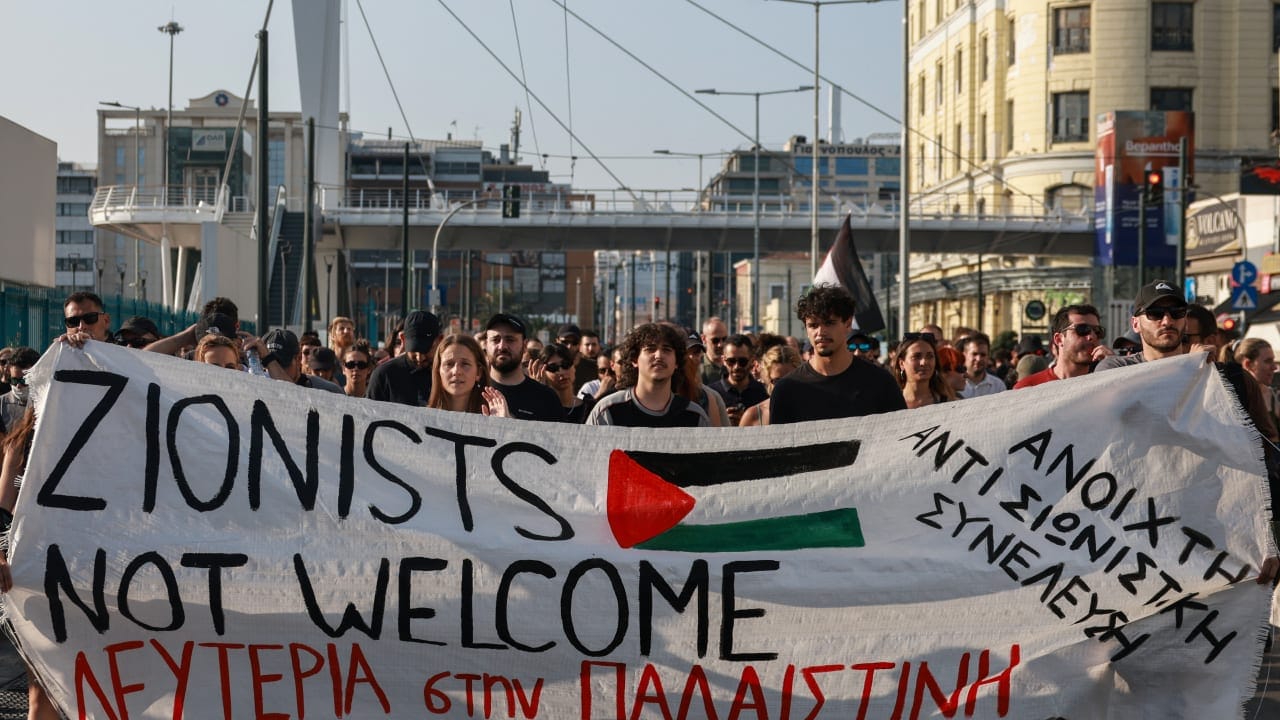
In light of a surge in antisemitic incidents across Greece—including threats and attacks on Israeli tourists—March of the Living Europe Chair and Holocaust survivor Benjamin Albalas shares his personal reflections. The conversation follows a wave of anti-Israel protests, including incidents where demonstrators prevented Israeli cruise ships from docking. The Greek government has condemned such acts, but tensions remain high as pro-Palestinian organizations announce a “Day of Action” across the islands today (Sunday).

How do you view the recent rise in antisemitism in Greece?
The recent increase in antisemitism is mainly driven by anger towards the State of Israel over the war in Gaza but it’s not just about the war. The conflict has become a convenient excuse for extremists in Greek society—especially those aligned with pro-Palestinian causes—to express hostility towards Israel. Roughly 80% of this comes from progressive left-wing ideologies, with the Communist party often taking the lead. Their actions echo what we might call “red fascism.” We’re seeing increased demonstrations and blockades targeting Israelis and even the IDF. Among leftist parties, there’s a kind of competition to appear the most sympathetic to Hamas and the Palestinians of Gaza.
I call upon the Greek authorities to enforce anti-racism laws more strictly, especially when it comes to daily Palestinian activism.
Do you believe Greece remains a safe place for Jews? Have you personally felt the need to hide your Jewish identity or avoid Jewish events?
Greece is still a safe place for Jews. My family and I feel completely secure and continue our daily lives without fear. We don’t hide who we are, and many of our Christian friends understand that Israel is doing the “dirty work” of defending Western values. Because it’s summer, there are fewer Jewish events, but I expect all scheduled activities after the High Holidays will proceed as planned—with perhaps some additional security.
Have you witnessed solidarity from non-Jewish Greeks during this period of rising antisemitism?
Yes. In both the media and daily life, many non-Jews have expressed support. A good example was on the island of Rhodes, where local authorities warmly welcomed passengers from an Israeli cruise ship, under police protection.

As Chair of EMOTL, what role do you believe Holocaust remembrance plays in combating antisemitism today?
Greek society does still respect the memory of the Holocaust. Many Greeks continue to publish stories about Jewish life before and after the war. We must continue to remind the world what happened 80 years ago. The Holocaust was the result of unchecked antisemitism in Germany and across Europe. This is why we have the annual March of the Living in Greece on March 16, to commemorate the first deportation of Jews from Thessaloniki to Auschwitz.
The events of October 7th can be seen as a “small Holocaust,” and we must remain vigilant. People need to be cautious about embracing leftist ideologies that target Israel and the Jewish people.
As a Holocaust survivor, how did you feel seeing the emaciated images of Israeli hostages such as Evyatar David and Rom Braslavsky? Did it bring back memories of your own trauma?
When I saw the tragically starved bodies of Evyatar and Rom, my thoughts went immediately to their families and to the hostages still in captivity. The images were profoundly painful—completely inhumane. They brought back memories of Auschwitz survivors and my own experience as a hidden child during the Holocaust.
What should Jewish communities around the world understand about the current situation in Greece?
It’s a difficult time, especially for young Greek Jews. But we believe that once there’s a resolution in Gaza, antisemitic sentiment will decrease. Greek Jews continue to live in a friendly society. The strategic alliance between Greece and Israel is a positive step toward regional peace and prosperity. Of course, Turkey plays a role in fueling anti-Israel propaganda—and it’s well known that most Greeks oppose Turkey’s current government.
Looking ahead, what gives you hope?
My hope lies in the prospect of a viable peace. But for that to happen, some journalists, authors, and politicians—both in Israel and the Diaspora—must stop falsely accusing Israel of genocide in Gaza. These lies fuel global antisemitism. Telling the truth is essential if we want peace.
About Benjamin Albalas: Benjamin Albalas was born in Athens in 1937. As a young child during the Holocaust, his family survived thanks to the bravery of Dr. Panos Macheras, a Greek physician who warned them of Nazi plans in 1943, shortly after the deportations began in Thessaloniki. The family adopted Christian identities and went into hiding. “We took every precaution,” Albalas recalls. “We stayed hidden until the end of 1944, when Greece was liberated.” On March 24th, 1944, while the family was in hiding, hundreds of Jews were rounded up at the Athens synagogue—where Albalas had lived as a baby—and deported to Auschwitz. Few survived. Dr. Macheras was later recognized as Righteous Among the Nations by Yad Vashem for his courageous actions.
Support the International March of the Living to amplify holocaust survivors' voices:
This article is published in cooperation with the International March of the Living.