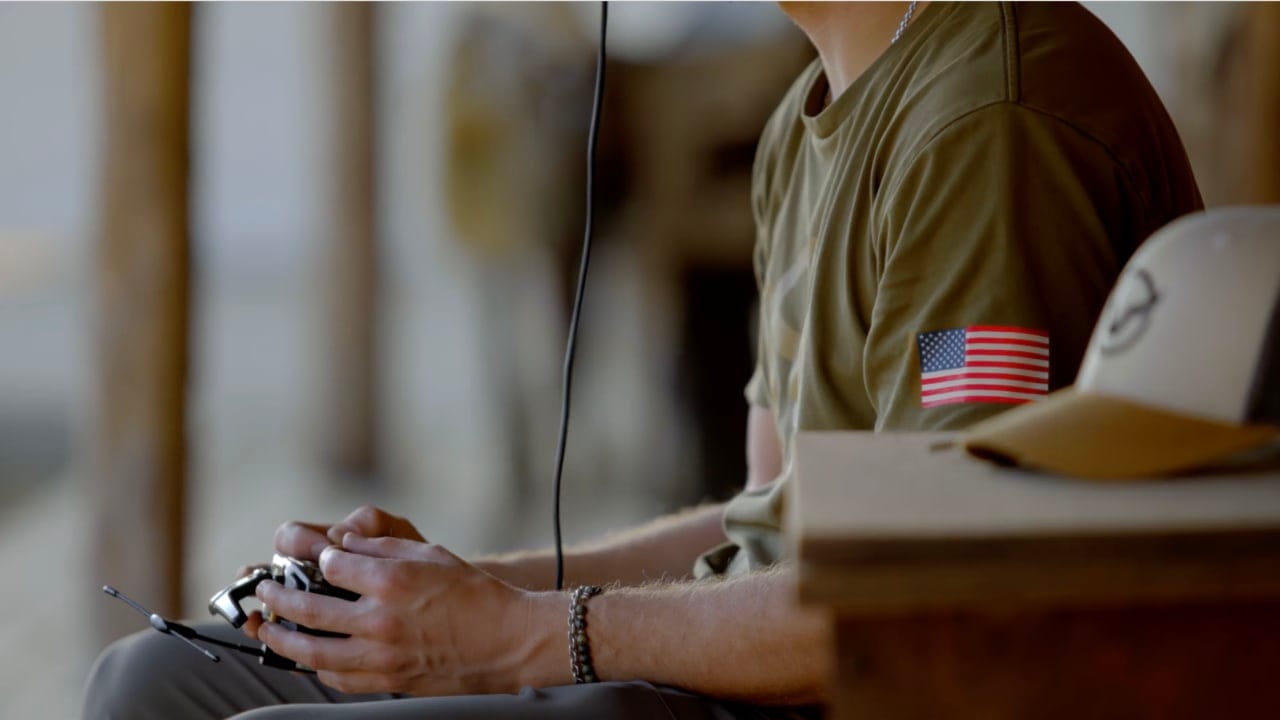
Defense-tech start-up Wild West Systems is developing lightweight weapons and software designed to enable drones and other robotic platforms to carry out missions traditionally performed by soldiers, as militaries increasingly turn to unmanned systems.
Founded in 2025 by American entrepreneur David Franco and engineer Moshe Baum, the company is focused on what it describes as the kinetic layer of autonomous systems — the weapons, munitions, and software that allow robotic platforms to engage targets.
“The battlefield is being taken over by robots. But we need to unlock the capabilities that soldiers have, except for robots,” Franco told Defense & Tech by The Jerusalem Post. “Everyone wanted to build the next platform. Now it’s the next layer. It’s the brain, the orchestration of the robot.”
The company is headquartered in Austin, Texas, where it has a 20,000-sq. foot (1,860 sq. m.) manufacturing operation, an outdoor testing area spanning 1,800 acres (728 hectares), and an underground facility for testing munitions. The company, which has 29 employees, also has a team in New York and another soon in Israel.

Franco explained that Wild West is developing systems designed to address the physical limitations of arming small drones, including weight and recoil. He said that it has developed a way to significantly reduce the weight associated with a traditional firearm by enabling smaller unmanned aircraft to carry weapons without compromising their ability to fly.
The company is developing both the weapons and the software that operates them, aiming to integrate its systems across different platforms, rather than tying them to a single drone manufacturer.
Wild West's technology is intended to allow unmanned platforms to engage targets while retaining the ability to return, rather than being used only in one-way attacks.
The company is also developing capabilities for ground robots, unmanned underwater vehicles, and other autonomous platforms.
“Our bet is that robotics is the next arms race. There will be more humanoids than soldiers on the battlefield, and they need special arms just for them,” Franco said.
From bar mitzvah money to defense tech
Franco's route into the defense industry began outside the traditional military and aerospace sectors.
Raised in Buffalo, New York, he started his first business with money from his bar mitzvah, working in fashion and music before moving to Israel and entering the music industry.
He later founded a social-commerce platform for the equestrian industry before he sold the business in 2018, after which he moved into the investment world.
Following the October 7, 2023, Hamas attack on Israel, Franco said he stepped away from work for six months and helped organize donations and supplies for the IDF. The effort began with a plane carrying medical and pharmaceutical supplies and then expanded.
“We supplied everything from tampons to drones,” he said.
The experience brought him into direct contact with military end users and exposed what he viewed as gaps between the capabilities soldiers needed and what the defense market could provide.
Franco subsequently met Baum, and the two decided to establish Wild West to develop weapons specifically for robotic platforms, rather than adapting conventional firearms and munitions to systems that were not built to carry them.
“We are the new cowboys coming in,” he said.
Working with drone manufacturers
The start-up is developing its systems for integration across a range of autonomous platforms, including aerial drones, ground vehicles, underwater systems, and humanoid robots.
Franco said the company's focus is on providing the weapons and software layer that manufacturers can integrate into their own platforms, allowing military customers to select systems according to their operational requirements.
The systems, Franco said, are free of any Chinese components and are platform agnostic. Wild West is working with various defense companies and is carrying out collaborative research and development programs with US Department of War.
While the company has not yet deployed its systems operationally, Franco said it expects the first operational use to take place in Israel in the fourth quarter of this year. It was nevertheless selected for African Lion, the US Africa Command-led multinational military exercise, last year.
Franco explained that Wild West has prioritized the United States and Israel despite receiving offers related to other conflict zones because the company's focus is on developing capabilities against threats it considers particularly relevant to the Jewish state.
“We want to focus on the mission that is closest to our hearts,” he said.
After completing oversubscribed pre-seed and seed funding rounds, the company closed an oversubscribed Series A in August.