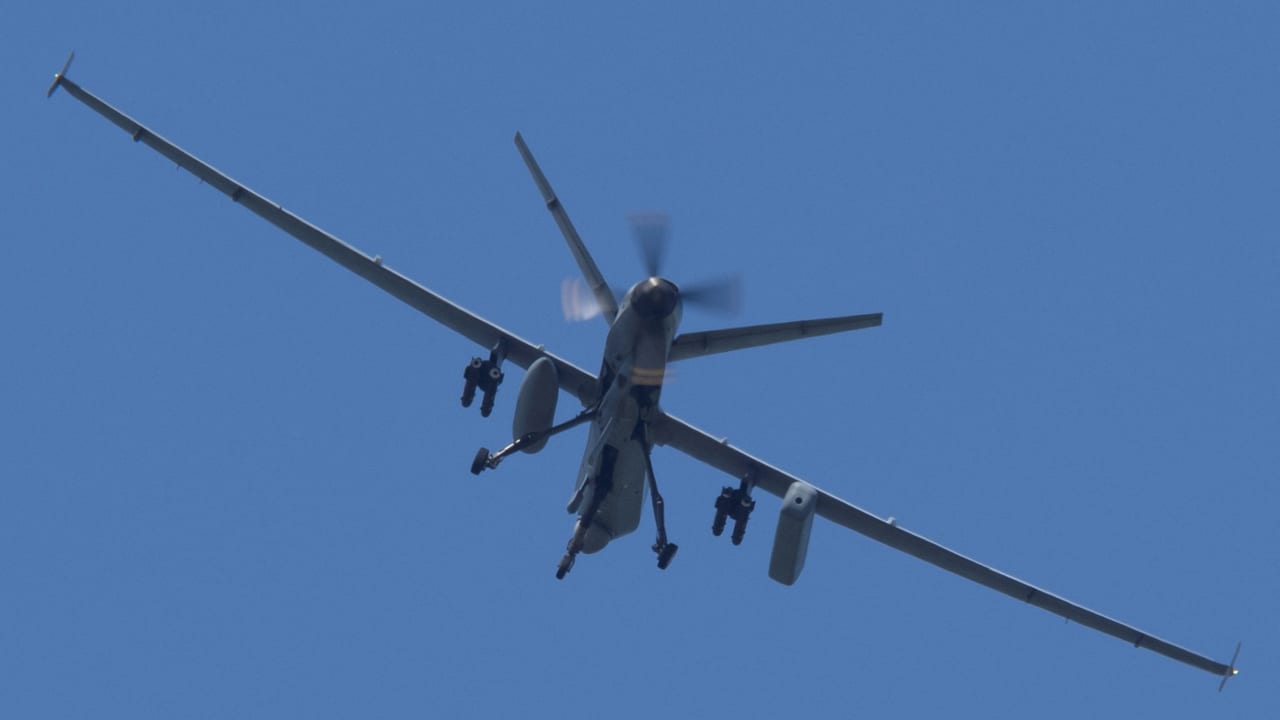
The US lost around 30 MQ-9 Reaper drones in the conflict with Iran. This is according to a new Lead Inspector General Report to the United States Congress. Operation Epic Fury, which covers the fighting from April to June 2026. Since June, more Reaper drones have been lost in the conflict.
These types of drones, the Reaper and the Predator, are legacy US drone platforms. However, they have been lost in larger numbers as they have been pressed into service in places like Yemen and now Iran.
The losses may point to these types of larger drones becoming obsolete. The drones are vulnerable to air defenses. The reason they are so vulnerable is due to their history. They are a legacy of the US global hegemony after the Cold War. The drones are a symbol of American power. Now they could also be seen as a symbol of the changing world order.
The MQ-1 Predator and MQ-9 Reaper helped transform US unmanned aircraft from reconnaissance platforms into strike systems. What that means is that the Predator was first rolled out to do slow intelligence and reconnaissance missions, monitoring areas.
This was considered a dull and dangerous job. Losing reconnaissance planes and pilots has historically been a problem. For instance, Francis Gary Powers was an American pilot whose U-2 spy plane was shot down over the Soviet Union in 1960.

Hellfire missiles: An early breakthrough in drone warfare
The Predator was an answer to this problem. No need to send pilots. Send drones. America’s General Atomics developed the Predator during the 1990s. The prototype first flew in 1994, and the RQ-1 entered operational use as an intelligence, surveillance, and reconnaissance aircraft, including deployments over the Balkans.
Then it became clear that the drone can and should be armed. A breakthrough came when the US began experimenting with arming it with the AGM-114 Hellfire missile. The first airborne Hellfire launch from a Predator occurred in 2001.
By October 7, 2001, armed Predators were flying combat missions over Afghanistan. This was too late to take out Bin Laden. However, the drone became a symbol of the war on terror.
The terrorist groups being hunted by US drones in Afghanistan, Iraq, Somalia, and Pakistan did not have air defenses. However, much has changed since then.
The MQ-9 Reaper first flew in February 2001. Reaper entered operational service in 2007. Compared with the Predator, it offered substantially greater speed, payload, and weapons capacity, including Hellfires and bombs. The Reaper was a natural evolution of the Predator.
The challenge in Iran, Yemen, and other places is that the Reapers are being lost at a higher rate than they will be replaced. It’s not clear if they will actually be replaced as the US transitions to other drones. The war in Ukraine and also in Iran has shown the need for large numbers of other drones.
The US knows it not only needs a Reaper replacement, but also needs tens of thousands of other smaller drones. Back in May, Aviation Week noted that the US Air Force had approved requirements for an MQ-9 Reaper replacement. It was supposed to be attritable, meaning it can be lost in larger numbers. Mass production and open architecture with a 1,500 km. range and 20-hour endurance.
Tyler Rogoway at TWZ noted that the requirement was for a drone “cheap enough to risk losing. “The Air Force’s MQ-9 Reaper successor will trade survivability for lower cost, broader missions, and mass production.”
New drones in development for replacement, supplementation
Armed Forces Press recently noted Swarm Aero had unveiled Gamera, a potential replacement. “After the US lost dozens of its MQ-9 Reaper drones to fighting in Iran, newcomer drone-maker Swarm Aero announced Monday that it had developed a drone in the same medium altitude, long-endurance (MALE) class, capable of executing swarm missions and cheap enough to afford losing, even in large numbers.”
It is said to have “a wingspan of about 72 feet, a payload capacity of 2,800 pounds, a ‘Pacific-spanning’ range of 9,000 miles and a combat radius of 2,300 miles with ‘hours’ of on-station time once at its patrol area.
Kitted-out Reapers, which reportedly cost $30-50 million apiece, have a payload capacity of up to 3,800 pounds.” In addition, another report at Aviation International News noted that General Atomics “has unveiled its Wildfire uncrewed air system” as a potential replacement.
The point is that the replacements are coming. In addition, many other drones are being used. The US is worried about munition shortfalls due to the Iran war. However, the lesson will be that the US needs new and cheaper munitions and drones. Rather than try to replace what was lost, the war will lead to major changes, much as World War II and other conflicts have.
The US military is already investing in lower-cost drones and missiles that can be produced and employed in large numbers, reflecting lessons from Ukraine and the 2026 conflict with Iran. One example is the Low-Cost Uncrewed Combat Attack System (LUCAS), a one-way attack drone similar to Iran’s Shahed 136.
Cheaper missiles are also a good move to get around the losses of the Reapers. Anduril’s Barracuda-500M is designed as an affordable, mass-producible cruise missile. Another entrant is Covenant’s Anthem, a long-range cruise missile carrying a payload exceeding 200 kg.
The future is clear. Cheaper and mass-produced drones and missiles. The era of the Reaper and Predator as a symbol of American warfare may be ending. Many other countries that use large drones, including Israel, will be learning from this.