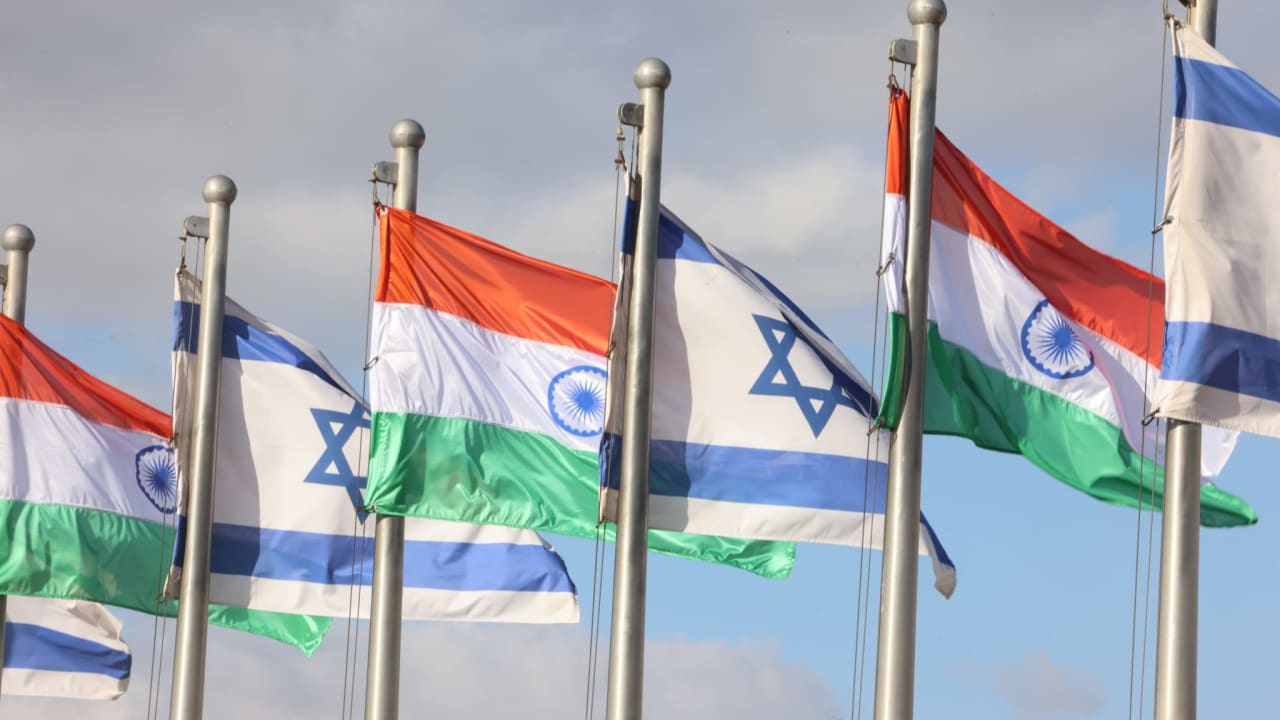
For years, India-Israel relations have been defined by the language of strategy: defense, agriculture, intelligence, technology, and trade. That is not wrong. The partnership is real, deep, and increasingly visible. Prime Minister Narendra Modi’s February 2026 visit to Israel only reinforced what many already understood: The relationship has moved from the margins to the strategic mainstream.
But if the next phase of India–Israel relations is to last, it cannot rest on government ties alone
This matters because strategic partnerships are strongest when they are not confined to elite circles. Official visits, security cooperation, and economic agreements can build momentum, but they do not by themselves create familiarity, trust, or long-term public legitimacy. Those are built elsewhere: in classrooms, workplaces, neighborhoods, cultural exchanges, and the small, human interactions that make one society more intelligible to another.
That is where India and Israel still have significant untapped potential.
The bilateral relationship is already anchored in hard interests. Defense cooperation remains central. Agriculture and water technology have created practical frameworks for collaboration. Innovation and entrepreneurship continue to generate new opportunities.

Yet a partnership built primarily from the top down has limits. It can remain politically strong while socially thin. If India and Israel want a relationship that is more resilient, more normalized, and more future-oriented, they must broaden their social base. That means investing more seriously in mid-level and everyday engagement: students, professionals, workers, artists, researchers, tourists, and local communities. These are not peripheral actors. They are the social infrastructure of a long-term strategic relationship.
For many Indians, Israel is still understood mainly through the lens of geopolitics and conflict. For many Israelis, India is admired, but often in broad civilizational or touristic terms rather than through sustained human engagement.
In both cases, the gap between strategic familiarity and social familiarity remains wider than it should be. That gap matters. Public perceptions shape the political environment in which strategic partnerships operate. They influence how societies interpret crises, how they react to controversy, and whether bilateral ties are seen as transactional or meaningful.
This is why everyday encounters matter. A cultural workshop, a student exchange, a shared festival, or a workplace friendship may seem minor compared to defense agreements or state visits. Yet these interactions do something official diplomacy often cannot: They humanize the other side.
When Indians encounter Israeli society beyond headlines, they often discover something more complex than the flat political image that circulates abroad. They encounter a diverse society shaped by migration, historical memory, strong family life, internal debate, and deep communal bonds. When Israelis engage more directly with Indians outside the usual tourism or business framework, they often discover a similarly rich social world marked by diversity, warmth, tradition, and democratic energy.
While these experiences do not necessarily erase political disagreement., nor should they, nevertheless, they create a broader framework for understanding. They make it harder to reduce the other side to a stereotype.
This is especially important in the Indian case. Parts of Indian public discourse still view Israel primarily through the prism of the Israeli-Palestinian conflict. In some circles, Israel is seen less as a complex society and more as a symbol within a broader anti-colonial narrative. That perception cannot be addressed by military cooperation or technological partnerships alone. It requires broader exposure, deeper engagement, and more spaces in which Israelis are encountered not only as state actors, but as people.
At the same time, Israel should better recognize the strategic importance of cultural literacy toward India. India is not just an economic giant or a defense partner. It is a society in which identity, history, public symbolism, and lived experience matter enormously. Any effort to deepen ties with India must take that seriously.
One of the most important developments in this regard is the growing presence of Indian workers in Israel, particularly in construction and caregiving. These workers are not merely filling labor gaps. They are becoming living bridges between the two societies. Their daily experiences create direct forms of contact that no official communiqué can replicate. Through community life, local interaction, and increasingly through social media, they carry stories back home that can complicate simplistic or one-dimensional perceptions of Israel.
The same is true of digital platforms more broadly. People-to-people diplomacy now unfolds not only in physical spaces, but online. Social media, podcasts, YouTube, and digital communities have become powerful arenas for shaping cross-cultural perception. Used well, they can foster familiarity and curiosity. Used poorly, they can reinforce caricatures and misinformation. That makes this domain strategically important, not merely culturally interesting.
None of this is sentimental. It is strategic.
People-to-people ties give political partnerships social depth. They create a wider constituency for bilateral cooperation. They strengthen resilience during moments of tension. And they help move a relationship from being government-led to socially anchored.
In the case of India and Israel, this has historical roots. Jewish communities lived in India for centuries under conditions that were exceptional in the Jewish Diaspora: coexistence without institutional antisemitism. That history created a reservoir of goodwill and memory that still matters today. Modern diplomatic ties, formally established in 1992, did not emerge from a vacuum. They were built on an older foundation of familiarity and coexistence. The task now is not to invent a connection where none exists, but to deepen one that already has historical depth.
India-Israel ties have matured significantly over the past decade. But maturity brings a new challenge: how to make the relationship sustainable beyond leaders, crises, and strategic necessity.
The answer lies not only in military cooperation or political symbolism, but also in the slower work of social connection.
The future of India-Israel relations will be shaped not only in defense corridors and diplomatic meetings, but also in kitchens, campuses, workplaces, and digital spaces. That is where familiarity grows, where trust becomes more durable, and where strategic partnership acquires human depth.
If the first chapter of India-Israel relations was about normalization, and the second about strategic consolidation, the third should be about social anchoring. That may prove to be the most important step of all.