
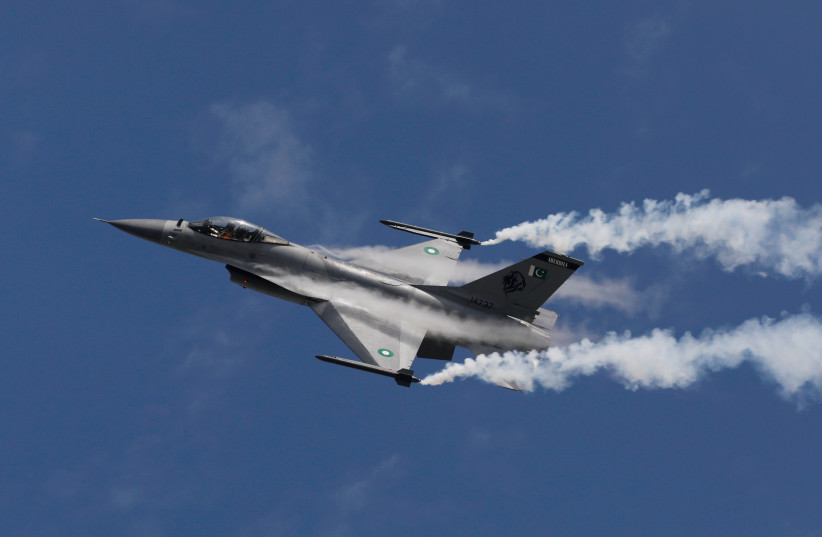
Saudi Arabia and Pakistan signed a Strategic Mutual Defense Agreement in Riyadh on September 17, 2025. The joint declaration, issued by the Saudi Press Agency, stated that “any aggression against either country shall be considered an aggression against both.” This language mirrors the collective defense clauses of formal alliances, signaling a significant step beyond the informal security ties Riyadh and Islamabad have long maintained.
For decades, Pakistan has acted as a de facto security provider for Saudi Arabia. During the Iran–Iraq War (1980–88), Pakistani officers and troops were stationed in the Kingdom to bolster its defenses. In 2014–15, former Pakistani army chief Gen. Raheel Sharif was appointed to lead the Saudi-backed Islamic coalition in Yemen. In all these cases, Pakistan offered manpower and expertise to protect Saudi Arabia. What is unprecedented in the 2025 pact is its symmetrical framing: Riyadh is now, at least symbolically, bound to Pakistan’s defense as well.
This novelty should not obscure the limits. In Pakistan’s wars against India (1965, 1971, and Kargil 1999), Saudi Arabia extended financial and diplomatic support but never deployed forces against New Delhi. Nor has Riyadh ever defended Pakistan’s sponsorship of terrorism in Kashmir. The pact’s main significance lies in political signaling, not operational commitment.
Timing and context
The pact was signed less than two weeks after Israel’s strike on Doha, which reportedly received prior approval from Washington. The attack shook Gulf capitals, already wary of the reliability of U.S. security guarantees. By formalizing its alliance with Pakistan—the only Muslim-majority nuclear power Saudi Arabia is signaling to Iran, Israel, and the United States that it has alternative anchors of deterrence.
Saudi officials insisted the pact was years in the making rather than a direct reaction to recent events. Yet the regional optics are clear: the agreement followed an extraordinary joint session of the Arab League and OIC convened after the Doha strike, where Israel faced sweeping condemnation.
Implications for India
For India, the pact poses both strategic and symbolic challenges. It risks emboldening Pakistan and its proxy networks, encouraging the perception that Islamabad now enjoys Saudi backing. More concretely, the agreement complicates New Delhi’s freedom of action in retaliating against terrorism. After the April 2025 Pahalgam attack, India suspended the Indus Waters Treaty and launched Operation Sindoor, reflecting a new doctrine of punitive deterrence. With the pact in place, any strike against Pakistan could be framed rhetorically as aggression against Saudi Arabia as well.
This outcome is particularly striking given Prime Minister Narendra Modi’s sustained investment in Saudi ties. Since 2016, when Riyadh awarded him its highest civilian honor, bilateral relations have deepened across energy, investment, and regional initiatives like I2U2 and IMEC. The defense pact with Pakistan therefore, represents not only a potential security risk but also a symbolic setback for Modi’s Middle East diplomacy.
When asked whether the agreement placed Riyadh under Pakistan’s nuclear umbrella, a senior Saudi official replied that it “encompasses all military means.” While not a formal nuclear guarantee, the phrasing deliberately cultivates ambiguity. Pakistan, unlike India, does not adhere to a “No First Use” doctrine. Thus, even if operational implications remain limited, the pact enhances Saudi deterrence against Iran and injects new uncertainty into South Asian and Middle Eastern security calculations.
Implications for Israel
For Israel, the pact introduces both risks and paradoxes. Pakistan, openly hostile toward Israel, positions itself rhetorically as a nuclear shield for Arab states. At the same time, Saudi Arabia continues to explore discreet channels with Israel and has conditioned normalization on progress in the Palestinian arena. The defense pact therefore illustrates Riyadh’s balancing act: anchoring its deterrence through Islamabad while keeping open economic and technological pathways with New Delhi and potential diplomatic engagement with Jerusalem.
Equally important is the symbolic dimension. By formalizing defense ties with Pakistan at a moment of heightened criticism of Israeli actions in Gaza and Qatar, Riyadh strengthens its standing in the Islamic world. Even if Saudi Arabia does not intend to sever future prospects of normalization with Israel, the pact underlines that Riyadh is hedging its security bets.
Conclusion
The Saudi–Pakistan defense pact represents both continuity and departure. It continues the decades-long pattern of Pakistani support for Saudi security, yet elevates the relationship to formal alliance language. For India, it complicates deterrence after Operation Sindoor and undermines years of Modi’s personal diplomacy with Riyadh. For Israel, it introduces Pakistan-and its nuclear ambiguity-into the Gulf’s formal security calculus.
This is less about the likelihood of Saudi troops defending Pakistan and more about the symbolic weight of a Muslim nuclear state tied openly to Riyadh. It is a reminder that the security architectures of South Asia and the Middle East are increasingly interconnected-and that both India and Israel must recalibrate their strategies in light of this emerging reality.