The 2025 Israel–Iran war marked a historic milestone in modern warfare — the first large-scale military conflict in which artificial intelligence (AI) was not only integrated, but indispensable to battlefield operations. In this campaign, the convergence of cutting-edge autonomous technologies and strategic military doctrine revealed the operational maturity of AI systems across intelligence, targeting, and strike execution.
The coordinated Israeli–American strikes on Iran’s nuclear infrastructure were not merely conventional air raids. They were the outcome of a meticulously orchestrated digital war plan that leveraged AI to enable unprecedented tempo, reach, and precision. This campaign redefined the role of technology in modern combat, transforming theoretical capability into tangible battlefield dominance.
Long-Range Missions and the Role of Edge AI
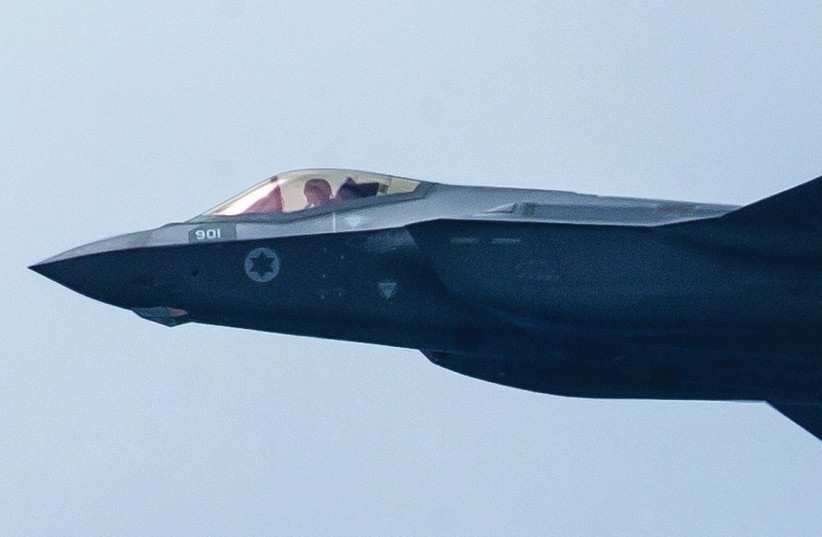
As fighter jets penetrate hostile airspace, real-time communication with command centers becomes increasingly constrained and contested. Over long distances, traditional command-and-control frameworks struggle to keep up. Imagine, for instance, an Israeli F-35 operating over Tehran — detecting suspicious movement or infrastructure. To engage, the aircraft must process battlefield intelligence, assess the target’s value, and determine the rules of engagement — within seconds, and without full communication with headquarters.
This is precisely the challenge Iran sought to exploit. Tehran designed a dispersed battlefield, with critical assets spread across thousands of kilometers — from underground enrichment facilities in Natanz, to air defense nodes near Bushehr, and mobile launch platforms scattered across rural terrain. The goal: stretch Israeli targeting capability and impose delays that would degrade operational effectiveness.
Yet, despite the geographic scale, the Israeli Air Force managed to neutralize thousands of high-value targets within a mere 12 days. This level of effectiveness was made possible by the massive deployment of edge-based AI systems capable of operating semi-independently across Iranian skies. These systems fused data from multiple sensors, reconnaissance platforms, satellites, and cyber-intelligence feeds to deliver high-resolution, real-time situational awareness — all without requiring continuous human intervention. The process, which Israel showcased, was unprecedented in scale and speed.
The First 48 Hours: Laying the Groundwork for Victory
The initial 48 hours of the conflict proved decisive. They served as the strategic and operational foundation for the remainder of the 12-day campaign.
What enabled this rapid and overwhelming success? The answer lies in a new combat doctrine — one built to scale over a country the size of Iran (1.65 million square kilometers), unlike previous operations in Gaza, which spans just 365 square kilometers. This new paradigm combined determined warfighting ethos with unique technology frameworks, shifting the center of gravity from sheer manpower to machine-accelerated effectiveness.
Israeli forces initiated the campaign with a high-tempo, multi-domain strike strategy. Dozens of long-range platforms, both manned and unmanned, penetrated Iranian airspace in near-simultaneous waves. Artificial intelligence systems processed incoming intelligence, surveillance, and reconnaissance (ISR) data in real time, detecting and prioritizing targets through pattern recognition and behavior prediction. Precision firepower was directed at operational chokepoints, command bunkers, and strategic launch sites, generating systemic disruption across Iranian military infrastructure.
Speed was a critical operational variable. It limited Iran’s ability to recover, reorient, or protect its remaining capabilities. But precision — the ability to strike only high-value, time-sensitive targets — was equally important. That precision came from tight integration between AI-enhanced sensors and strike platforms, enabling machine-to-machine targeting cycles with minimal human delay.
These systems weren’t limited to targeting. They supported battle damage assessment (BDA), re-prioritization of targets, autonomous threat avoidance, and dynamic re-tasking of airborne assets. This cognitive loop — continuously refined by AI models trained on massive wartime datasets — allowed for adaptive battlefield dominance in a highly fluid, high-threat environment.
Without this infrastructure, Israel would have likely achieved no more than 5–10% of its target list, or would have been forced into a prolonged war of attrition. Worse, Iran’s mobile forces and retaliatory units would have had time to regroup and strike back — resulting in significantly greater damage to the Israeli home front and prolonged regional instability.
AI as a Force Multiplier — Not a Replacement for Command
The success of this AI-driven campaign does not suggest the removal of human judgment from warfare. On the contrary, Israel and its allies maintained a strict doctrine of “human-on-the-loop” or “human-in-the-loop” decision-making — especially when it came to lethal force.
AI served as a force multiplier — accelerating the tempo of decision-making, enhancing the quality of data fusion, and optimizing strike efficiency. But all final strike authorizations required human validation. Military commanders had the authority — and the obligation — to verify critical decisions, particularly those with legal, political, or humanitarian implications.
This policy reflects a fundamental distinction between democratic military ethics and those of authoritarian regimes. In May 2025, Ukrainian officials revealed the downed remnants of a fully autonomous Iranian drone — equipped with AI-based targeting algorithms that required no human input. This system was capable of selecting and engaging targets based solely on behavioral data and pre-programmed mission parameters.
The use of fully autonomous lethal systems without human oversight violates widely accepted ethical frameworks, including NATO’s AI principles and the OECD’s AI guidelines. It also introduces risks of unintended escalation, targeting errors, and loss of control in conflict zones — particularly in urban or civilian-dense areas.
The June 2025 Campaign: From Concept to Operational Reality
The June 2025 campaign was not a testbed. It was an operational deployment at full scale — a real-world demonstration of what happens when AI-enabled warfare reaches maturity. The battlefield of 2025 was faster, smarter, more autonomous, and far less dependent on centralized command infrastructure.
Israel and the United States established a new standard for 21st-century military effectiveness — combining edge AI, teaming coordination, cyber-physical integration, and automated C4ISR (command, control, communications, computers, intelligence, surveillance, reconnaissance). This model allowed for coordinated action across air, land, sea, and cyberspace — at speeds impossible under traditional command structures.
While engineering, legal, and ethical challenges remain — particularly around explainability, accountability, and system validation — the AI revolution in warfare is no longer theoretical. It has begun.
Strategic and Technological Implications
The success of artificial intelligence in combat operations carries strategic implications that extend far beyond the immediate conflict. It forces both allies and adversaries to reconsider their force structures, investment strategies, and long-term defense planning. AI is no longer merely a tool but a strategic capability on par with airpower or nuclear deterrence. In this new paradigm, data dominance is emerging as a critical requirement, rivaling the importance of all domain superiority. Moreover, the ability to process and fuse data at the edge — rather than relying solely on centralized cloud-based analytics — is essential for achieving real-time operational advantage. Finally, the most effective and ethically sound approach lies not in full autonomy, but in human-AI teaming, which enables rapid decision-making while preserving human judgment and accountability.
The Israel–Iran conflict of 2025 was a turning point not only for regional security, but for the global military landscape. Artificial intelligence is now a core pillar of modern warfare — not just as a support function, but as a decision engine, intelligence analyst, and battlefield coordinator.
The events of June 2025 demonstrated that AI, when combined with operational discipline and human oversight, can deliver unmatched precision, speed, and strategic depth.
The battlefield has changed — not tomorrow, but today. The nations that adapt will prevail. Those that hesitate may find themselves outpaced — not by enemy soldiers, but by enemy algorithms.