
GFN - CHICAGO: CME Group halted trading across its futures and options markets late Thursday after a data-center cooling failure disrupted the CME Globex platform, interrupting live pricing in commodities, Treasuries, equity-index futures and foreign exchange during early Asian trading.
CME first acknowledged the disruption on November 27 at around 22:00 CT, reporting that "a cooling issue at CyrusOne data centers" had forced a halt of all CME Globex and EBS electronic markets. The issue affected benchmark contracts including crude oil, gold, S&P 500 futures, FX pairs, and U.S. Treasuries.
Bloomberg's initial flash update reported:
"Live trading of commodities futures on the Chicago Mercantile Exchange has halted, according to traders who monitor the platform. Contracts including crude oil and palm oil are affected in Friday morning Asian trading."
Bloomberg added that CME Group "did not immediately respond to Bloomberg queries."
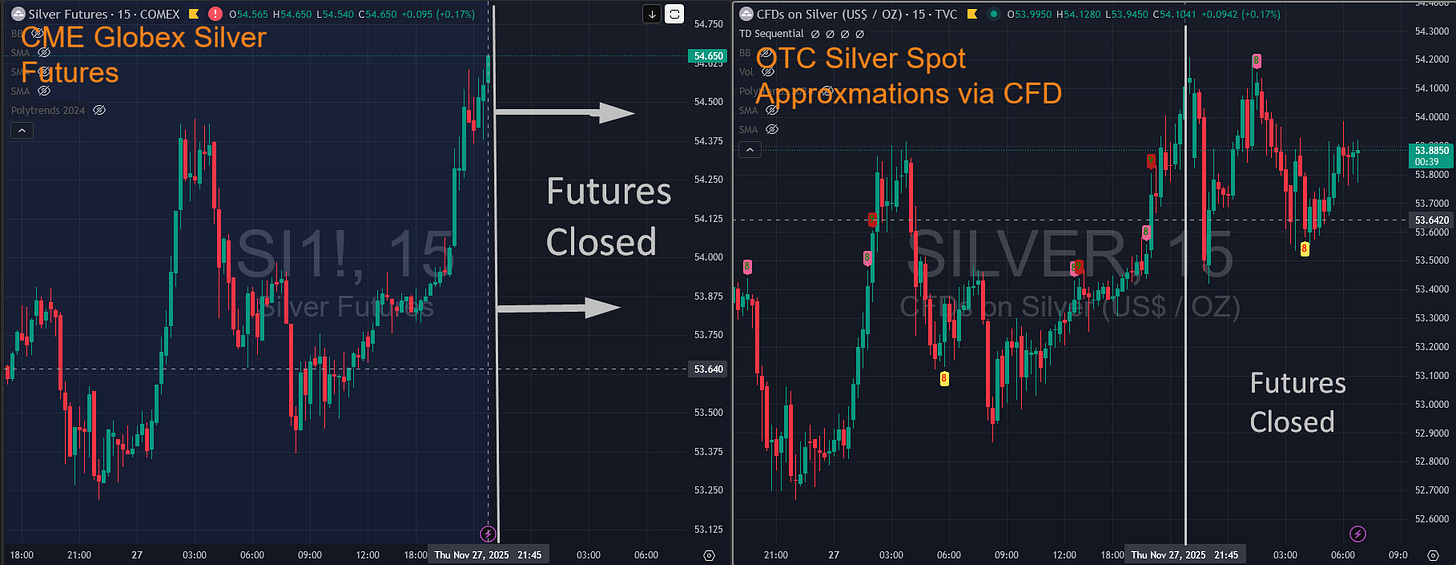
The halt extended across asset classes and persisted longer than a similar multi-hour outage in 2019. According to Bloomberg's follow-up report:
"The impact of the malfunction across a slew of markets from crude oil to Treasuries and S&P 500 futures - already longer than a similar hours-long outage back in 2019 - is a reminder of the reach of CME and its Globex electronic trading platform."
Market participants described operational difficulty and growing concern as price feeds stalled worldwide. Bloomberg noted:
"It has also triggered widespread frustration, as market participants contemplated the prospect of a lost trading session."
Strategists cited the timing of the halt - immediately following the U.S. Thanksgiving holiday - as a compounding factor given reduced liquidity.
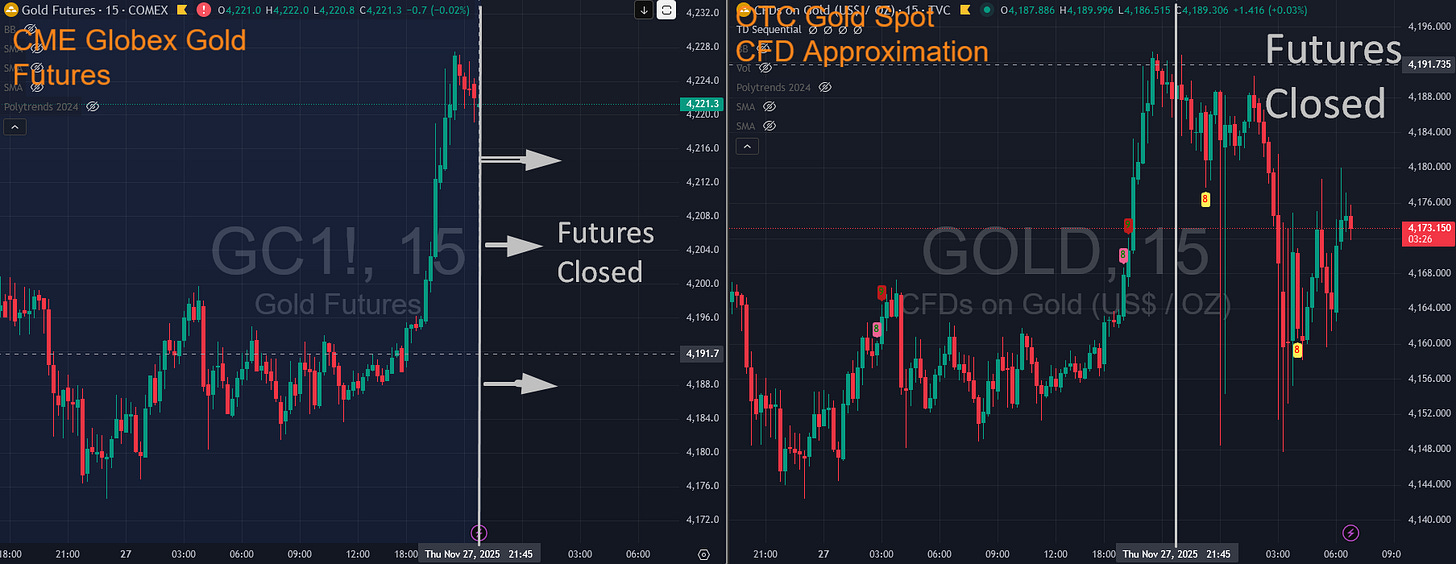
"Liquidity is already thin, so even a brief halt can distort price discovery in Treasuries, FX and commodities," said Charu Chanana, chief investment strategist at Saxo Markets in Singapore. "The main risk is a burst of catch-up volatility."
CME said its teams were working with CyrusOne to restore systems and would issue "Pre-Open" details once the environment stabilized. As of early Friday U.S. hours, no firm restart time had been published.
Business Risk
On the surface, this looks like a straightforward technical failure. Cooling problems happen in data centers. Hardware fails. Software misbehaves. In most industries, that would barely make news. But this is not "most industries." This is CME Globex, one of the most relied-upon and redundantly engineered electronic trading systems on the planet. It is supposed to be robust, resilient, and always available. And more importantly, global markets depend on it.
Financial markets function because prices are continuously broadcast. When price discovery stops, liquidity quickly becomes illiquidity. Markets seize. Information flow slows or fractures. The entire structure of modern globalized trading depends on tight, uninterrupted synchronization. When that breaks, the system stops looking global and starts looking fragmented - which is, in many ways, a mirror of what's happening in the world right now.
CME has only experienced a few major platform failures in the modern era - 2014 and 2019 are the big precedents - and those occurred in a world where CME had no serious competitors. That has changed. The Shanghai Futures Exchange and the Shanghai Gold Exchange have been gaining ground rapidly in metals, energy, and financial futures. Exchanges today do not simply match trades; they compete for the right to define the price the world references. The old "turn the machines back on" line from Trading Places is now a real geopolitical analogy.
So beyond the immediate technical failure, there is a strategic business issue: this outage exposes vulnerability. Whether the root cause was hardware, software, a vendor problem, or a holiday-weekend scenario, the end result is the same. It shows that even the most centralized and respected price engine in the West can go dark. And that is exactly the kind of incident that encourages rival exchanges to accelerate their own ambitions.
Any business that depends heavily on its online infrastructure cannot afford downtime. This is not different. CME's electronic platform is the business. When it goes offline, the brand takes a direct hit. In a competitive landscape that now includes rising Asian futures markets, the optics are poor, and the timing compounds the problem.
About the Author
Vincent Lanci is a commodity trader, Professor of MBA Finance (adj.) , and publisher of the GoldFix newsletter.
Don't miss out on the opportunity to invest in Gold & Silver. Check out our featured companies today: (Ad)

Augusta Precious Metals — Named “Best Overall” by Money Magazine and trusted by high-net-worth investors. Augusta specializes in premium IRA and 401(k) rollovers, offering direct access to educational 1:1 web conferences and U.S. Mint-approved gold and silver.
- Minimum Investment: $50,000
- Fees: $0 storage up to 10 years
- Rating: ★★★★★ (A+ BBB, AAA BCA)

Goldco — With over $2 billion in precious metals placed for customers, Goldco is a leading name in Gold & Silver IRAs and direct bullion purchases. Known for its strong buyback program and industry awards, Goldco offers both IRA and non-IRA investments.
- Minimum Investment: $25,000
- Buyback Guarantee: Yes
- Rating: ★★★★☆ (A+ BBB, AAA BCA)

American Hartford Gold — Ranked #1 Gold Company on Inc. 5000, endorsed by Bill O’Reilly and Rick Harrison. AHG offers flexible IRA rollovers and direct gold & silver purchases, serving over $2B in precious metals to clients nationwide.
- Minimum Investment: $10,000
- Endorsements: Bill O’Reilly, Rick Harrison
- Rating: ★★★★☆ (A+ BBB)
Content quality approved by JPost. JPost oversees the native, paid, and sponsored content on this website and guarantees quality, relevance, and value for the audience. However, articles attributed to this byline are provided by paying advertisers and the opinions expressed in the content do not necessarily express the opinions of JPost.The sponsor retains the responsibility of this content and has the copyright of the material. For all health concerns, it is best to seek the advice of your doctor or a legal practitioner.