
More information about companies is now in the public domain, according to the Entities Authority. Until now, the Israel Companies Registry has lagged behind other countries in providing corporate information to the public. This has hampered creditworthiness checks, among other things.
That has partly changed. Any time someone requests a printout (extract) on the company, they will now receive more information at no extra charge (currently nothing or NIS 12). The website to request a printout is: https://www.gov.il/en/service/company_extract.
What was already publicly available?
Although the website landing page is available in English, the rest of the request and payment process is in Hebrew. Until now, company printouts have included the following items of information, mostly in Hebrew: name, address, principal purpose (often “to do any legal act”), capital, shareholders, directors, managers (with functions), annual fee balance, charges (liens), and any change of name.
What’s new?
The Justice Ministry reiterated that a company printout is a central service that provides comprehensive information about companies registered in Israel, the Entities Authority reported in August.
The Entities Authority encompasses the companies’ and partnerships’ registries in Israel.
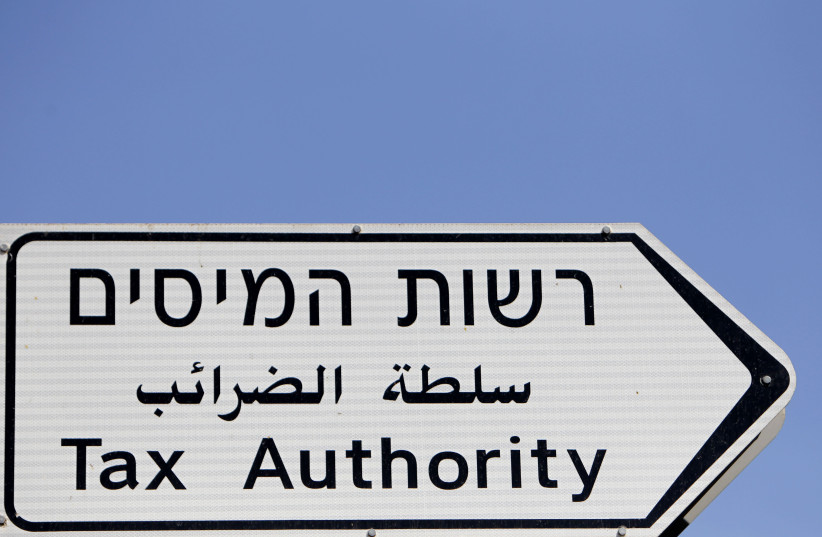
As part of the Entities Authority’s efforts to strengthen the principle of public information and promote transparency in the business sector, the company printout has been expanded. It now includes additional information received by other government authorities and public bodies, including:
- Intellectual property (IP) owned by the company – patents, trademarks, and designs;
- Information from the Bank of Israel about any “constraint on the Company’s account”;
- Information from the Innovation Authority regarding government R&D grants given to the company;
- Information from the Resolution and Enforcement Administration at the Labor Ministry regarding licensing and approvals to service contractor companies (guards, cleaners, and security) and employing crane operators.
The Entities Authority said it intends to furnish reliable information to help generate a stable background for business activity in Israel, etc.
Does it work?
We obtained a specimen printout of our own company. It contained all the old information as well as a space for the above new information, but that was empty.
Comments
The intention to provide information on IP owned by a company is potentially important for both the hi-tech and low-tech sectors. Hi-tech IP includes registered patents, while low-tech IP includes registered logos and trademarks. The important thing is to register them in the relevant registry by subject, and details may then appear by company at the Companies Registry.
In practice, not all hi-tech companies register their IP; they don’t want to reveal their intellectual crown jewels to the public in case competitors or copycats rip them off.
The tech industry often works in the opposite direction: To obtain information about IP, it is often necessary to sign a non-disclosure agreement (NDA).
An NDA is not guaranteed to prevent ripping off, but it is a partial deterrent at least: Professionals and hi-tech operators with IPO or exit ambitions do not want to stain their name with an NDA infringement. The Companies Registry will not sign an NDA.
So, tech companies should consult lawyers and patent attorneys about whether to register a small part of their IP, register an old version, or register nothing at all.
Publishing “constraints” on accounts – presumably bank accounts – might presumably reveal companies with severe cash-flow issues, but this is narrow and may not be enough. Why?
Because the Companies Registry still will not publish financial statements of private companies, unlike other countries, such as the UK. This is partly for a historic reason: Israel gained its independence from the UK in 1948 just before the UK adopted an amended company law that required private (and public) companies in the UK to publish financial statements.
Instead, if you want to check up on an Israeli company, you would probably search the Internet and/or go to a credit-agency company.
M&A deals
When conducting an M&A (mergers and acquisitions) deal, due diligence is needed to see whether a target company is worth acquiring. So, a potential buyer should obtain an expanded company printout to see what details about IP (or bank limitations, liens on assets, etc.) are published. This may help with multiple aspects of the M&A deal, including valuation, structuring the deal, tax, and legal and post-deal integration aspects.
As always, consult experienced tax advisers in each country at an early stage in specific cases.
leon@hcat.co
The writer is a certified public accountant and tax specialist at Harris Consulting & Tax Ltd.