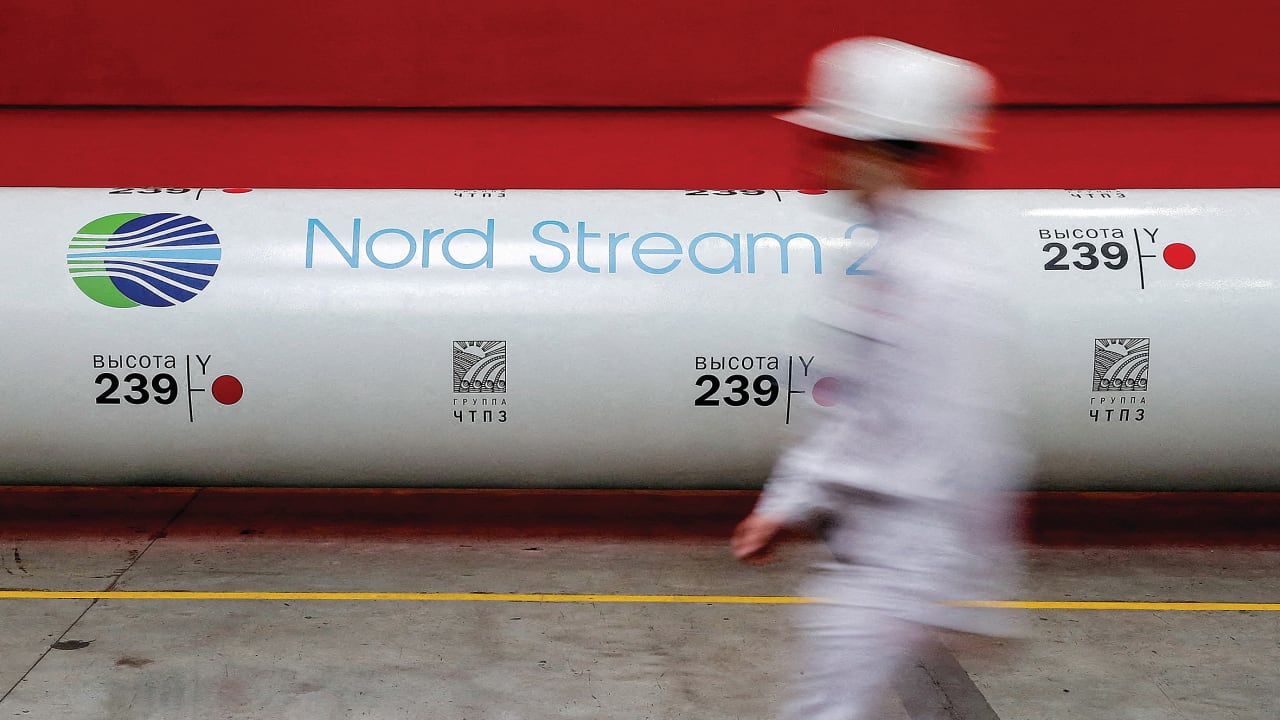
Top Russian and US officials, including US Special Envoy Jared Kushner, have held talks about bringing a US investor into the Nord Stream pipelines that delivered gas to Germany before Russia invaded Ukraine, five people with knowledge of the situation said.
The discussions included Kirill Dmitriev, a close adviser to Russian President Vladimir Putin, and Kushner, the son-in-law of US President Donald Trump, the people said.
Kushner, who has been trying to broker a truce between Russia and Ukraine, views doing business as central to restoring peace. Such a deal would enable US investors to profit from energy flows to Europe once the war ends.
Dmitriev and Kushner have met in Moscow and New York in recent weeks. While it was unclear to what degree they discussed Nord Stream on those occasions, the topic remains on the agenda, two of the people told Reuters.
"Any deals will have to be negotiated by Russia with DFC (US International Development Finance Corporation) and Treasury and must benefit United States taxpayers and companies," a White House official said when asked about the pipeline discussions.

There had been "no Nord Stream discussions recently," the official told Reuters.
Dmitriev, who has campaigned for a resumption of Russian gas sales to Germany, met last month with US Energy and Treasury Department representatives to discuss potential US-Russia energy initiatives. A representative for Dmitriev declined to comment.
It remains unclear how interested Washington is in pursuing the restarting of Russian gas flows to Germany, which is Europe's biggest energy consumer.
A US official said that given the obstacles, a deal is unlikely in the medium term. The US and the EU have sanctioned the Nord Stream gas pipelines, making any restart illegal.
Trump could waive or soften US sanctions, but if Democrats win control of Congress in next month's midterm elections, this would become harder.
Germany and other European countries, which are spending billions of euros to rebuild their militaries to defend themselves from Russia, would strongly resist reopening Nord Stream.
A spokeswoman for Germany's economy and energy ministry said Europe had sanctioned Nord Stream and Russian gas and that Germany had found alternatives. She said any reopening of the pipelines would require government approval, and that was not desired.
Before Russia's invasion of Ukraine in February 2022, Germany bought more than half of its gas from Russia through the two Nord Stream pipelines. They were mothballed after Moscow throttled supply to Europe and were blown up in a series of underwater explosions in September 2022.
Europe distrusts Russia as Washington-Moscow talks continue
Talks between Moscow and Washington are taking place against a backdrop of deep European mistrust of Russia's motives.
Earlier this year, the heads of five European spy agencies told Reuters that Russia did not want to end the war quickly and was using US talks to push for business deals instead.
Relations between Russia and Germany, which is among the biggest providers of military support to Ukraine, have hit a low ebb, as officials in Berlin have accused Russia of mounting a systematic campaign of hybrid attacks.
Some German lawmakers say that business deals would bolster Moscow as it pursues war with Ukraine.
"This threatens to be a dirty deal that will cost Europe dearly," said Michael Kellner, a lawmaker who led German energy policy in the aftermath of the Ukraine invasion.
"Americans and Russians will share the profits," he said.

While Germany's coalition government opposes restarting the pipeline, Alternative for Germany (AfD), the country's most popular political party, wants to do so.
Dmitriev will meet the AfD leadership early next year to discuss selling Russian gas again.
But selling ownership of the company that controls the Nord Stream gas pipelines to a US investor or restarting Russian gas faces hurdles.
The company is 51% owned by Russian state energy giant Gazprom, with a further 31% split between two German entities and the rest in the hands of a French and a Dutch firm.
The two German shareholders are seeking to keep their shares to maintain German influence if Gazprom sells its stake, another person said.
Days after the Moscow meetings, Kushner said in Kyiv he had spoken to European counterparts about how the war pushed up energy prices, advocating "prosperity agreements" to encourage peace and give "leaders... something to look forward to."
Germany, Europe split over potential Russia gas deal
While a gas deal would please the Kremlin, it would split German public opinion, which is divided over buying Russian energy, and Europe, where Poland and the Baltic states are particularly vulnerable to Russia and reject energy ties.
Poland's political leadership is watching the discussions to reopen the pipeline but remains firmly opposed, one person with knowledge of the government's thinking said.
Kushner and Dmitriev have also been discussing the sale of a collection of businesses, from oil refineries to petrol stations in Europe and elsewhere, owned by Russian energy company Lukoil, two other people familiar with the matter said.
Under that plan, a consortium of the DFC federal investment agency and investors from Qatar and the United Arab Emirates would buy the assets, while US authorities would lift sanctions, those people said.
"On Lukoil, Steve (Witkoff) and Jared (Kushner) worked with DFC to negotiate a substantial upfront payment and profits interest for the United States," said a White House official.
Lukoil and Gazprom did not respond to requests for comment.