On paper, modern mass gatherings should be safer than ever. Attendees arrive with smartphones more powerful than the computers that sent humans to the moon. Organizers deploy layers of private security, medical teams, and emergency protocols. Surveillance cameras monitor nearly every angle.
Despite rapid advances in personal technology, public safety at mass gatherings, tourist sites, and crowded venues continues to rely on systems that have changed little in decades. Walkie-talkies remain the primary communication tool for security teams. Cellular networks frequently fail under heavy load. Command centers often operate with incomplete or delayed information.
The consequences of those limitations have been felt repeatedly, sometimes with fatal results.
For Noam Goldman, now CEO and co-founder of Israeli safety-technology startup dotSAGA, the issue became impossible to ignore after a Jerusalem event he helped organize several years ago.
The moment everything broke
“I woke up as an event manager to a message saying, ‘I was sexually assaulted at your event,’” Goldman told The Jerusalem Post. “I learned about it 24 hours later; that was the moment everything broke for me.”

Security personnel had been deployed, volunteers were clearly marked, and procedures were in place. Yet no alert reached those responsible while the incident was unfolding.
“I was responsible for my guests’ safety,” Goldman said, “but I had zero indication that anything had happened in real time.”
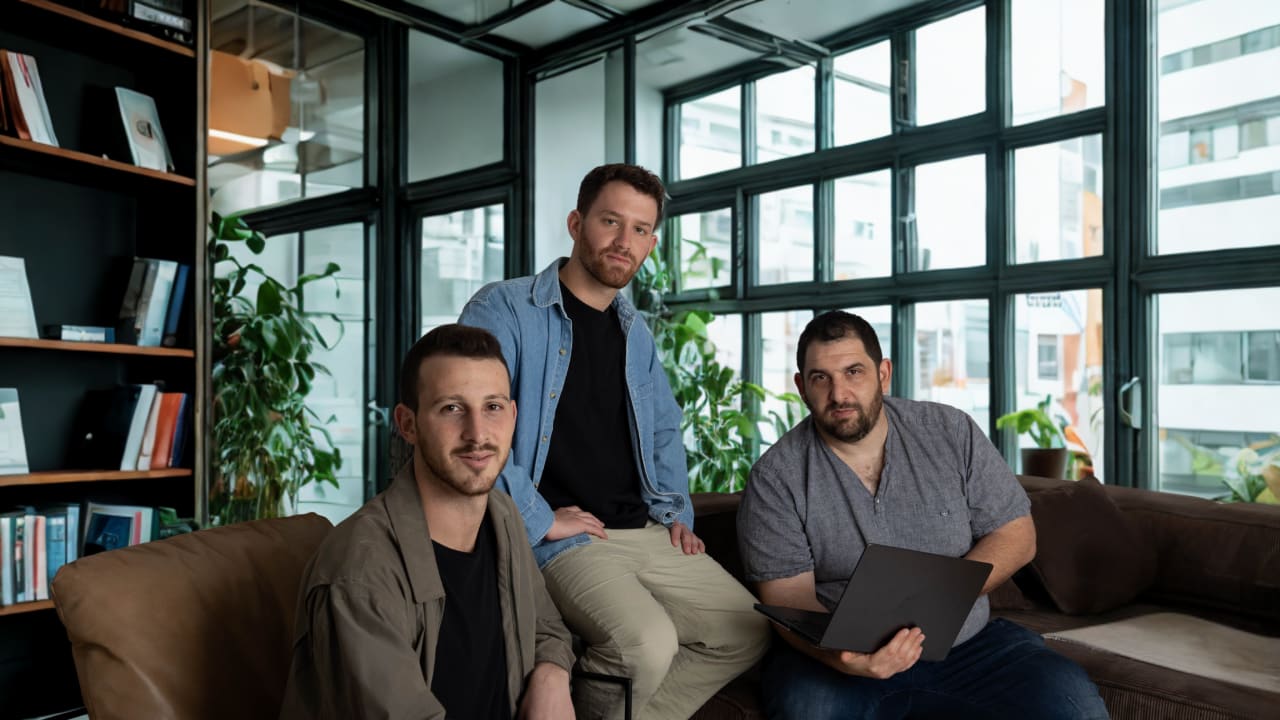
Goldman joined forces with co-founders Alon Abekasis, the company’s CPO, and Alon Sadan, their CTO.
The incident highlighted a broader reality facing event organizers, venue operators, and security professionals worldwide: modern safety is often reactive rather than preventative, and fragmented communication can leave decision-makers blind at critical moments.
At large gatherings, participants typically rely on smartphones to summon help. Security teams, meanwhile, depend on closed radio systems that allow voice communication but provide little situational awareness. In dense environments, mobile networks are frequently overloaded, rendering phones unreliable precisely when they are most needed.
“We’re walking around with the smartest devices in the world,” Goldman told the Post, “but safety still depends on radios invented in 1944.”
The result, he argues, is a structural gap between those experiencing danger and those tasked with responding to it.
“There’s a black box between end users and first responders; they’re not connected to the same system,” Goldman said.
Without real-time data, such as precise location, movement patterns, or the number of people affected, response teams are often forced to rely on fragmented reports and intuition. That delay can prove decisive.
“If you miss the golden hour after an incident,” Goldman said, “you increase the chance of death by three and a half times.”
Emergency physicians and disaster-response experts have long emphasized the importance of early intervention. In crowded or remote environments, however, the lack of immediate visibility often turns manageable incidents into crises.
The dangers of communication breakdowns were starkly illustrated during the 2021 Astroworld festival in Houston, where 10 people were killed in a crowd surge.
“At Travis Scott’s concert, 10 people died, and it took 40 minutes to stop the show,” Goldman noted.
Subsequent investigations found that warnings from attendees and medical staff failed to reach decision-makers in time. Radio channels were congested, command authority was unclear, and those overseeing the event lacked a real-time understanding of conditions near the stage.
The Astroworld tragedy echoed earlier incidents at sporting events, religious pilgrimages, and music festivals worldwide, where crowd density, panic, and delayed response combined with lethal consequences.
For safety professionals, such cases have underscored the limitations of voice-only communication and reinforced calls for systems that provide a shared operational picture rather than isolated reports.
dotSAGA positions its technology within that emerging shift. Rather than focusing on consumer safety apps, the company frames its platform as a communications infrastructure designed for environments where conventional networks are unreliable or unavailable.
“With one press of a button, the command center knows who you are, where you are, and when you triggered the alert, even without cellular service,” Goldman said.
The system relies on a small, screenless wearable device with a single button. Each device functions as a node in a self-forming mesh network, allowing alerts and location data to pass from device to device until they reach a command center. The network operates independently of cellular towers, Wi-Fi, or satellites.
This design choice reflects lessons drawn from both military and civilian emergency settings. In high-stress situations, Goldman said, expecting individuals to unlock a phone, open an app, and navigate menus is unrealistic.
“In emergencies, people freeze,” he said. “One button is everything when someone freezes.”
Beyond individual alerts, the platform enables command centers to monitor movement patterns, detect abnormal density, and identify individuals who stop moving; indicators that can signal injury, panic, or disorientation.
The need for such situational awareness was underscored again during the Hamas-led attack on the Nova music festival on October 7, 2023.
Two months before the attack, dotSAGA had been approached about deploying its system at an upcoming event. At the time, the technology was still in development and not ready for deployment.
Only afterward did Goldman learn the request had come from Nova’s organizers.
In conversations following the attack, the festival’s producer described manually sharing WhatsApp live locations with security forces and armed responders in an attempt to guide people to safety.
The experience left a lasting impression.
“You can’t stop a thousand terrorists,” Goldman said, “but you can stop being blind.”
For security analysts, the lesson was not about preventing the initial attack, but about reducing chaos and improving coordination once an incident begins. Real-time visibility, they note, can help responders allocate resources, identify escape routes, and locate those in need of assistance more quickly.
Since then, dotSAGA has begun pilot deployments in civilian settings where safety depends on coordination rather than constant connectivity. These include ski resorts, outdoor camps, and large venues with limited cellular coverage.
At a ski camp in Italy, counselors used the system to monitor groups as they moved across slopes. The platform allowed staff to see each participant’s location in real time and receive alerts if someone stopped moving or exited a defined area.
“One kid shouted from the back, ‘Don’t worry, we have dotSAGA,’” Goldman shared with a smile across his face. “That was product–market fit for me.”
Organizers involved in the pilot said the system reduced response times and provided reassurance to both staff and parents, particularly in poor weather conditions or on remote runs where visibility is limited.
dotSAGA’s development has taken place against the backdrop of prolonged national disruption in Israel. Since October 7, Goldman and his co-founders, all veterans of elite IDF intelligence units, have spent extended periods in military reserve duty while continuing to advance the project.
Despite those constraints, the company has expanded pilot programs in Europe and entered discussions with international operators in tourism, recreation, and venue management.
Industry observers note that interest in off-grid safety systems has grown in recent years, driven by a combination of increased mass gatherings, climate-related disruptions, and persistent security threats.
Proponents of such technologies argue that the larger issue extends beyond any single startup or product.
“We realized we’re not building a nice-to-have product,” Goldman emphasized. “This is critical infrastructure.”
As mass events resume worldwide and public spaces remain potential targets for accidents, panic, or violence, pressure is mounting for systems that can operate independently of fragile networks and provide responders with reliable, real-time information. Goldman and his co-founders expressed that they hope to someday have dotSAGA incorporated into festival wristbands and other important event infrastructure.
In that context, the debate is no longer about whether safety technology should evolve, but how quickly institutions are willing to adopt new standards.
“In a world of advanced technology,” Goldman stated, “there’s no reason safety should still operate blind.”