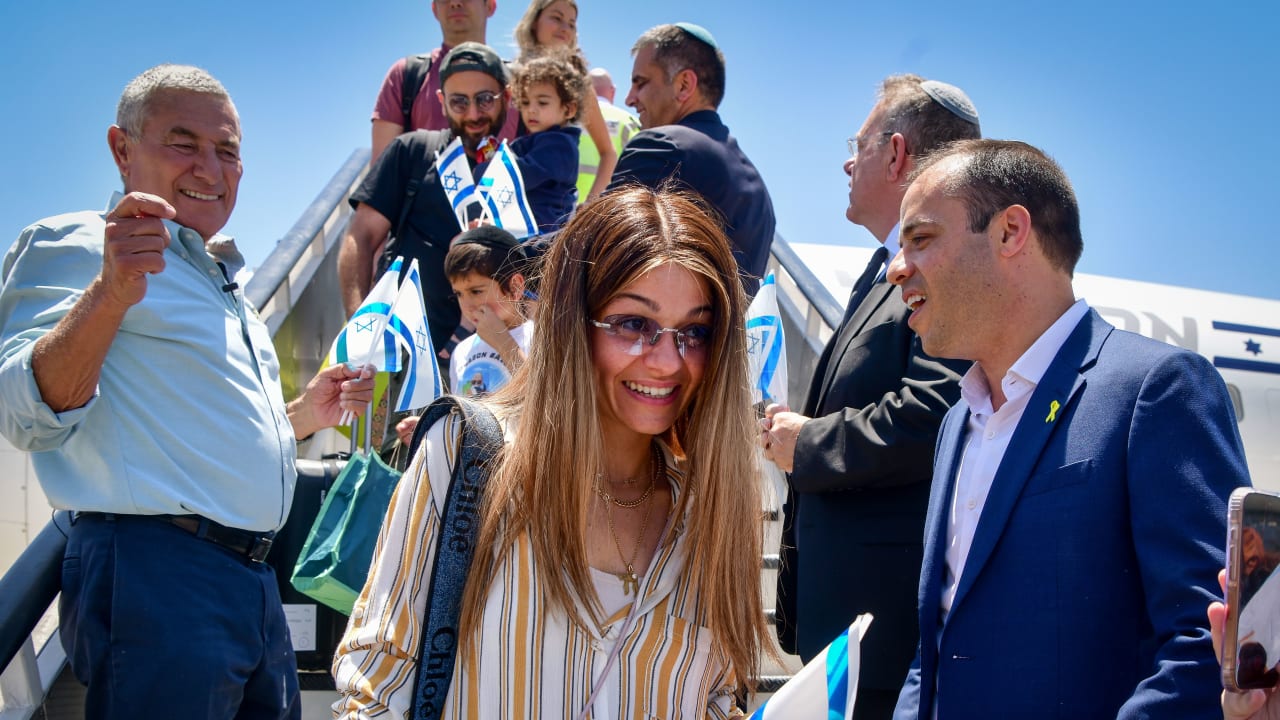
A meeting on improving the absorption of new immigrants (olim) into Israel’s education system was held ahead of the upcoming school year at the Knesset’s Committee for Immigration, Absorption, and Diaspora Affairs during the first week of August.
Chair of the committee, MK Gilad Kariv (The Democrats), said that in the coming year, there would be a focus on helping new olim better integrate into the Israeli educational system.
The meeting provided a space for various representatives to present information about the complexities of integrating into the educational system after making aliyah.
Government representatives, for example, spoke about the challenges that olim face when joining the system.
Difficulties often extend beyond studies, as many of the kids arrive in the country due to their parents’ decision. The kids may then struggle emotionally while adapting to the new culture and finding a new identity and friends, the representatives explained.
Elian Demasay, a 15-year-old entering 10th grade, spoke about the gaps in the educational system for olim. She expressed the needs of olim as a new immigrant herself and also spoke as the representative of Israel’s Students and Youth Council.

“We are talking a lot in this committee about how to provide support, teach Hebrew, how to bridge gaps, and that is correct and very important,” Demasay began. “But what the youth in Israel and I experience is that many olim don’t feel that they belong in the educational systems. They don’t feel heard. They don’t feel like they have a safe space where they can be exactly who they are,” she explained.
“I come from a family of olim, and I see and know how hard it can feel living in a country where the language is different, the culture is different, and the values and places where you come from are different,” she said.
“The system doesn’t always know how to accommodate it all. I’m not trying to point fingers and blame, but the youth in Israel and I really see that this comes from a possible lack of awareness toward students in Israel.”
Demasay also underscored the importance of providing support for students that extends beyond educational needs and helps kids adapt to their new lives in the country. She called on educational staff in Israel to prepare themselves more effectively.
“I’m asking that we build an educational system that provides a sense of belonging, listening, and understanding so that no student will feel alone, giving them the ability to belong within the educational system,” she told the committee.
Among the topics discussed in the meeting was the addition of more one-on-one teaching for the olim students.
While olim are entitled in their first year of arrival to receive about six hours of one-on-one learning, the hours are reduced already by their second year. Kariv said that this lowering of the amount of one-on-one hours should be reconsidered.
Struggles faced by young olim are often overlooked
The topic of returning residents also came up often, as kids with such a status require different accommodations and can be overlooked. Returning residents hold a different status than olim. They are individuals who once lived in Israel but moved overseas, returning to live in the country once again, often after the passage of many years.
The representative of the Education Ministry explained that there “is a significant difference between new olim and returning residents.” Kariv said that the support for returning residents needed upgrading and improvement.
Dr. Shari Peir from the Aliyah and Integration Ministry said she was instructed to focus on integrating various educational frameworks for olim by Aliyah and Integration Minister Ofir Sofer (RZP). A representative from Nefesh B’Nefesh spoke at the committee, explaining the setbacks that parents of students who made aliyah also face.
She noted that just as students lack tools, parents also do due to language barriers and a lack of cultural knowledge, creating further difficulty in adjusting to the country. The Nefesh B’Nefesh representative also noted that sometimes returning residents can fall through the cracks of the system and struggle.
She stated that just because the returnees often know Hebrew, it doesn’t mean that they always speak the language at a sufficient level to integrate properly. The meeting also displayed the rise in new olim who have joined Israel’s education system since the start of the Israel-Hamas War in 2023.
The numbers showed that since the start of the war, 3,779 new olim have been absorbed into the system. An additional 504 olim between the ages of three and 17 are expected to join in the upcoming 2025/2026 school year. Kariv said that a follow-up meeting on the matter of absorbing olim into the educational system will be set, and it will review the progress on the variety of issues raised.
“Education for olim is an extremely significant factor for families considering aliyah, and the message about absorbing olim into various frameworks must be spread,” he stated.